PureShape, Convex wavefront with cut circular-to-rectangular transition tweeter waveguide
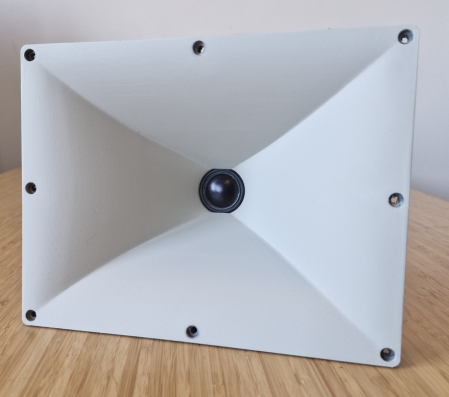
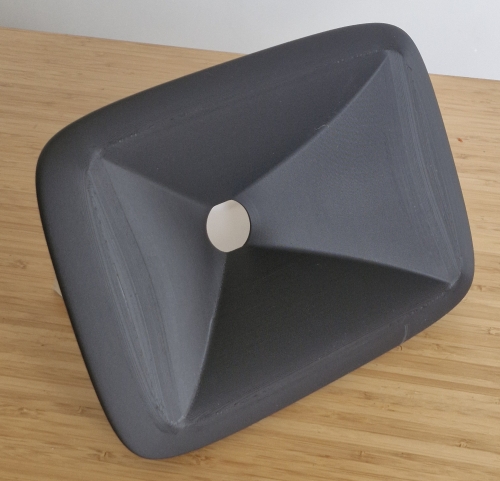
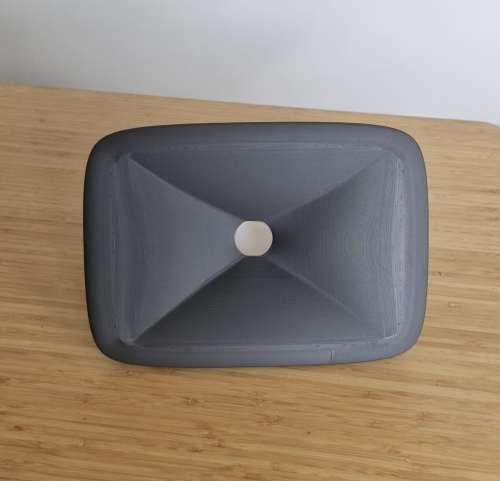
PureShape is our new tweeter waveguide using the SB26 ADC tweeter or the Bliesma T34B, designed for convex wavefront radiation without any phase plug or shield.
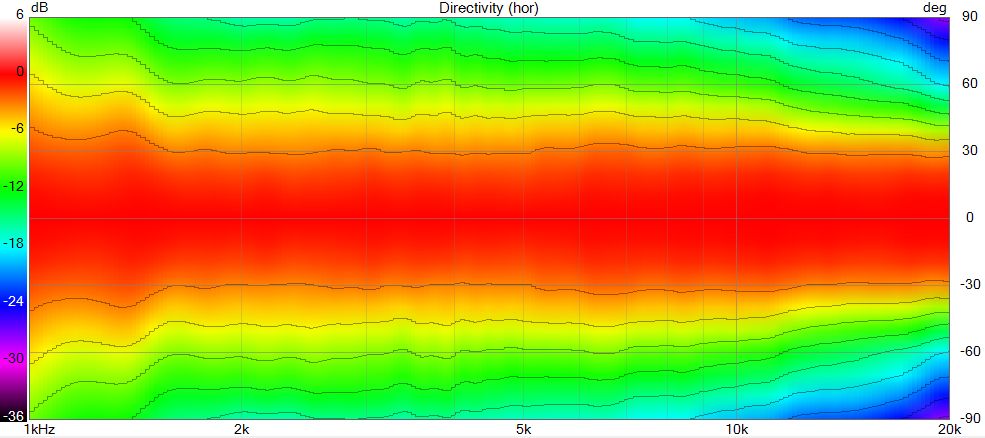
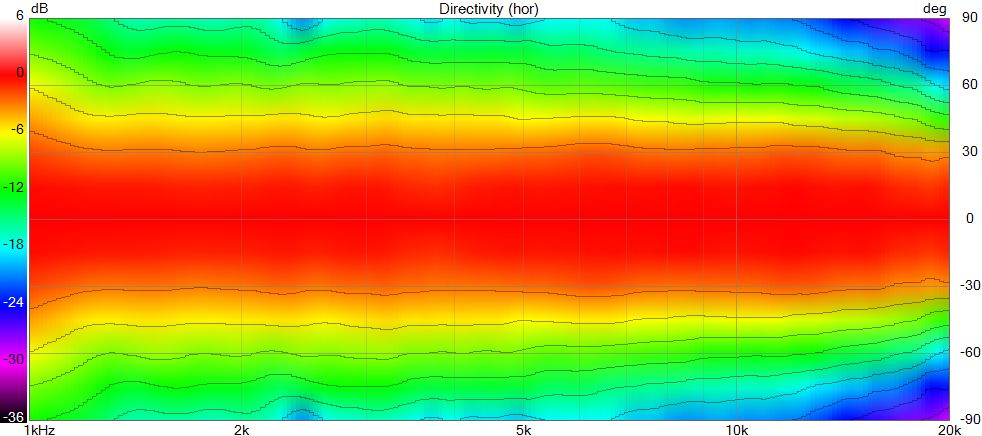
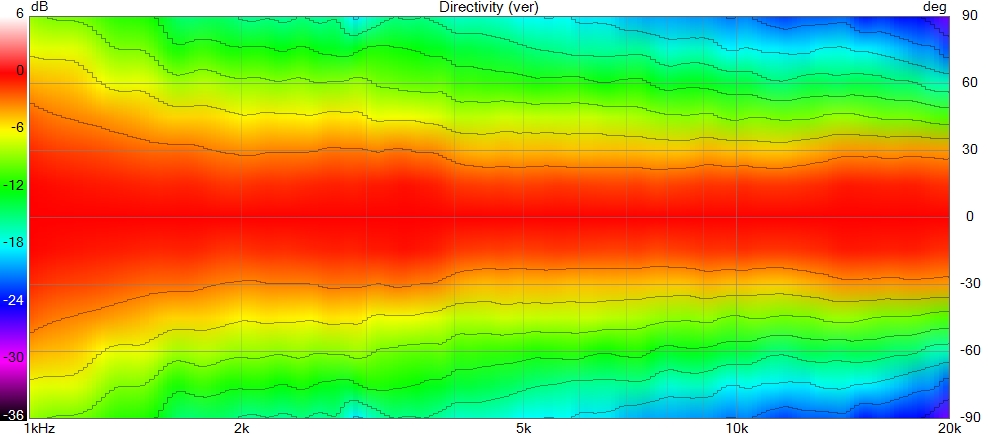
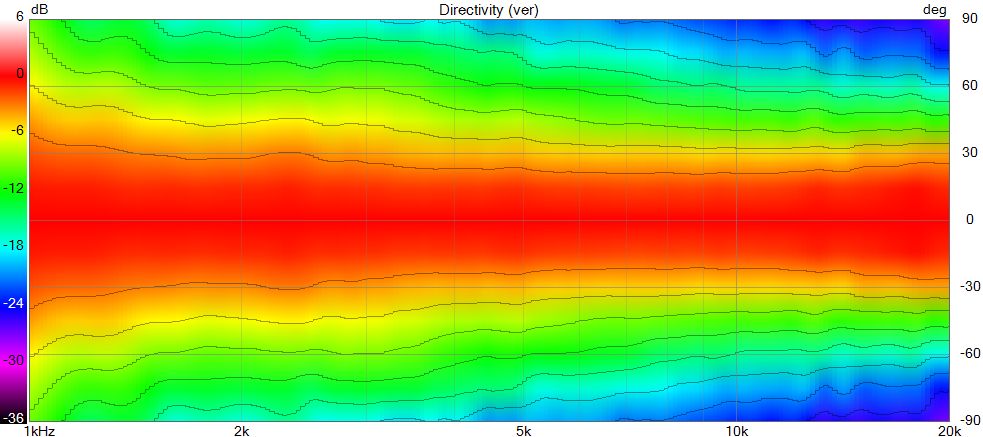
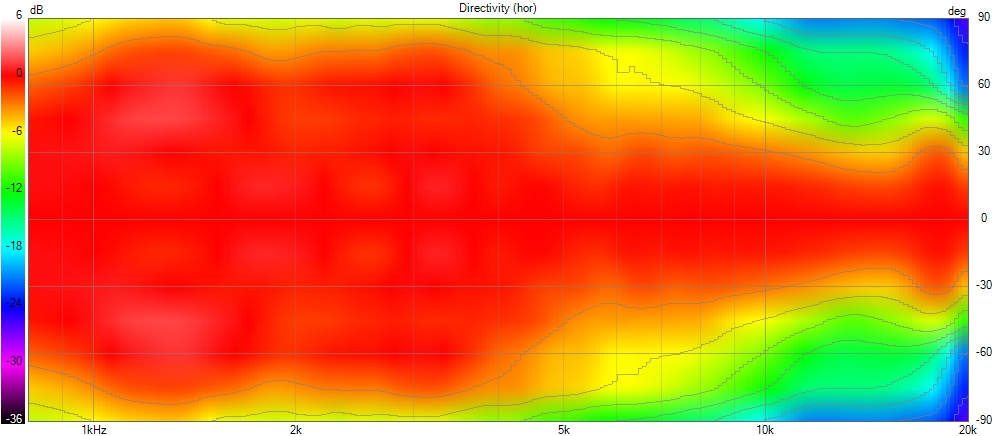
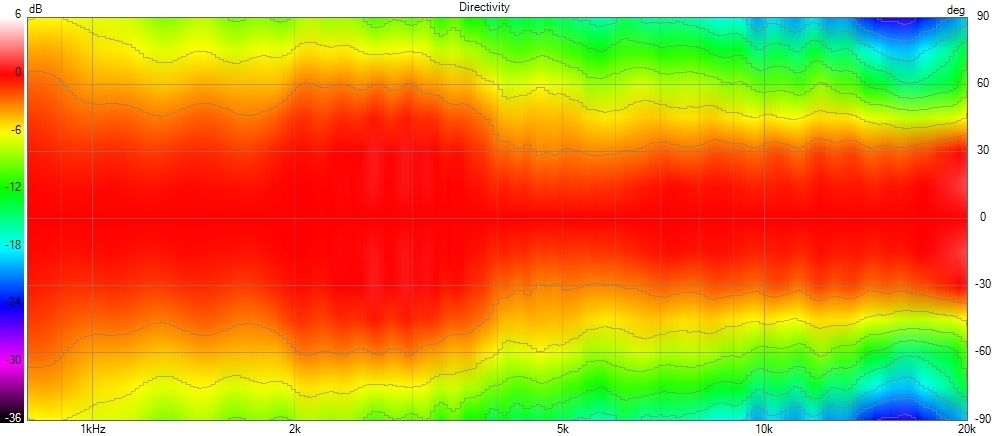
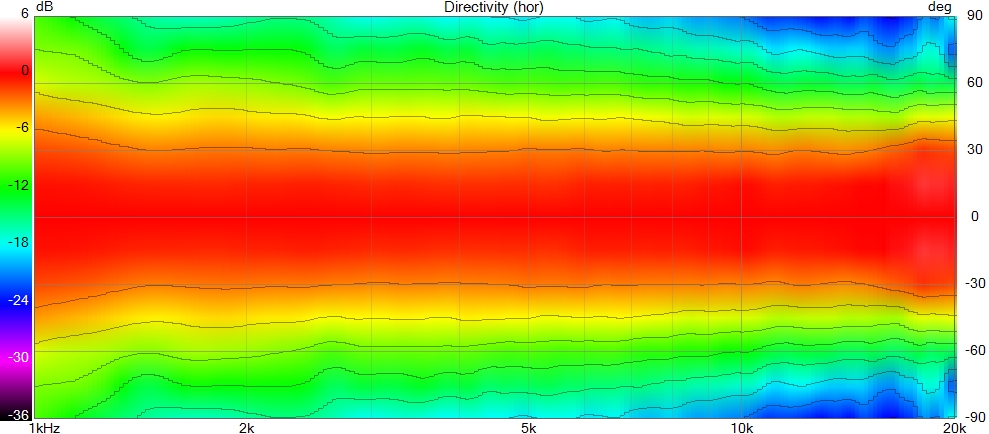
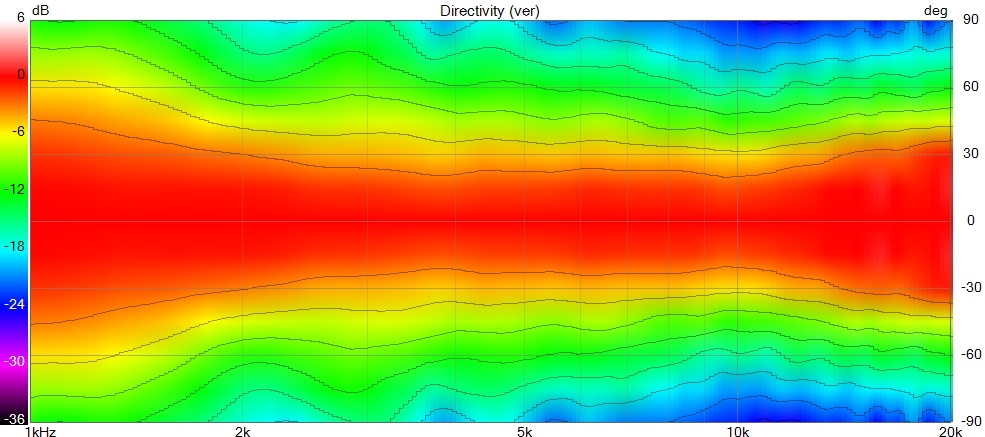
It uses a brand-new cut circular-to-rectangular transition, achieving constant directivity: 90° horizontal × 70° vertical.
Its horizontal coverage suits typical listening distances, and vertical directivity makes it insensitive to listening height.
The waveguide exhibits true constant directivity, free from midrange narrowing and beaming, providing a precise soundstage and immersive environment.
To order, see horn versions and prices, then contact us to proceed to payment and worldwide shipment.
Directivity polar plot
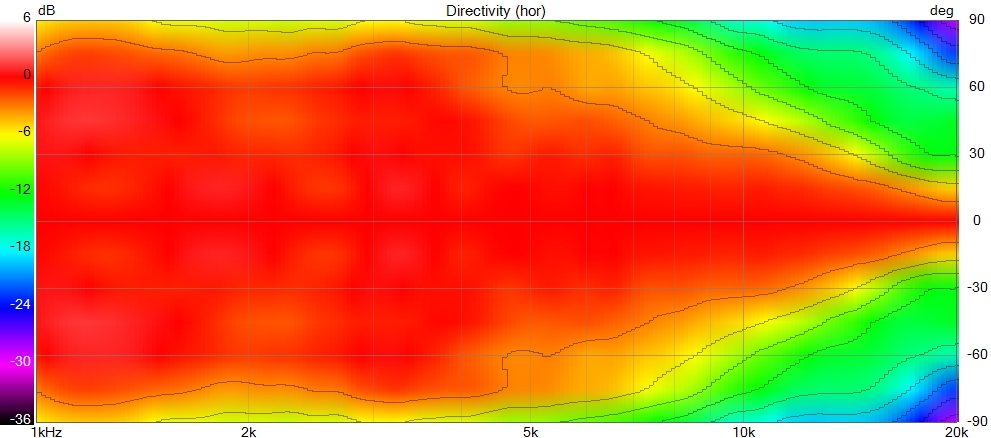
All measurements are real ones, performed with the ideal 25mm roundover return, taken at 1/24 resolution in a half-space presentation (±90°).


SPL
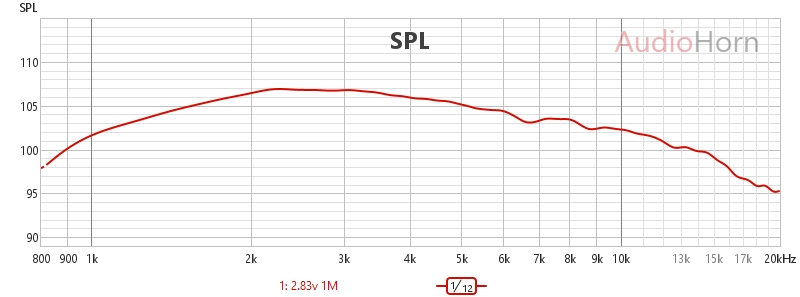
The waveguide is easy to filter, even passively, it only requires two high-shelf EQ filters: +7 dB @ 3000 Hz and +4 dB @ 7500 Hz (with the default Q = 0.707) to be corrected.
The loading effect provides 10 dB of sensitivity compared to direct radiation in the low end, allowing for a low crossover point with high SPL.


Distortion
Its loading capacity allows operation at very low frequencies. The radiation restriction, combined with the reactive loading effect, reduces the tweeter’s required excursion to achieve a given SPL after equalization to a flat response, leading to lower distortion.
Intermodulation distortion (IMD) is also reduced, since both harmonic and intermodulation distortions are strongly linked to driver nonlinearities, which generally increase with diaphragm excursion.
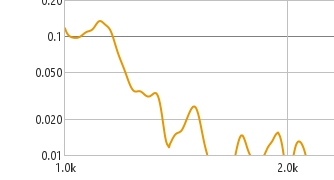
Below is the H3 distortion for the 18 cm and 22 cm versions at 95 dB SPL (1 m), measured with EQ applied to achieve a flat and identical response from 1 kHz for both:

Note: The 3rd harmonic (H3) appears up to about 6.66 kHz because at that point it already corresponds to 20 kHz, thus producing an unwanted 20 kHz tone. A 3rd harmonic distortion produces an unwanted tone at three times the fundamental, 3 × 6.66 kHz = 20 kHz.
How it competes versus Direct Radiation (no WG) and Somasonus
Mounting
We recommend a round-over return of around 25mm radius on each exposed side to eliminate midrange narrowing and beaming.
Mounting is done with the baffle using M4 screws into a rebate 12 mm large, 8 mm high, with 4 mm radius corners.
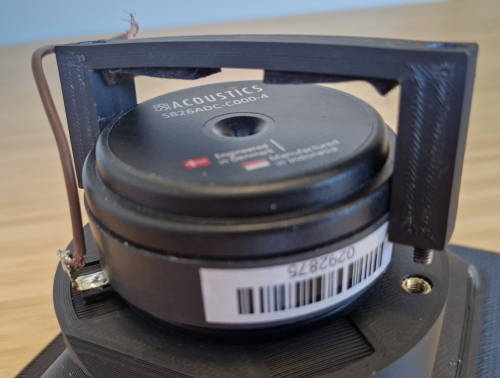
Tweeter mounting is done as show here, users has to remove the face plate but reuse the screm and put it back in place, they will serve as a centering device
The fix system with his two M4 screw is provided too.

Directivity polar plot
All measurements are real ones, performed with the ideal 25mm roundover return, taken at 1/24 resolution in a half-space presentation (±90°).
SPL
The loading effect provides much greater sensitivity in the low end compared to direct radiation in the low end.
Distortion
 Its loading capacity allows operation at very low frequencies. The radiation restriction, combined with the reactive loading effect, reduces the tweeter’s required excursion to achieve a given SPL after equalization to a flat response,
leading to lower distortion.
Its loading capacity allows operation at very low frequencies. The radiation restriction, combined with the reactive loading effect, reduces the tweeter’s required excursion to achieve a given SPL after equalization to a flat response,
leading to lower distortion.
Intermodulation distortion (IMD) is also reduced, since both harmonic and intermodulation distortions are strongly linked to driver nonlinearities, which generally increase with diaphragm excursion.
The driver becomes so efficient that most distortion components are buried in the measurement noise floor (around 0.01% here), making them effectively invisible on the 95 dB SPL distortion chart, making only a tiny rise in H3 visible.
How it competes versus Direct Radiation (no WG)
Mounting
We recommend a round-over return of around 25mm radius on each exposed side to eliminate midrange narrowing and beaming.
Mounting is done with the baffle using M4 screws into a rebate 12 mm large, 8 mm high, with 4 mm radius corners.
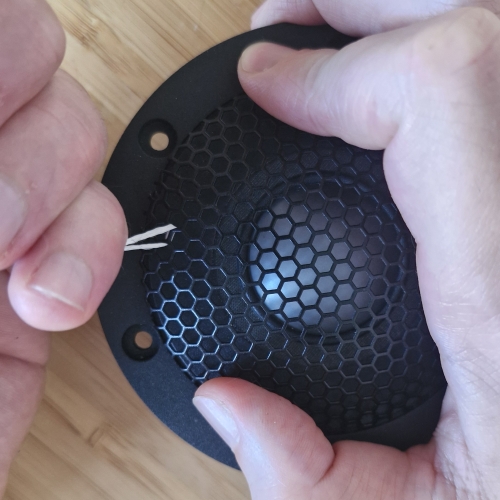
Users must remove the protective grille using a heat gun, or by carefully following the method shown in the photos. The grille must be gently pulled off a few millimeters at a time around the entire adhesive circumference. Be careful of the magnetic force when the grille is released.
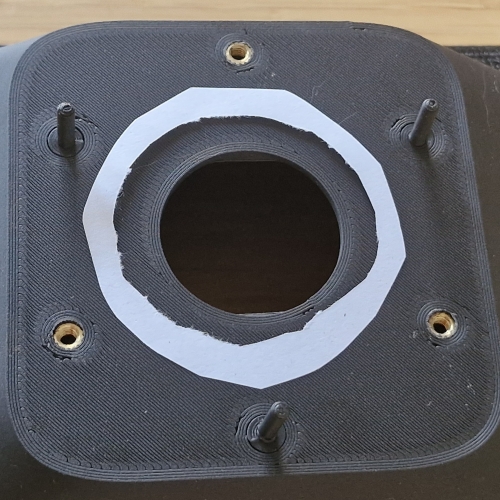
To avoid applying lateral pressure on the driver’s surround during screwing, use a paper ring with an inner diameter greater than 50.5 mm. The ring will provide a 0.1–0.2 mm clearance around the entire surround, including its glued area.
Together with the waveguide’s centering system, it prevents lateral forces from being applied to the tweeter surround during screw tightening, eliminating the risk of permanently displacing the voice coil and causing rub & buzz.
The mounting operation is the sole responsibility of the client, and AudioHorn cannot be held responsible for any damage resulting from improper installation. In case of damage, Bliesma offers affordable repair services if the tweeter dome has not been damaged.
Then place the three centering pieces to align the tweeter. With the waveguide facing downward, keep the assembly well away from any metal objects, as the tweeter’s magnet is very strong and may attract them.
Hold the tweeter securely while lowering it into its final position. Once it is correctly seated using the centering pieces, tighten the three supplied screws. Leave the centering pieces in place.
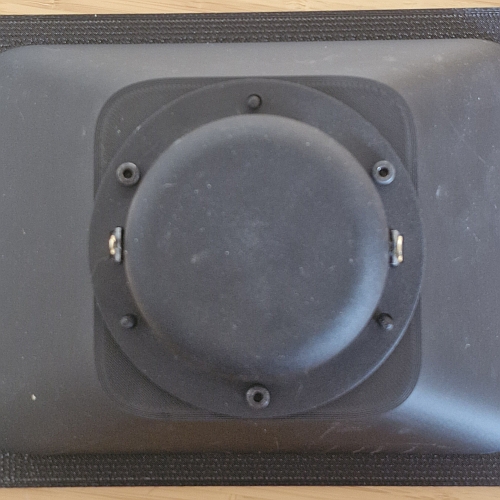
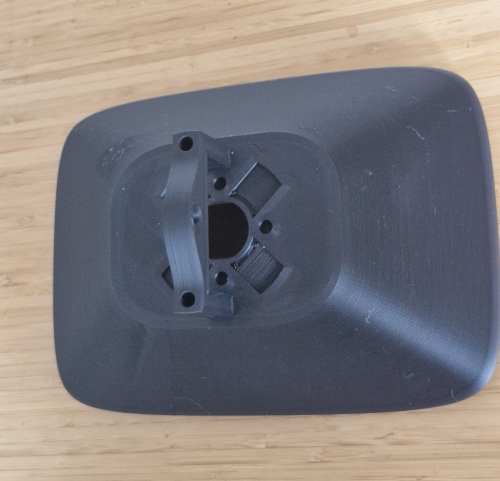
We offer a free-standing integration of the PureShape waveguide, featuring a continuous curved geometry optimised through FEA (Finite Element Analysis). This allows the waveguide to simply be placed on top of the woofer cabinet, without requiring any modification to the cabinet itself.
The rear of the mounting system provides the first anchoring point, while the front of the waveguide can either rest directly on the woofer cabinet at the level of its roundover, or we can provide a customised support leg to accommodate the desired placement and height.
Price upon request.
Material and Finish
The waveguide is 3D-printed using PLA for indoor applications or PETG (price on demand) for outdoor use.
It arrives raw unless you order the spray putty service. Layers of spray putty must be applied before primer for a smooth finish, as described in our dedicated article: How to Finish my Horn.
Roundover Kit
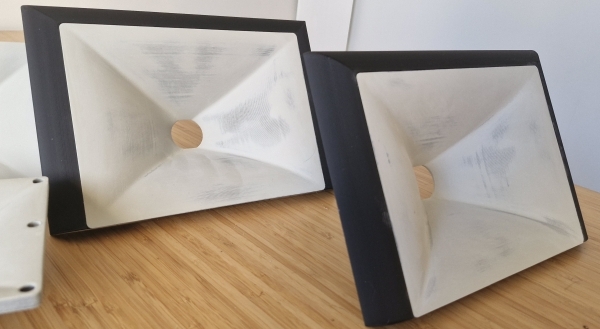
It can be bonded directly to your baffle, with the waveguide glued in place and finished flush inside. In this configuration, a rear access opening must be provided to allow installation of the tweeter.
For more adventurous users, it is also possible to install the tweeter directly through the woofer cutout below.
Passive crossover
PureShape brings the tweeter back closer to the mid-woofer in depth, making delay management easier in passive filtering.
Solutions for time alignment with passive filtering (no DSP delay):
- Asymmetrical Crossover: A steeper slope can be applied to the woofer to compensate for delay, by adding one more order to the woofer’s filter.
- Mechanically Time-Aligned Design: Alternatively, our medium waveguide solution positions the mid-woofer further back, achieving proper alignment without electronic delay.
For bigger sizes X-Shape Horn with Compression Drivers are advised.