C-Planar, Compressed Planar waveguide

The compressed planar waveguide, using the GRS PT2522C-4 planar tweeter with back cup (or any OEM equivalent coming from the same factory as the GR Neo 3), is designed to control and guide the generated wavefront.
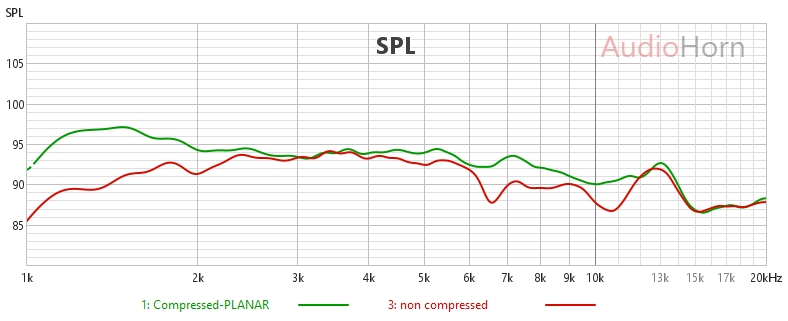
This compression, similar in principle to a compression driver, introduces a loading effect that increases low-frequency efficiency, resulting in higher SPL, lower distortion, and improved low-end response.
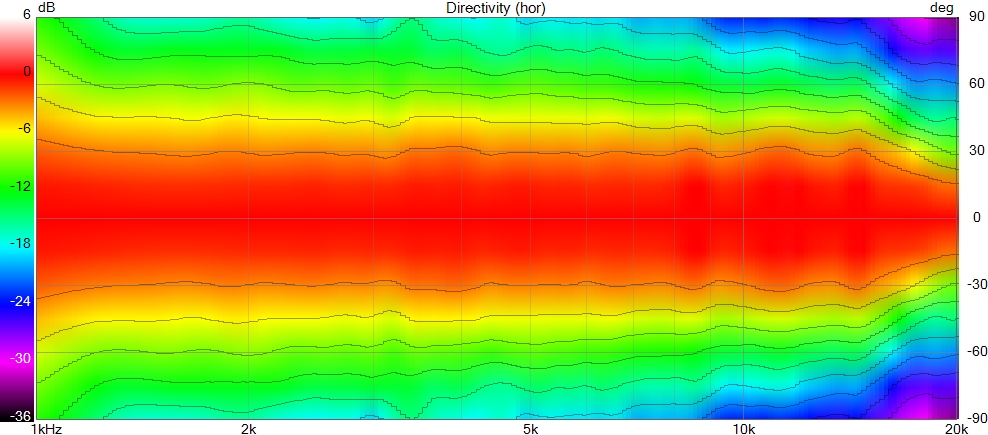
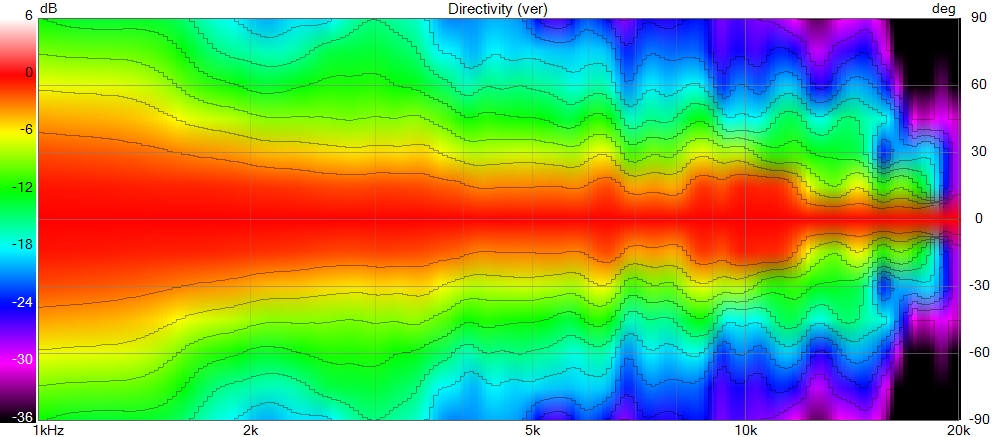
The waveguide provides true 90 × 60° constant directivity, free from midrange narrowing and beaming, ensuring precise imaging and an immersive soundstage.
To order, see horn versions and prices, then contact us to proceed to payment and worldwide shipment.
Compression and SPL
The compression is achieved by blocking the lateral radiation slots, which are already integrated with felt as part of the design.
This creates a compression ratio that increases acoustic loading through a reactive loading mechanism, improving low-frequency SPL by enhancing energy transfer at low frequencies, without drawbacks.
The X-max (excursion) of these planar drivers is often limited, but thanks to this compression, the driver produces more low-frequency SPL, allowing higher maximum SPL, lower distortion, and a lower crossover point.
The measurements below show the SPL of the compressed version compared with the non-compressed version:
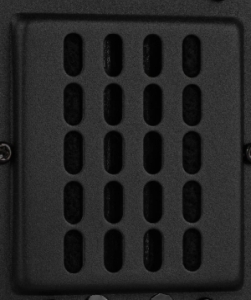
A back-cup version of the planar is required to also provide compression behind the diaphragm.
The fins are designed to maintain a planar wavefront and ensure uniform propagation inside the waveguide, as well as improve vertical dispersion.
Directivity polar plot
All measurements are real ones, performed with the ideal 25mm roundover return, taken at 1/24 resolution in a half-space presentation (±90°).
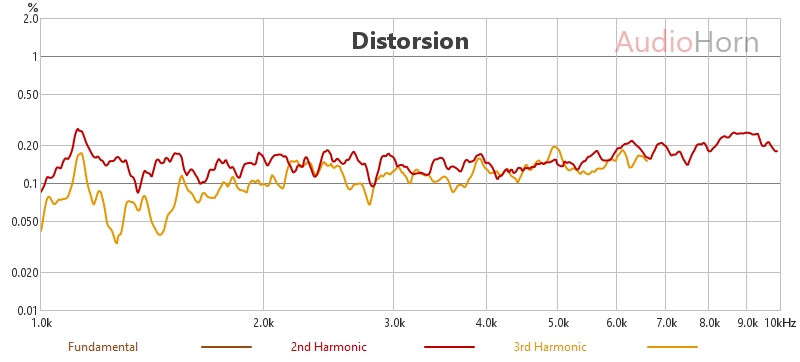
Distortion 95dB SPL
Its loading capacity allows operation at very low frequencies. The radiation restriction, combined with the reactive loading effect, reduces the tweeter’s required excursion to achieve a given SPL after equalization to a flat response, leading to lower distortion.
Intermodulation distortion (IMD) is also reduced, since both harmonic and intermodulation distortions are strongly linked to driver nonlinearities, which generally increase with diaphragm excursion.
Roundover Kit

It can be bonded directly to your baffle, with the waveguide glued in place and finished flush inside. In this configuration, a rear access opening must be provided to allow installation of the tweeter.
Material, Finish and Mounting
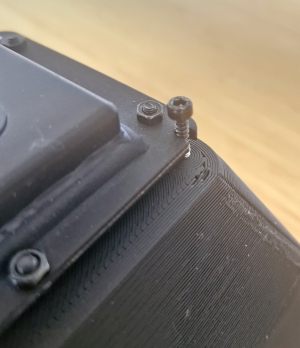
It arrives raw unless you order the spray putty service. Layers of spray putty must be applied before primer for a smooth finish, as described in our dedicated article: How to Finish my Horn.
The mounting is done using tiny M3 wood screws.