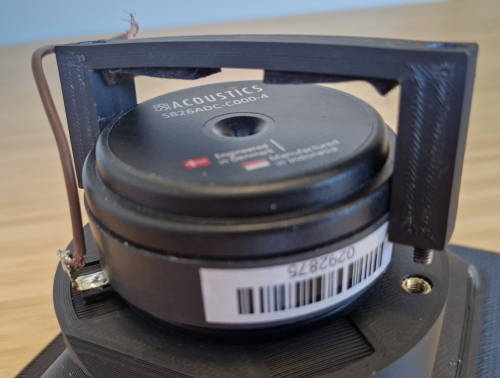
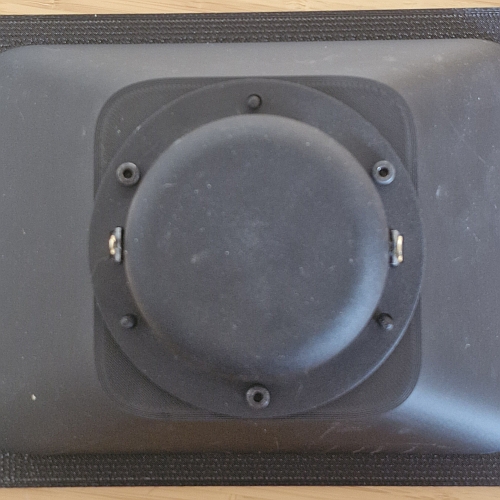
The compressed planar waveguide, using the GRS PT2522C-4 planar tweeter with back cup (or any OEM equivalent coming from the same factory as the GR Neo 3), is designed to control and guide the generated wavefront.
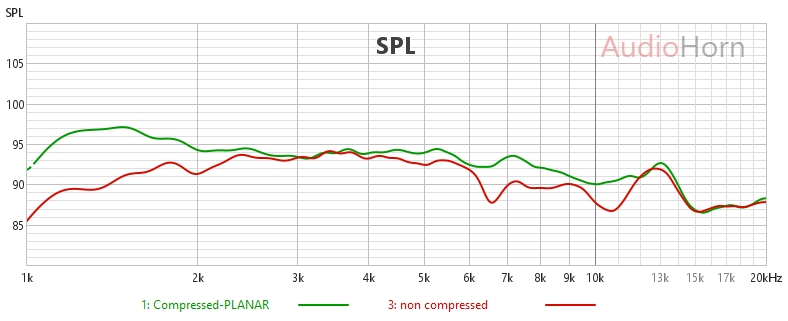
This compression, similar in principle to a compression driver, introduces a loading effect that increases low-frequency efficiency, resulting in higher SPL, lower distortion, and improved low-end response.
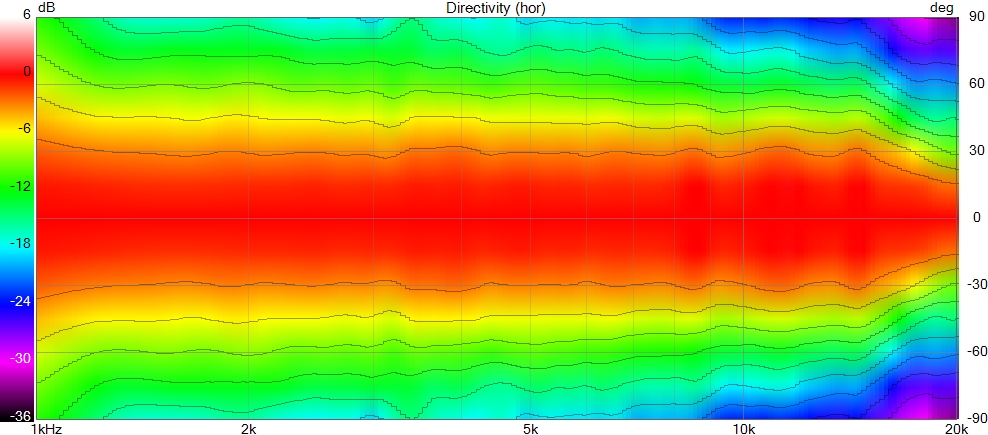
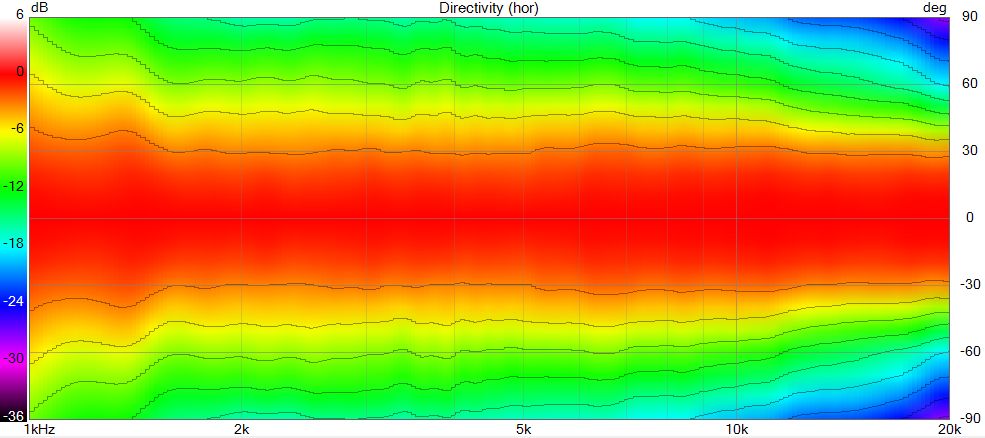
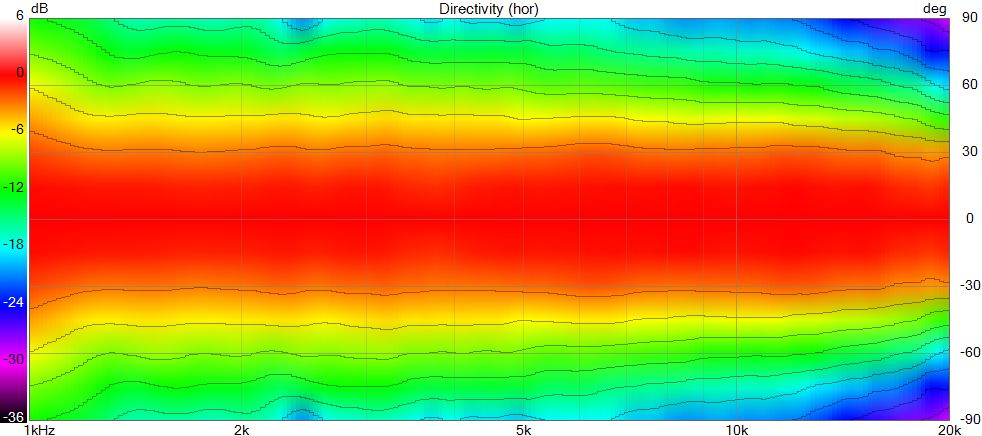
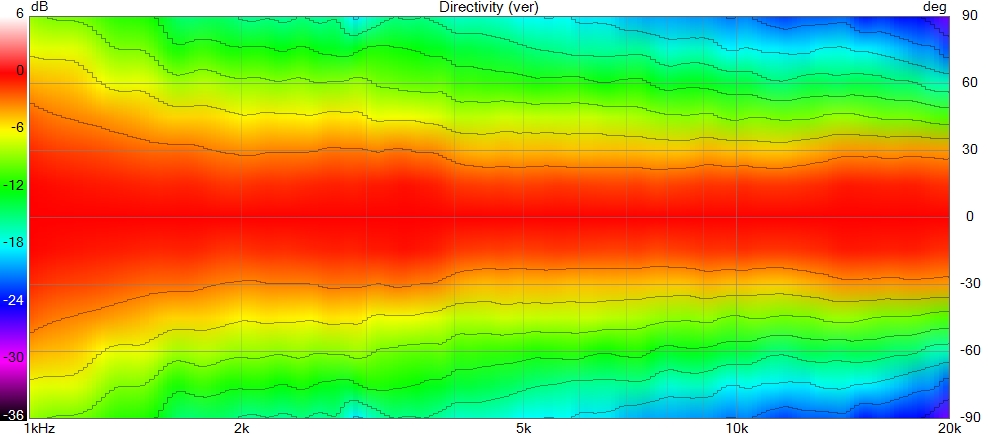
The waveguide provides true 90 × 60° constant directivity, free from midrange narrowing and beaming, ensuring precise imaging and an immersive soundstage.
To order, see horn versions and prices, then contact us to proceed to payment and worldwide shipment.
Compression and SPL
The compression is achieved by blocking the lateral radiation slots, which are already integrated with felt as part of the design.
This creates a compression ratio that increases acoustic loading through a reactive loading mechanism, improving low-frequency SPL by enhancing energy transfer at low frequencies, without drawbacks.
The X-max (excursion) of these planar drivers is often limited, but thanks to this compression, the driver produces more low-frequency SPL, allowing higher maximum SPL, lower distortion, and a lower crossover point.
The measurements below show the SPL of the compressed version compared with the non-compressed version:
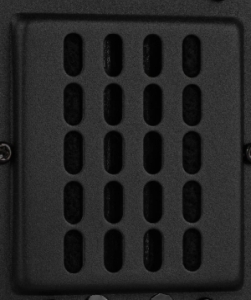
A back-cup version of the planar is required to also provide compression behind the diaphragm.
The fins are designed to maintain a planar wavefront and ensure uniform propagation inside the waveguide, as well as improve vertical dispersion.
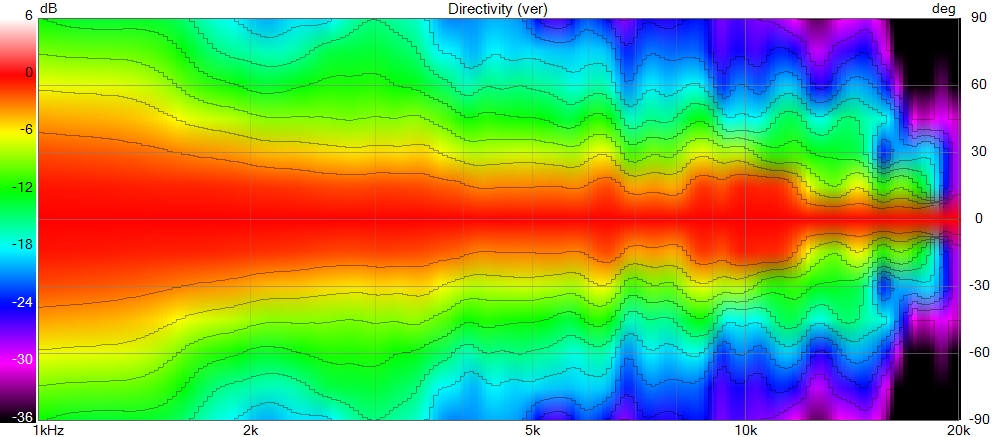
Directivity polar plot
All measurements are real ones, performed with the ideal 25mm roundover return, taken at 1/24 resolution in a half-space presentation (±90°).
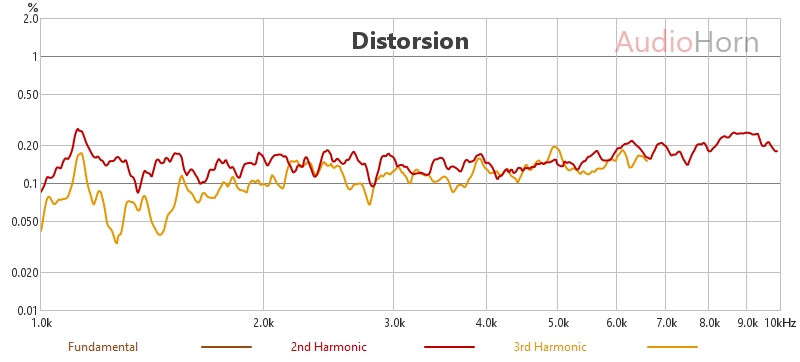
Distortion 95dB SPL
Its loading capacity allows operation at very low frequencies. The radiation restriction, combined with the reactive loading effect, reduces the tweeter’s required excursion to achieve a given SPL after equalization to a flat response, leading to lower distortion.
Intermodulation distortion (IMD) is also reduced, since both harmonic and intermodulation distortions are strongly linked to driver nonlinearities, which generally increase with diaphragm excursion.
Roundover Kit

It can be bonded directly to your baffle, with the waveguide glued in place and finished flush inside. In this configuration, a rear access opening must be provided to allow installation of the tweeter.
Material, Finish and Mounting
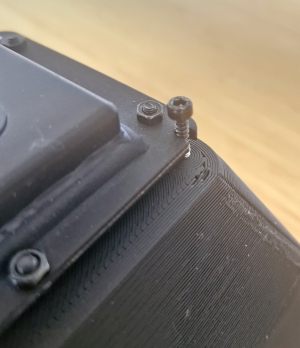
It arrives raw unless you order the spray putty service. Layers of spray putty must be applied before primer for a smooth finish, as described in our dedicated article: How to Finish my Horn.
The mounting is done using tiny M3 wood screws.
HPM Horn – Dedicated Midrange Solution for Cone Drivers
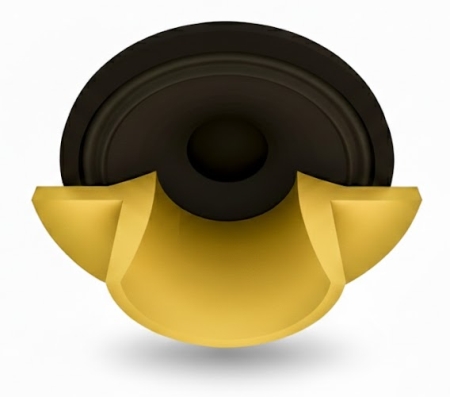
The HPM horn is a dedicated midrange solution designed for direct-radiating cone drivers, meeting both high SPL requirements and constant directivity behavior.
To achieve this objective while maximizing output, we developed a direct-coupling interface between the cone driver and the horn. This design captures the wavefront directly at the surface of the cone, eliminating the air impedance mismatch that typically occurs between a conventional horn entrance and the radiating surface. Such mismatches can create response irregularities and SPL loss in the upper half of the horn’s operating range.
When paired with MX-Shape or X-Shape waveguides in 1.4" or 1.5" exit formats, the system delivers very high output in the 300 Hz to 1000 Hz range, with an on-demand constant-directivity pattern.
Unlike conventional compression-driver horns, HPM is specifically designed to operate with cone midrange and low-midrange drivers, typically ranging from 6" to 15" depending on the application.
For the kick-bass range, between subwoofers and the midrange section, we recommend a solution similar to the Peavey FH-1 kick horn enclosure.
The Coupling Interface
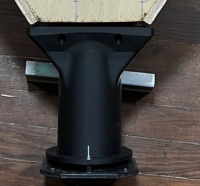
HPM applies the MX-Shape design philosophy to the midrange and low-midrange bands, extending X-Shape technology to cone-driver horn loading.
The HPM is supplied as a custom coupling interface, individually designed and simulated using FEA for each specific driver. A STEP file is provided for the wooden horn section that mates with the printed interface.
Because every application has unique requirements, HPM is offered as a custom solution and includes a consulting phase.
The 18Sound 10NMBA520 is recommended, although HPM can be designed for other cone midrange drivers.
Client Implementation Example
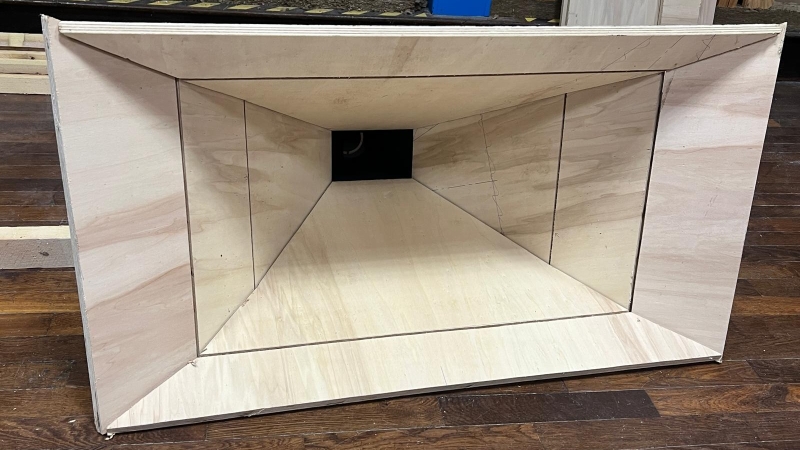
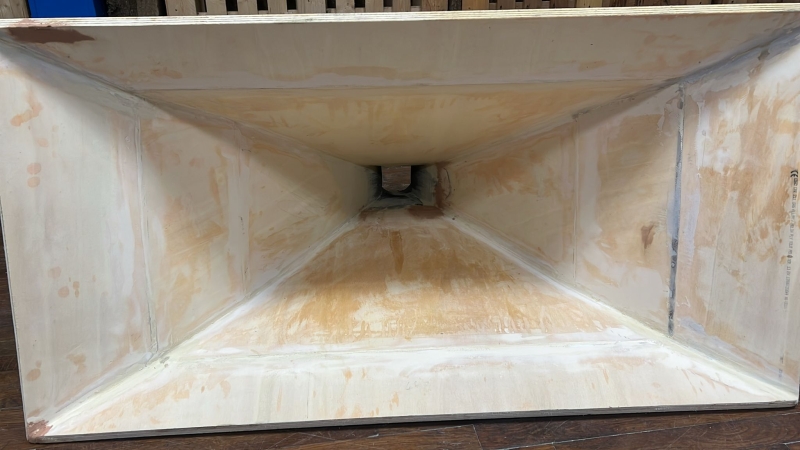
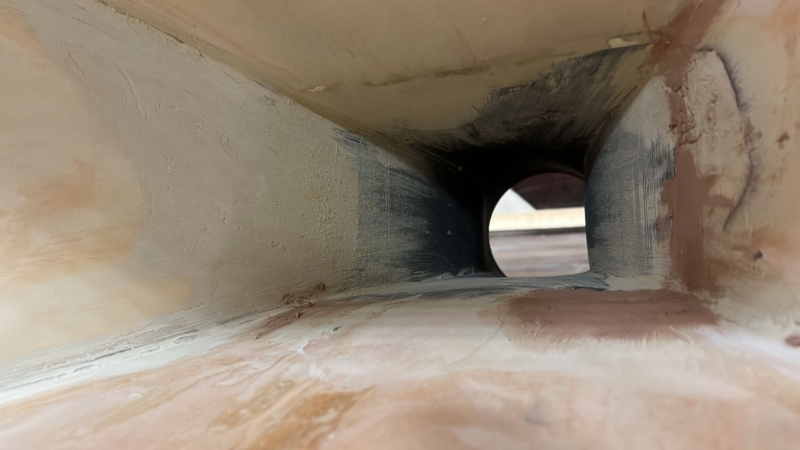
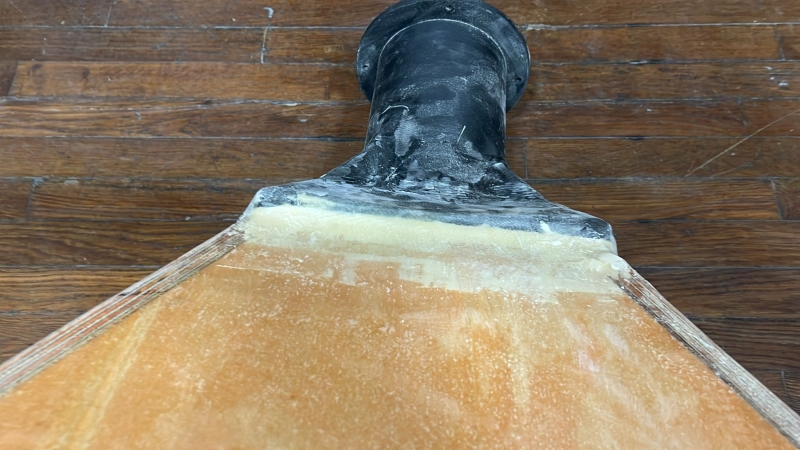
Below is an example of an implementation using a JBL CMCD midrange compression driver.
In this case, the direct-coupling throat component is not used, as the CMCD already incorporates an integrated phase plug.
Measurement
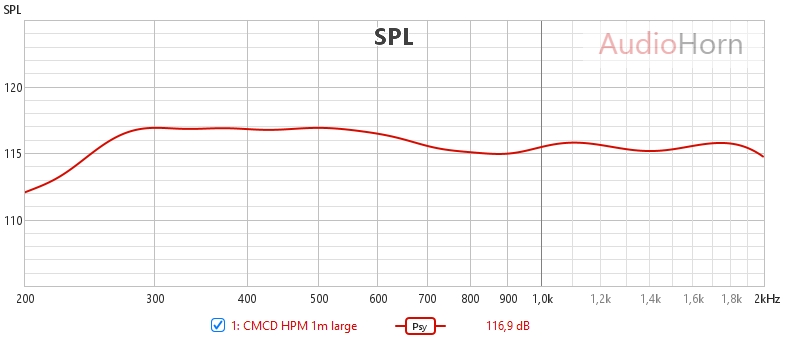
SPL
Typical response of the 1 m wide HPM with JBL CMCD (a midrange driver):
HPM technology can be used with all types of speaker cones; it does not define an absolute limit in SPL, which instead depends on the type of driver used and the horn following the throat.
The throat is a major contributor to the reactive loading effect, maximizing extension in relation to the driver and horn size.
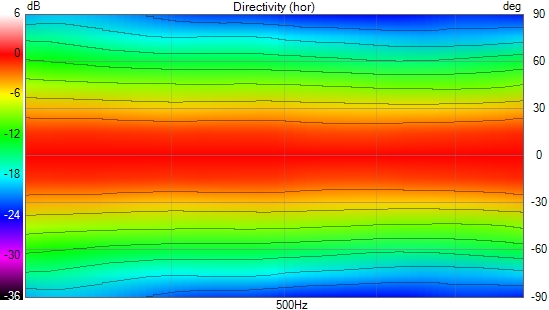
Directivity

MX-Shape line up
The MX-Shape horn is designed modular approach based on X-Shape technology.
This innovative horn features a modular design for easier shipping and customization.
For OEM the throat (PLA or MJF, 1.4" or 1.5") comes in various options, while the profile can be sent as a digital plan, this allows for customization of the horn width (30cm to 200cm) without affecting price.
For DIY, all parts are manufactured at AudioHorn, the price is depending of size and choosen material, Walnut or Birch Plywood.
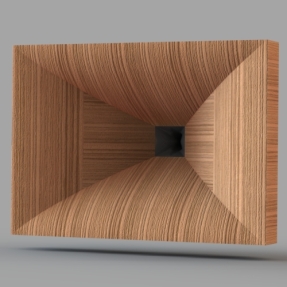
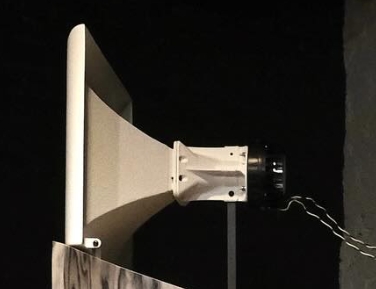
Available with different coverage angles:
- 90*60
- 80*60
- 80*50
- 70*50
- 60*40
Versions and price :
: To order you can discover our horn versions and prices bellow then contact us here to proceed to payment and worldwide shipment.
- On demand size and finish:
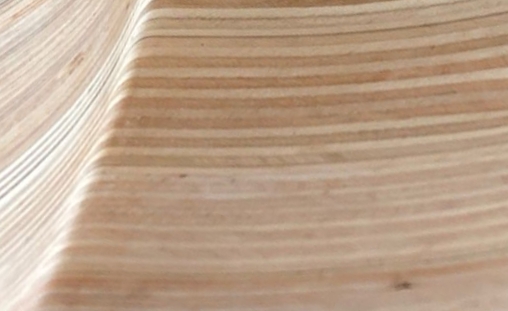
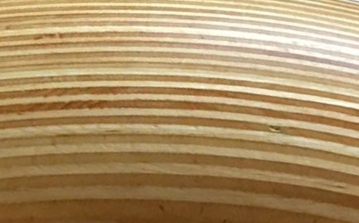


-
Printed Throat PLA or MJF
-
Size and Price on demand
-
Round-over for free standing usage
-
Includes AudioHorn consulting for horn design and compression driver selection tailored to your application
-
Raw throat (matte black PLA or PETG): €380 per unit
-
Profile plan (STEP file): €180
-
Fully machined wooden horn profile with delivery: price on request
Measurement
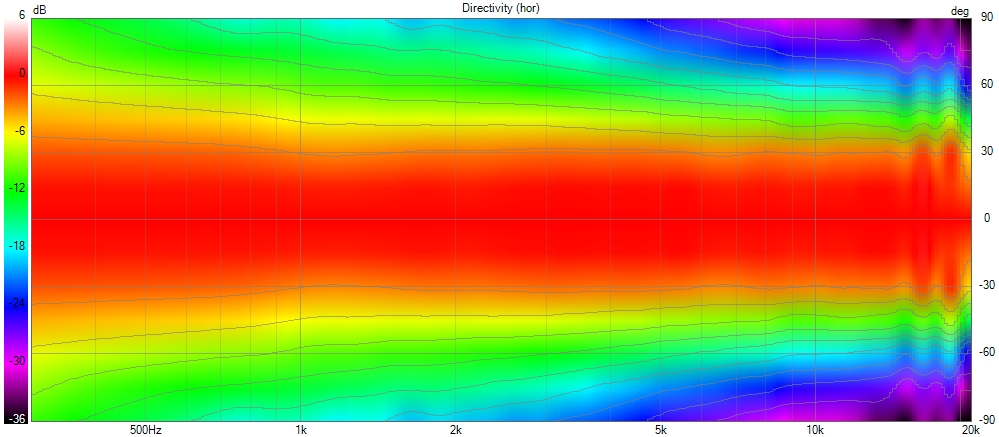
Here is the measurement for a 50cm version :
Measurements are from 300hz to 20kHz, with a 18Sound ND3T, the accident in HF is due to Ti diaphragm breakup, not to the horn.
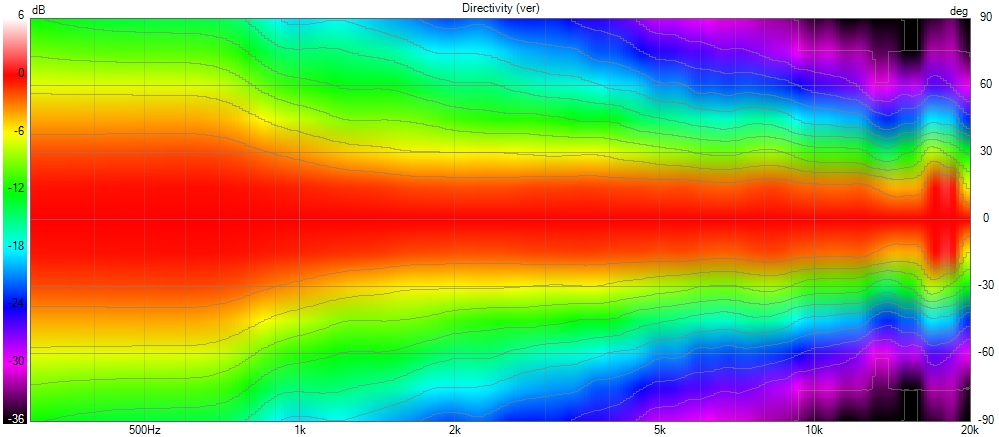
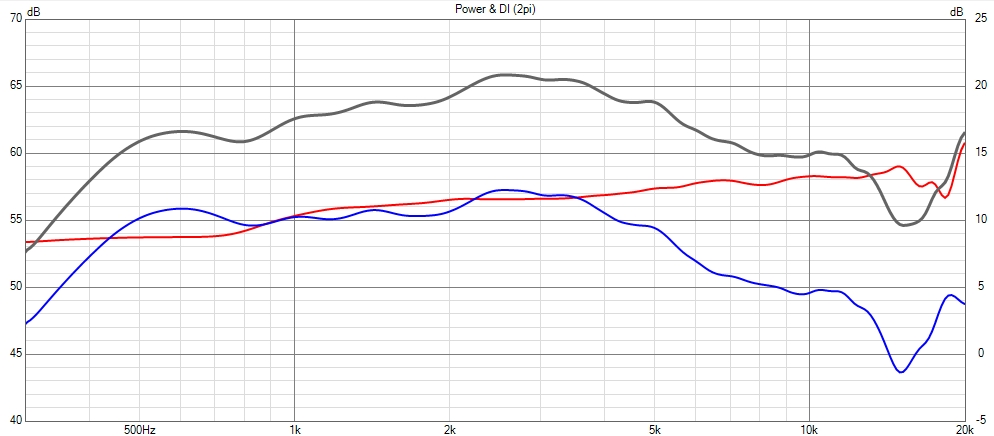
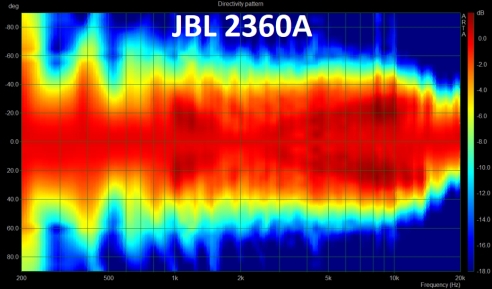
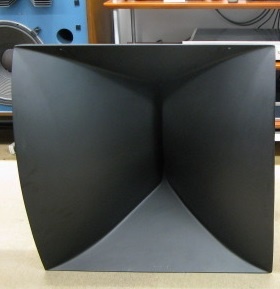
Compared with other solutions like JBL 2360, HP9040, Manta-Ray horn or first generation “CD” horns
The JBL 2360A was the last big representative in date of the big familly of Manta-Ray horn then Quadratic-wave and “CD” diffraction horns.
We can see midrange narrowing on this 2360, a lot of midrange beaming too and diffractions (dark red) from 1 to 15 Khz. All theses defaults aren’t present on MX-Shape.
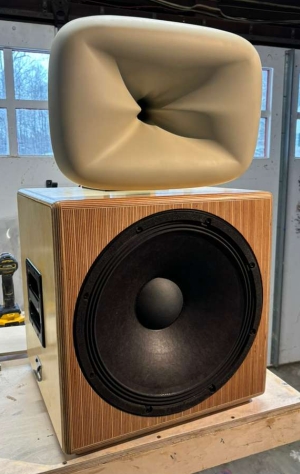
RX-Shape horns are the rounded free-standing evolution of the X-Shape concept.
They retain all the acoustic qualities, loading behavior, and constant directivity performance of the X-Shape, now optimized for free-standing use.
RX-Shape are designed for free-standing mounting, making them extremely simple to use.
They can be directly placed on top of a conventional loudspeaker cabinet, aligned with a mid-woofer below, without requiring a front baffle cut-out, round-over machining, or complex integration work.
The RX-Shape horn is only available for DIY projects.
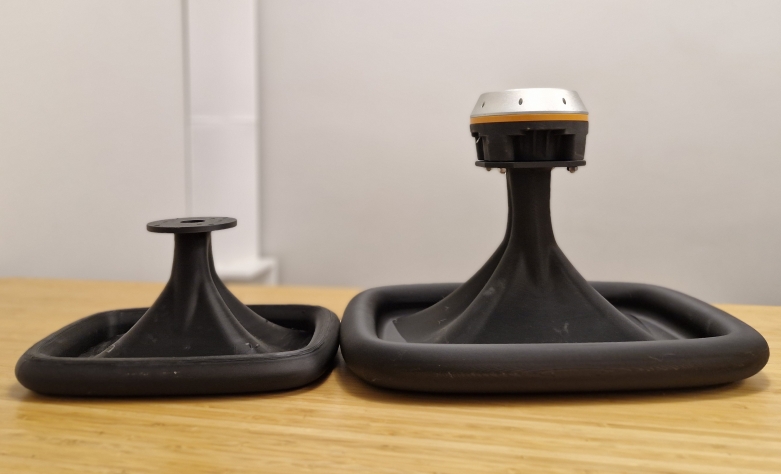
We recommend using the specified width of the supporting cabinet to ensure perfect directivity matching.
A cabinet that is too wide will interfere with the natural directivity of the woofer, while a properly proportioned cabinet reinforces low‑mid directivity, ensuring a smooth directivity match with the RX-Shape horn above, without requiring woofer front baffle round-over.
Our directivity match article explains how intentionally placing midrange narrowing on a woofer cabinet will reinforce the woofer’s natural directivity, improving the transition to the horn.
Horns and their Polar plot
: To order, discover our RX horn versions below, then contact us here to proceed to payment and worldwide shipment.
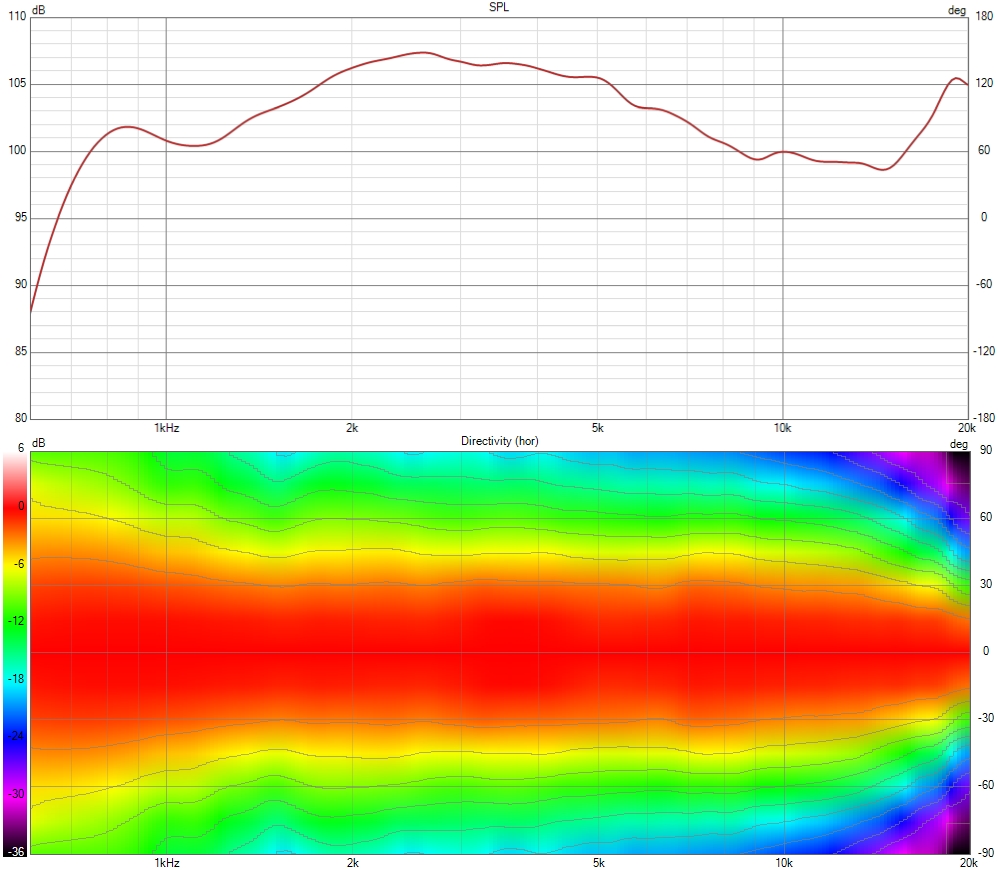
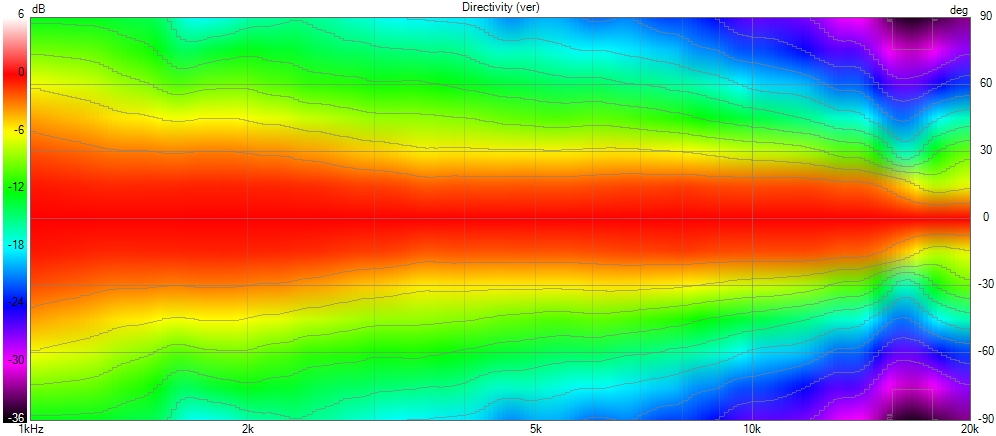
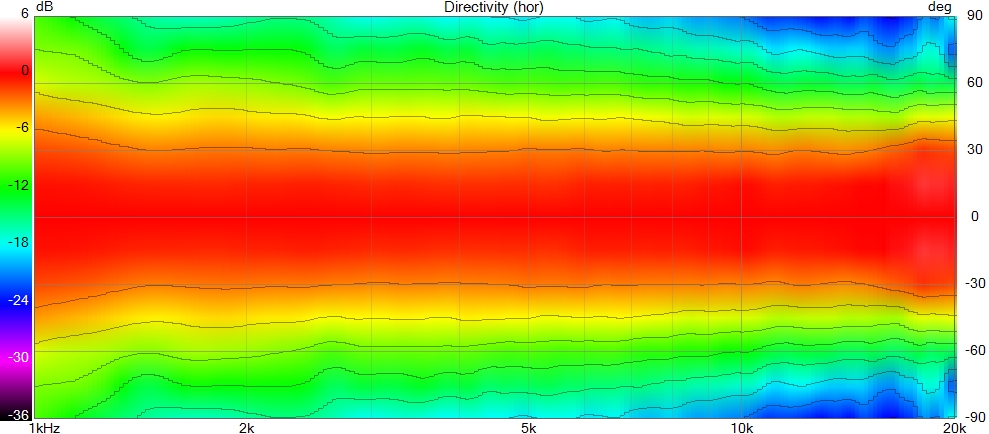
All measurements are identical to the corresponding X-Shape equivalent models, performed with the ideal simulated return, taken at 1/24 resolution in a half-space presentation (±90°).
RX-Shape 25 for 1" compression driver and 8/9.5" woofer
- Prices:
- PLA Printed: 195€/U
- PETG Printed: 265€/U
- Specifications:
- Width: 30.7cm
- Height: 21.3cm
- Deep: 14.2cm
- Recommended crossover: 1200Hz
- Recommended cabinet width: 32cm, 4mm roundover
- Recommended compression driver:
- 18Sound ND1TP-16 / 1095N / 1090
- BMS 5530-16
- Recommended woofer:
- Sb Audience NERO-8MWN400D
- AudioTechnology 23i52
- PURIFI PTT8
- PURIFI PTT10
- SbA SATORI WO24TX
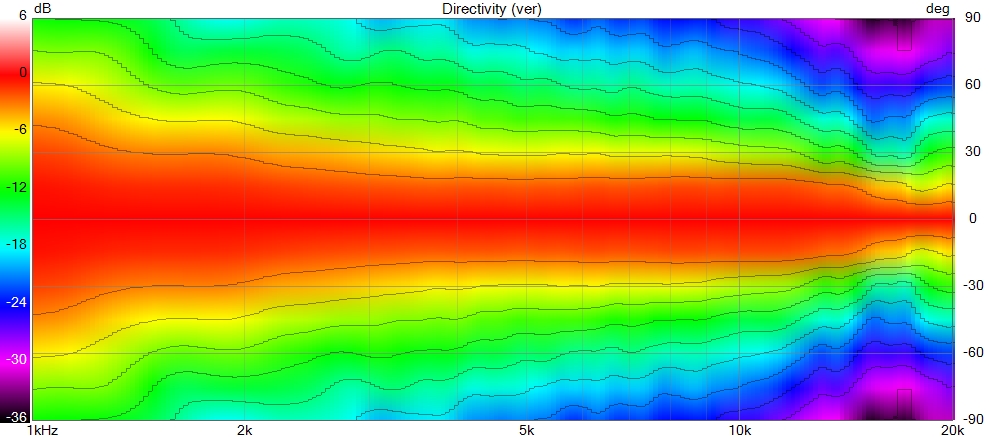
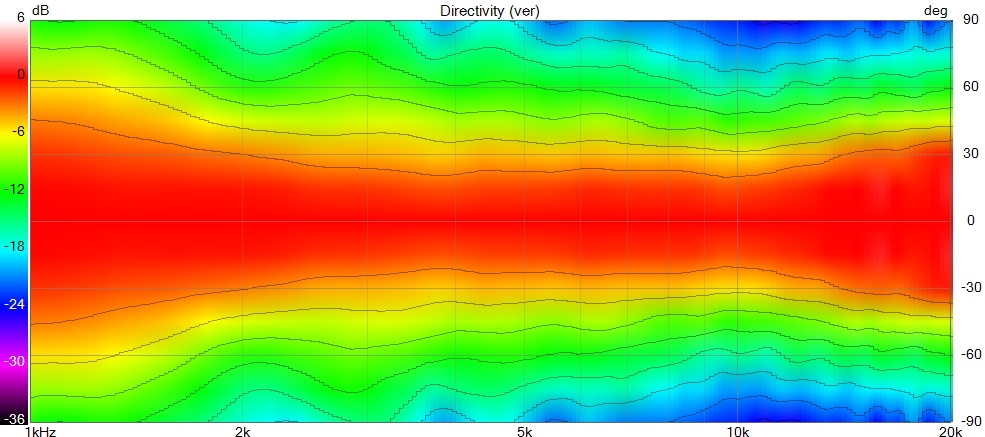
 Vertical Polar:
RX-Shape 28 for 1" compression driver and 10/12" woofer
- Prices:
- PLA Printed: 275€/U
- PETG Printed: 355€/U
- Specifications:
- Width: 33.7cm
- Height: 23cm
- Deep: 15.3cm
- Recommended crossover: 1100/1200Hz
- Recommended cabinet width at 1200hz: 34cm, 4mm roundover
- Recommended cabinet width at 1100hz: 35/36cm, 4mm roundover
- Recommended compression driver:
- 18Sound ND1TP-16 / 1095N / 1090
- Recommended woofer:
- PURIFI PTT10
- 18Sound 12LW1400
- Sb Audience NERO-12MWN700D
- AudioTechnology FlexUnit 12"
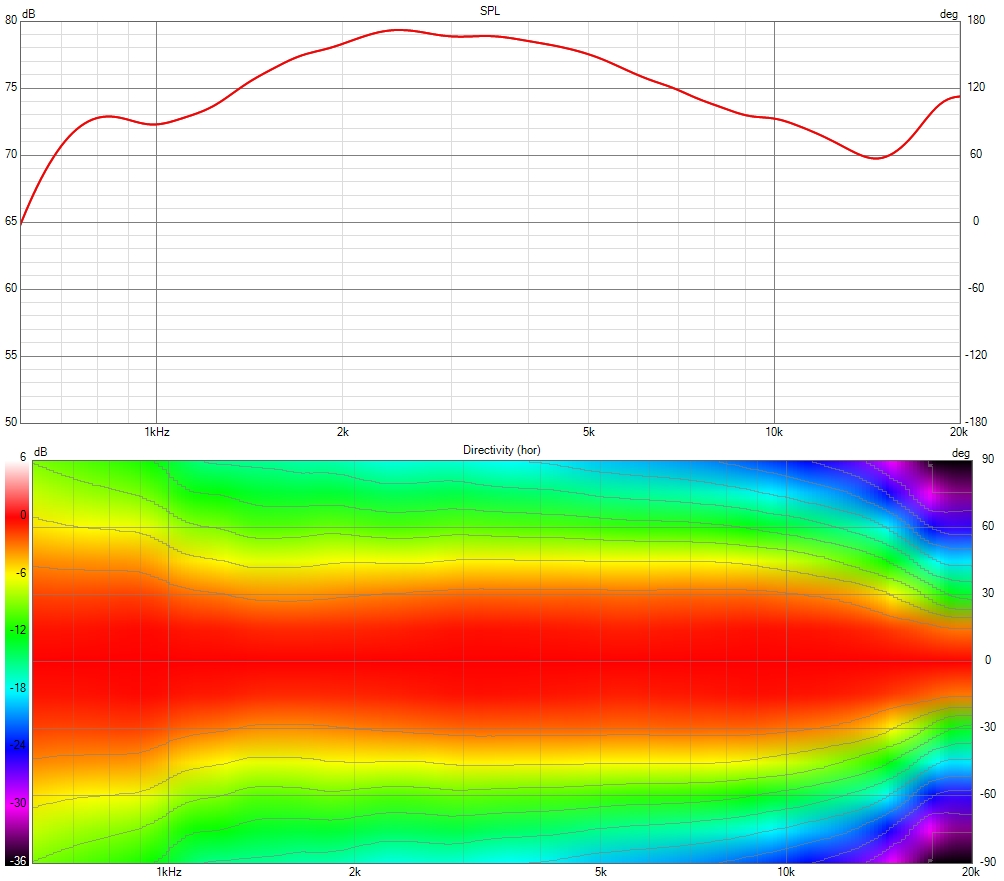 Vertical Polar:
RX-Shape 34 for 1.4"/1.5" compression driver and 14/15" woofer
- Prices:
- PLA Printed: 365€/U
- PETG Printed: 465€/U
- Specifications:
- Width: 41.6cm
- Height: 29cm
- Deep: 20.7cm
- Recommended crossover: 750Hz
- Recommended cabinet width: 44/50cm, 4mm roundover
- Recommended compression driver:
- 18Sound NSD1460/1480
- FaitalPRO HF1440/1460
- Recommended woofer:
- 18Sound 15NTLW3500
- Sb Audience NERO-15MWN700D
- AudioTechnology FlexUnit 15"
- B&C 14NDL76
- SbA SATORI WO34HC
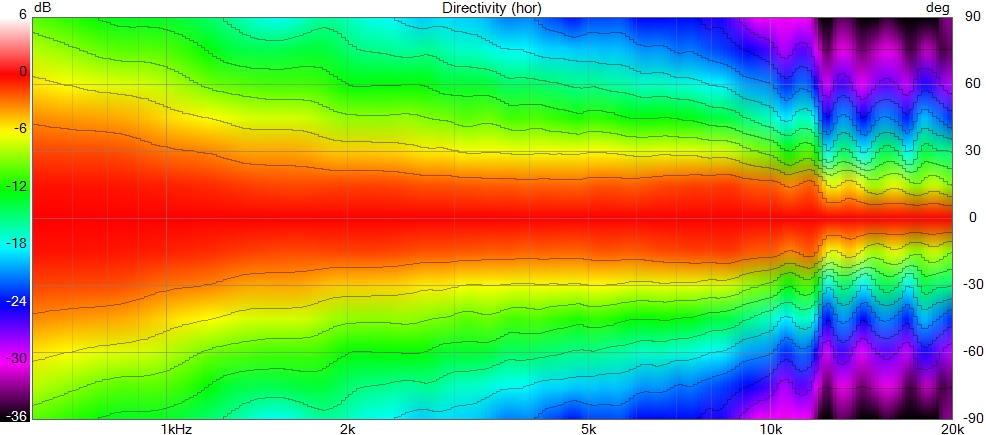
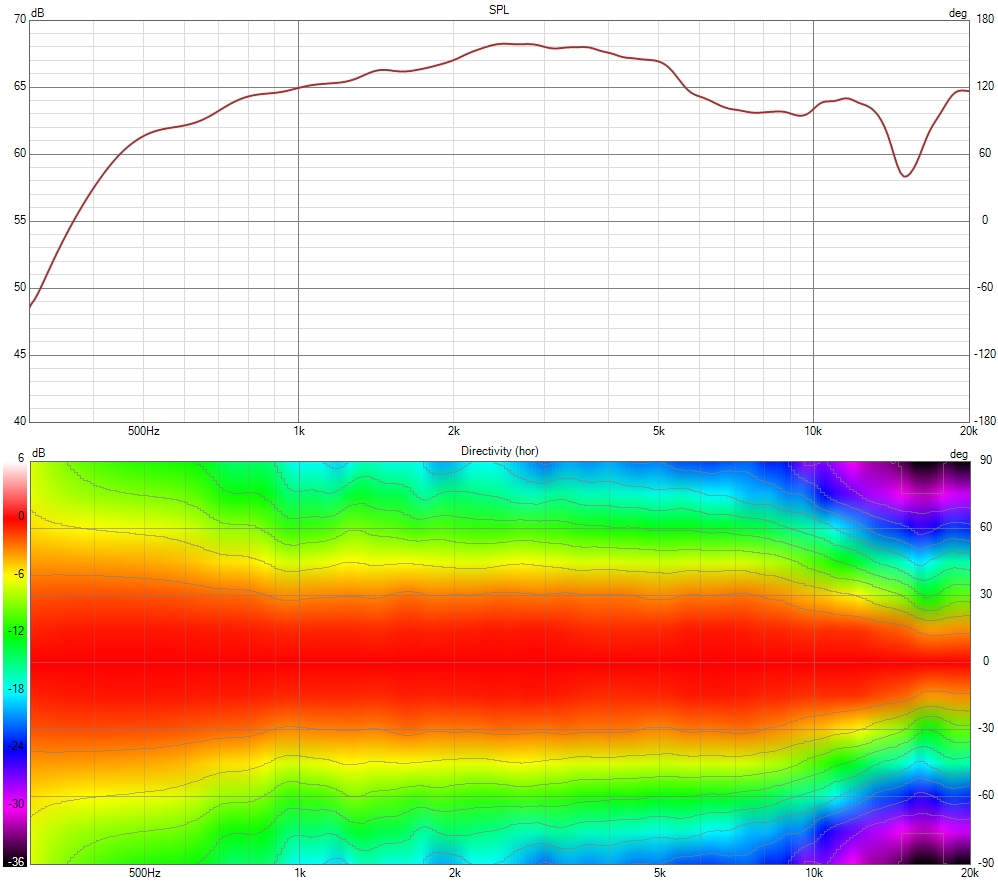 Vertical Polar:
SPL
- 1": RX 25 and RX 28 with 18Sound ND1090
- 1.4": RX 34 with 18Sound ND1460
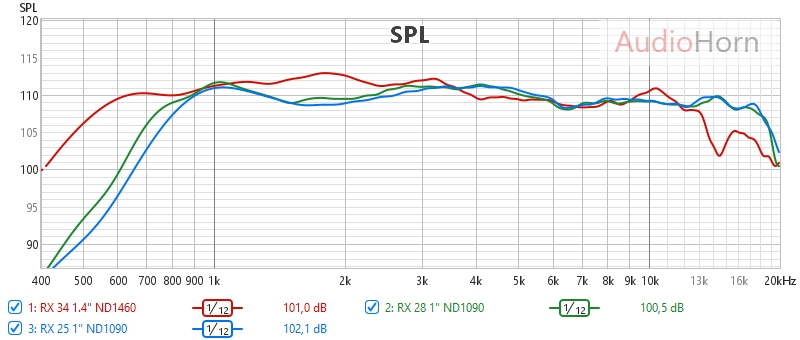
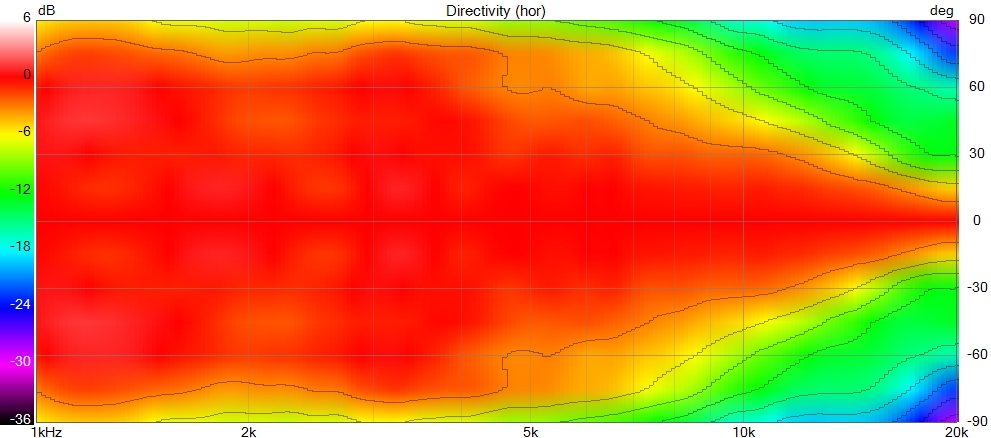
Directivity polar plot
All measurements are real ones, performed with the ideal 25mm roundover return, taken at 1/24 resolution in a half-space presentation (±90°).
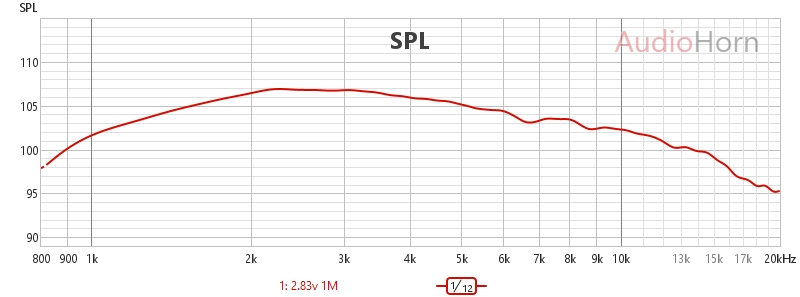
SPL
The loading effect provides much greater sensitivity in the low end compared to direct radiation in the low end.
Distortion
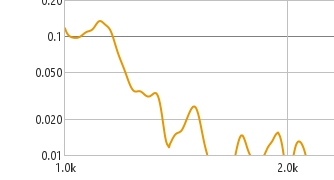 Its loading capacity allows operation at very low frequencies. The radiation restriction, combined with the reactive loading effect, reduces the tweeter’s required excursion to achieve a given SPL after equalization to a flat response,
leading to lower distortion.
Its loading capacity allows operation at very low frequencies. The radiation restriction, combined with the reactive loading effect, reduces the tweeter’s required excursion to achieve a given SPL after equalization to a flat response,
leading to lower distortion.
Intermodulation distortion (IMD) is also reduced, since both harmonic and intermodulation distortions are strongly linked to driver nonlinearities, which generally increase with diaphragm excursion.
The driver becomes so efficient that most distortion components are buried in the measurement noise floor (around 0.01% here), making them effectively invisible on the 95 dB SPL distortion chart, making only a tiny rise in H3 visible.
How it competes versus Direct Radiation (no WG)
Mounting
We recommend a round-over return of around 25mm radius on each exposed side to eliminate midrange narrowing and beaming.
Mounting is done with the baffle using M4 screws into a rebate 10 mm large, 8 mm high, with 4 mm radius corners.
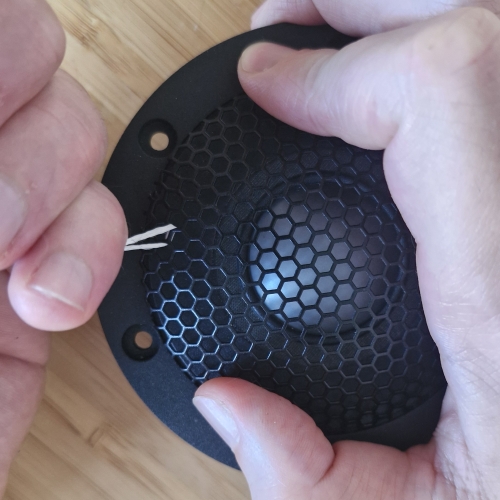
Users must remove the protective grille using a heat gun, or by carefully following the method shown in the photos. The grille must be gently pulled off a few millimeters at a time around the entire adhesive circumference. Be careful of the magnetic force when the grille is released.
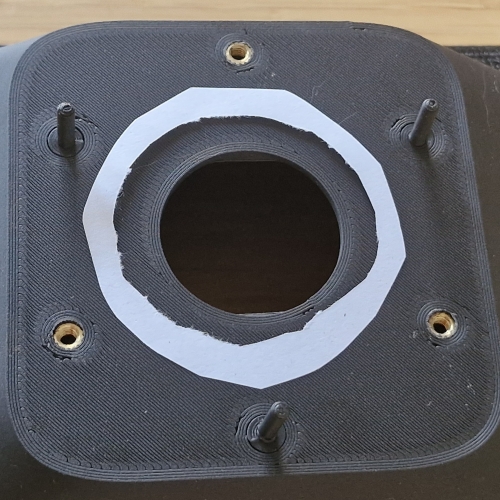
To avoid applying lateral pressure on the driver’s surround during screwing, use a paper ring with an inner diameter greater than 50.5 mm. The ring will provide a 0.1–0.2 mm clearance around the entire surround, including its glued area.
Together with the waveguide’s centering system, it prevents lateral forces from being applied to the tweeter surround during screw tightening, eliminating the risk of permanently displacing the voice coil and causing rub & buzz.
The mounting operation is the sole responsibility of the client, and AudioHorn cannot be held responsible for any damage resulting from improper installation. In case of damage, Bliesma offers affordable repair services if the tweeter dome has not been damaged.
Then place the three centering pieces to align the tweeter. With the waveguide facing downward, keep the assembly well away from any metal objects, as the tweeter’s magnet is very strong and may attract them.
Hold the tweeter securely while lowering it into its final position. Once it is correctly seated using the centering pieces, tighten the three supplied screws. Leave the centering pieces in place.
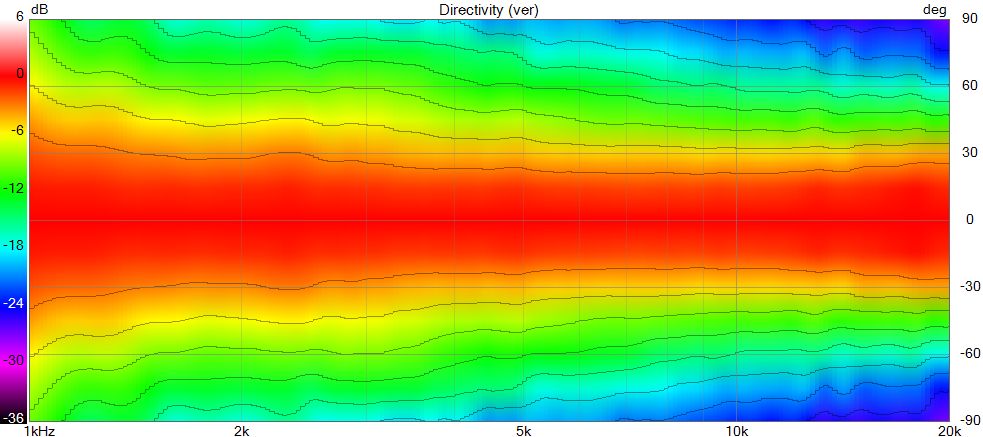
Directivity polar plot
All measurements are real ones, performed with the ideal 25mm roundover return, taken at 1/24 resolution in a half-space presentation (±90°).


SPL
The waveguide is easy to filter, even passively, it only requires two high-shelf EQ filters: +7 dB @ 3000 Hz and +4 dB @ 7500 Hz (with the default Q = 0.707) to be corrected.
The loading effect provides 10 dB of sensitivity compared to direct radiation in the low end, allowing for a low crossover point with high SPL.


Distortion
Its loading capacity allows operation at very low frequencies. The radiation restriction, combined with the reactive loading effect, reduces the tweeter’s required excursion to achieve a given SPL after equalization to a flat response, leading to lower distortion.
Intermodulation distortion (IMD) is also reduced, since both harmonic and intermodulation distortions are strongly linked to driver nonlinearities, which generally increase with diaphragm excursion.
Below is the H3 distortion for the 18 cm and 22 cm versions at 95 dB SPL (1 m), measured with EQ applied to achieve a flat and identical response from 1 kHz for both:

Note: The 3rd harmonic (H3) appears up to about 6.66 kHz because at that point it already corresponds to 20 kHz, thus producing an unwanted 20 kHz tone. A 3rd harmonic distortion produces an unwanted tone at three times the fundamental, 3 × 6.66 kHz = 20 kHz.
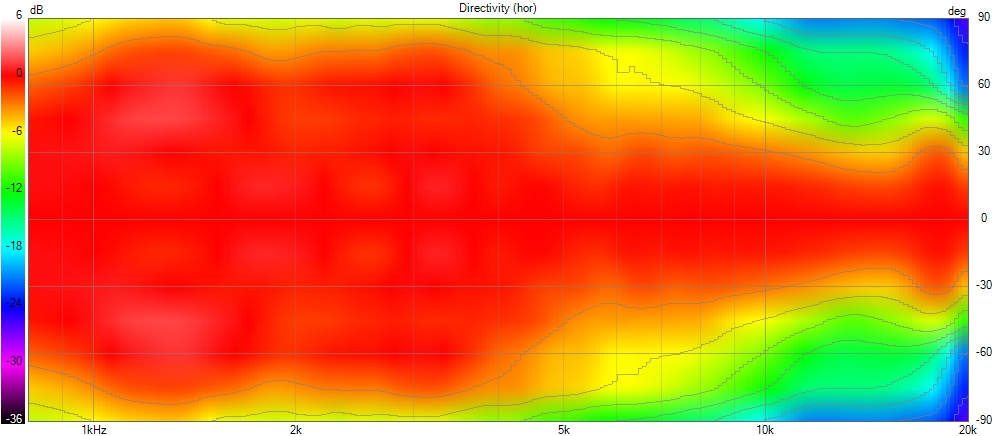
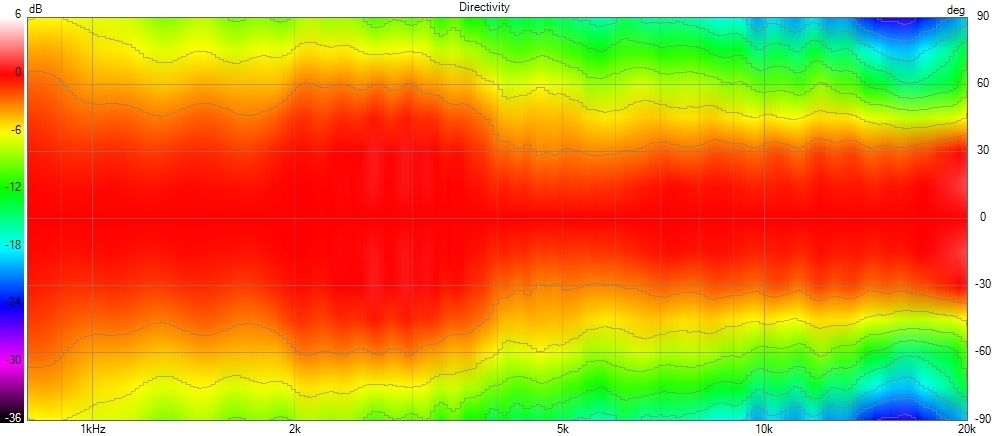
How it competes versus Direct Radiation (no WG) and Somasonus
Mounting
We recommend a round-over return of around 25mm radius on each exposed side to eliminate midrange narrowing and beaming.
Mounting is done with the baffle using M4 screws into a rebate 10 mm large, 8 mm high, with 4 mm radius corners.
Tweeter mounting is done as show here, users has to remove the face plate but reuse the screm and put it back in place, they will serve as a centering device
The fix system with his two M4 screw is provided too.