1.4 inch compression drivers test, FaitalPRO vs 18Sound
The 1.4 Compression Drivers
We will test several 1.4" exit compression driver in this article:
- 18Sound ND3ST-16: 3 inch titanium diaphragm
- 18Sound ND3SN-16: 3 inch Nitrided titanium diaphragm
- 18Sound ND3A-16: 3 inch Aluminium diaphragm
- 18Sound 1480N: 3 inch Nitrided titanium diaphragm
- 18Sound 1460: 3 inch titanium diaphragm
- FaitalPro HF1440-8: 3.4 inch Ketone annuar diaphragm
- FaitalPro HF1460-8: 3 inch TeXtreme (woven carbon) diaphragm
- FaitalPro HF144-8: 3 inch Ketone diaphragm
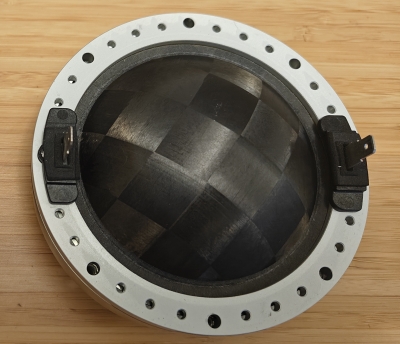
For interpreting results about break-up, it is advised to read the breakup article.
In essence: Stiffer materials, like metals, will exhibit a higher but more violent break-up point, while materials with inherent damping, like treated paper or composites (Ketone), will break up at a lower frequency but affect a wider range of frequencies.
It’s all a mater of compromise, the larger the diaphragm is lower he can goes (theoretically) and the sooner the breakup will occur.
The horn used for testing is a X-Shape X34 with his return for doesn’t be impacted with midrange narrowing or beaming.
SPL
Here is the SPL alligned on 1kHz witout EQ of crossover
On X-Shape X34:
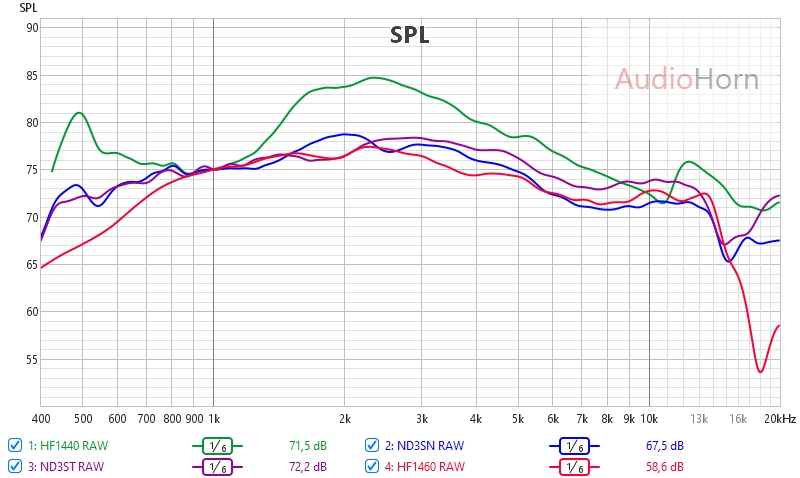
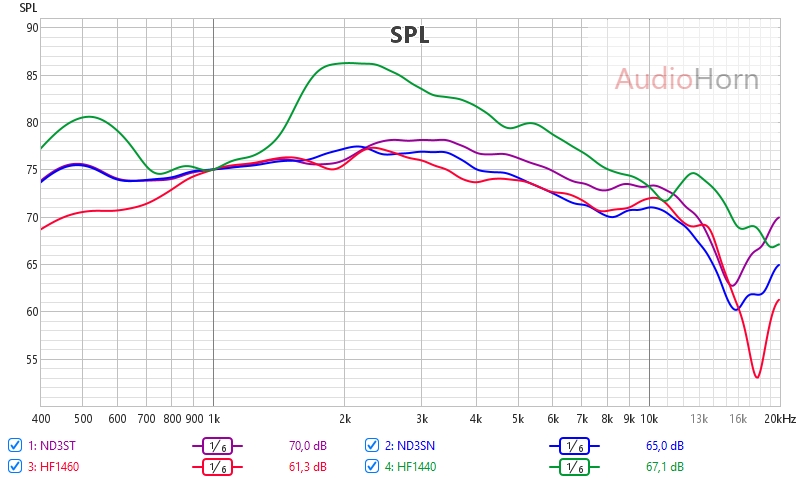
There is no notion of “more” or “less” energy here. The driver provides an initial energy, and the horn distributes it, as explained in detail here: Energy in horns.
If a driver showed a flat response without EQ, it would simply indicate that the horn is not constant, which is exactly what we do not want.
So the typical “mountain-shaped” response is normal. The only unusual aspect is the high-frequency roll-off of the HF1440 (Keton), but this will later prove to be a significant advantage in another type of measurement.
At the low end, the HF1460 (Carbon) clearly shows that it does not naturally extend very low. However, this can actually be beneficial in the context of a passive crossover.
Additionally, the HF1440 (Keton) exhibits almost exactly the same response on an RCF 950. As mentioned earlier, when the coverage remains constant and similar across different horns (X-Shape X34, MX-Shape, RCF950…), the on-axis response also remains consistent.
The idea that a compression driver must be specifically “matched” to a horn is largely a misconception. What can be matched, however, is the compression chamber flare to the horn. In this case, all drivers use relatively slow flare geometries.
Since the total energy remains the same, no fundamental change in response should be expected from this aspect alone.
The HF144 shows an unusual dip around 2.5 kHz. This clearly originates from the driver itself and requires EQ. There is also a sign of strong breakup mode higher in frequency. This will become more evident in the temporal measurements.
Ultimately, the main evaluation criterion will be distortion measurements after applying EQ to achieve a flat response.
Distortion
Here is an overlay of all the compression drivers. The measurement is taken at 31.5 cm from the horn mouth. Every driver is EQ’d flat, and the level is 95 dB SPL (referenced at 1 m).
A point about audibility
Distortion refers to unwanted components added to the original signal by a system. In audio, these components are often perceived as harmonics and their audibility depends strongly on masking effects and human hearing sensitivity.
For a more detailed explanation of how distortion becomes audible, see our article about audibility and masking effect. The following is a short overview of the key ideas.
H2 (2× the fundamental frequency) is closer to the fundamental than H3 (3× the fundamental frequency), and the closer this unwanted component is to the fundamental, the more it tends to be masked by the masking effect of that fundamental.
Moreover, when this unwanted energy moves above roughly 8 to 12 kHz, it enters a region where hearing sensitivity drops significantly:
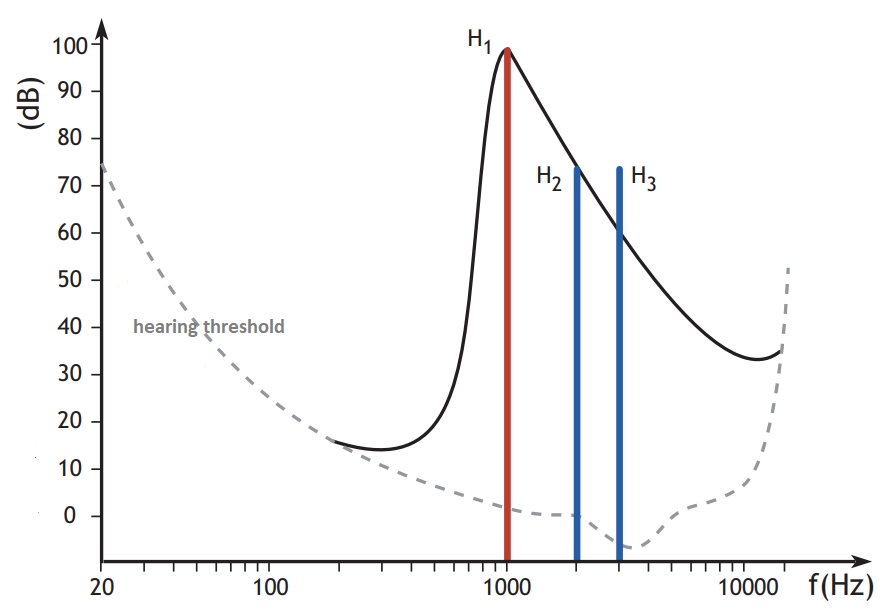
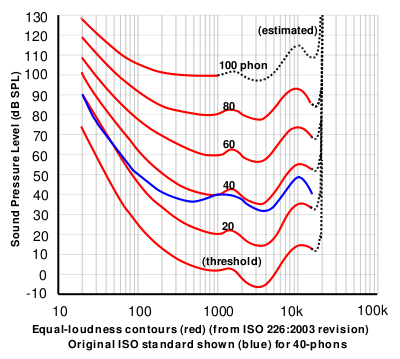
As a result, some high-frequency increases in H2 are not actually audible and typically require more than ~2 or 3% in the low range to become noticeable, whereas for H3 this threshold is closer to ~0.3%. This threshold is dependent on the audibility of the harmonic frequency itself (harmonic order × fundamental frequency).
This is why attention should primarily be focused on the low end through the mid section of the measurements, keeping in mind that the upper boundary of this mid region will move lower as harmonic order increases.
H2
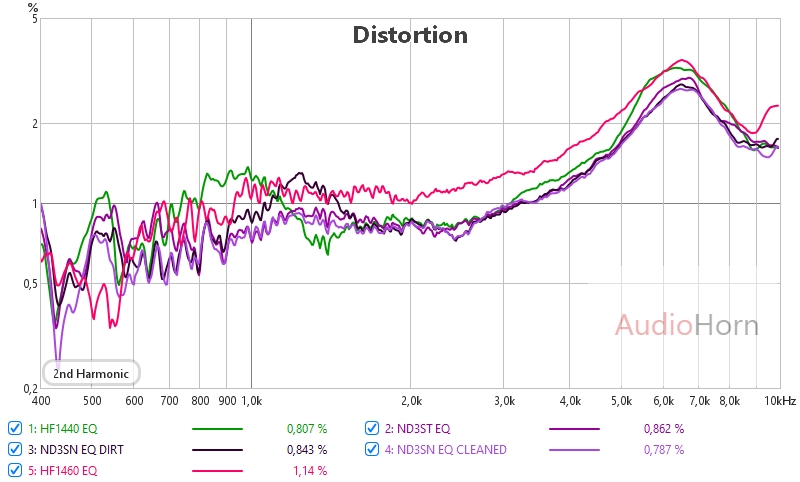
The 18Sound are partculary good here, the two Faital a little less but everybody is bellow 3%, so almost not audible.
In the higher frequency range, the harmonic falls into a less sensitive region of the hearing system and is therefore not audible.
H3
H3 is the most important component to look at when evaluating distortion.
Top 4:
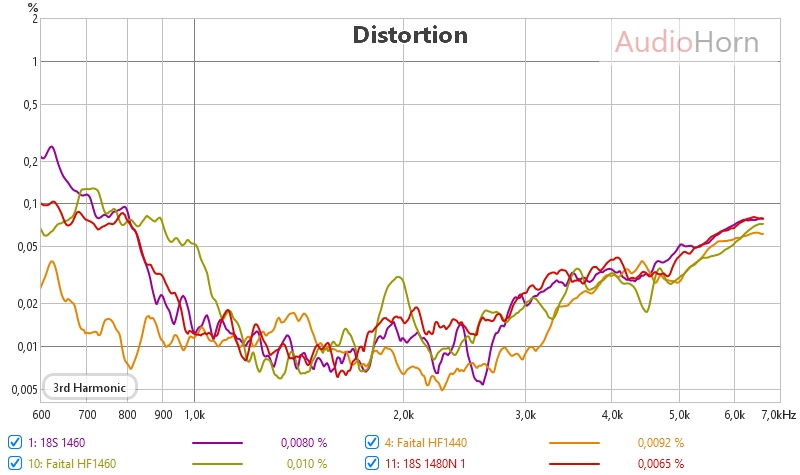
Here we see a major advantage of the 3.4" Ketone diaphragm of the Faital HF1440: it extends lower without forcing. On the contrary, the Faital HF1460 does not naturally go down as low, and in comparison we can observe more H3 at the low end.
Note that I am showing the best measured response for the HF1440, and some units may not perform as well.
The 18Sound 1460 and 1480 are very good performers.
Non-leading results
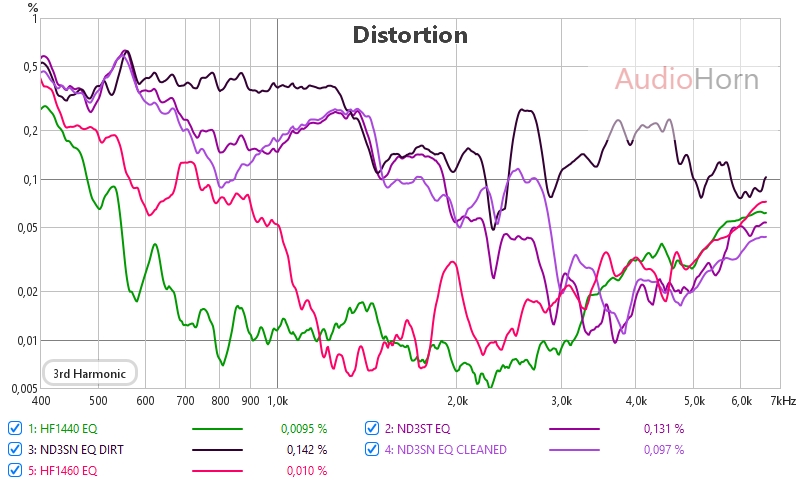
The three 18Sound ND3 drivers are almost identical. They all pass the ~0.2% H3 threshold, which is where distortion starts to become audible.
The ND1460 and ND1480 perform better compared to the ND3 family, which is somewhat surprising.
In the 1" range, the 18Sound ND1 is very close to the 18Sound 1090 or 1095N, all are excellent performers.
The Faital HF144 is also close to its limits, and shows significant H3 distortion relative to its SPL behavior, with variation between units.
Temporal Behavior
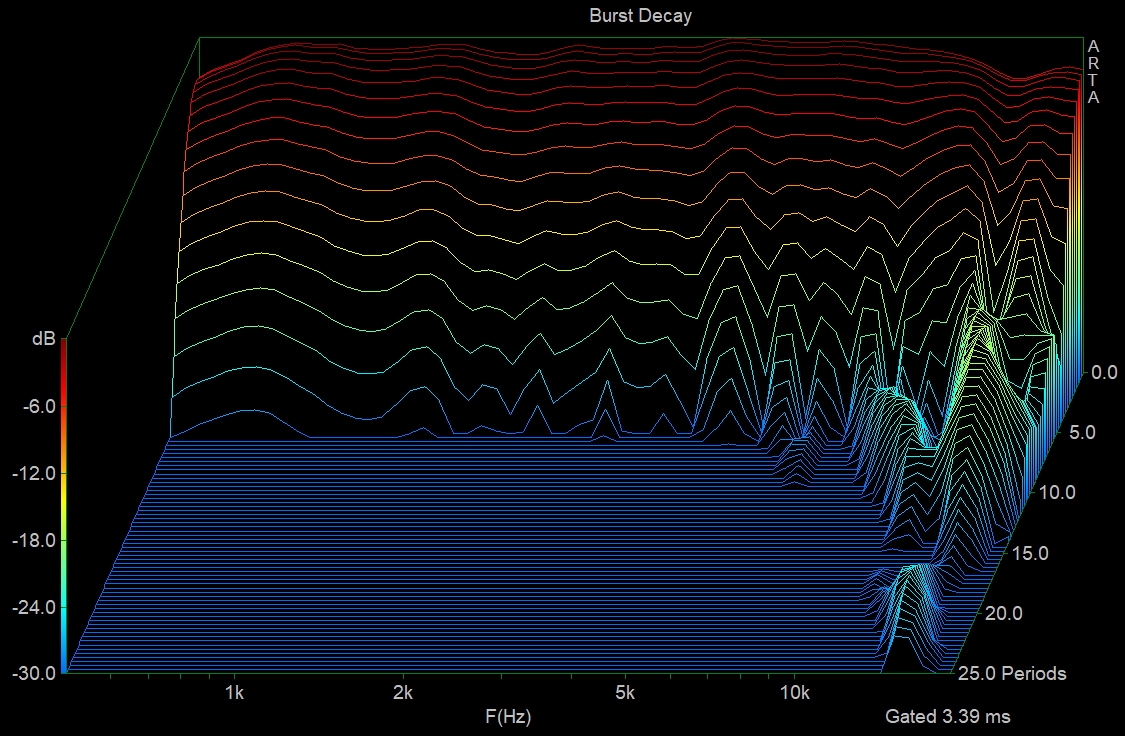
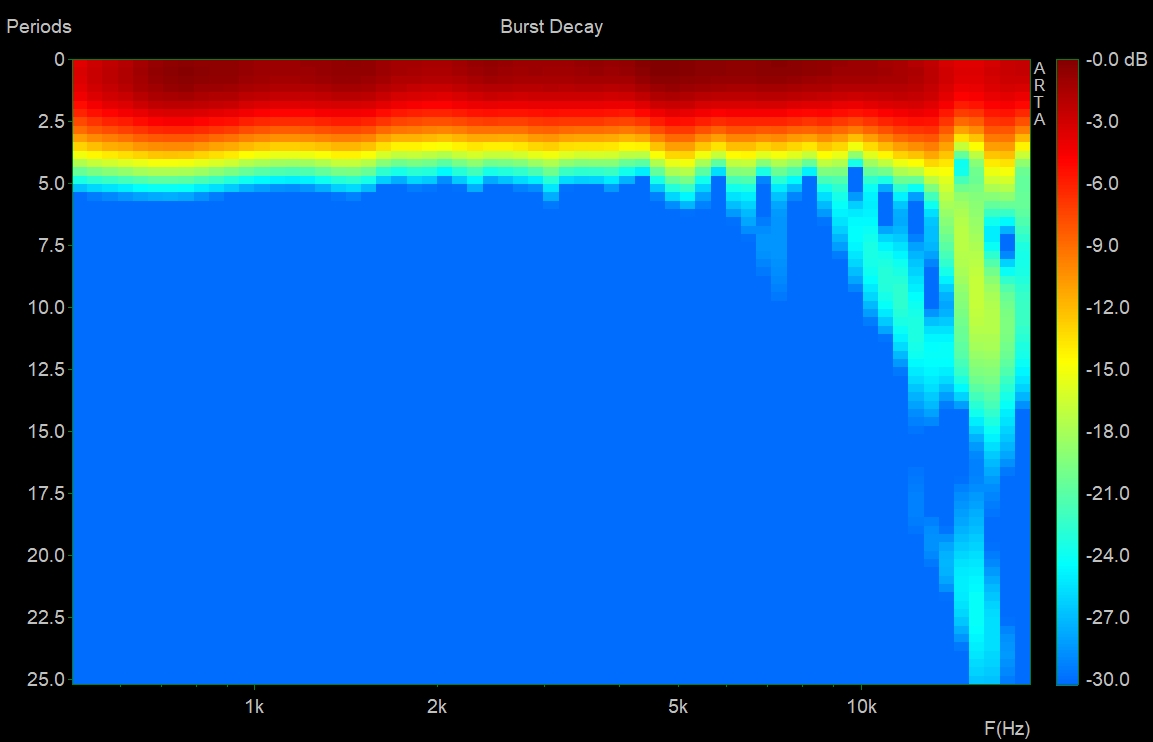
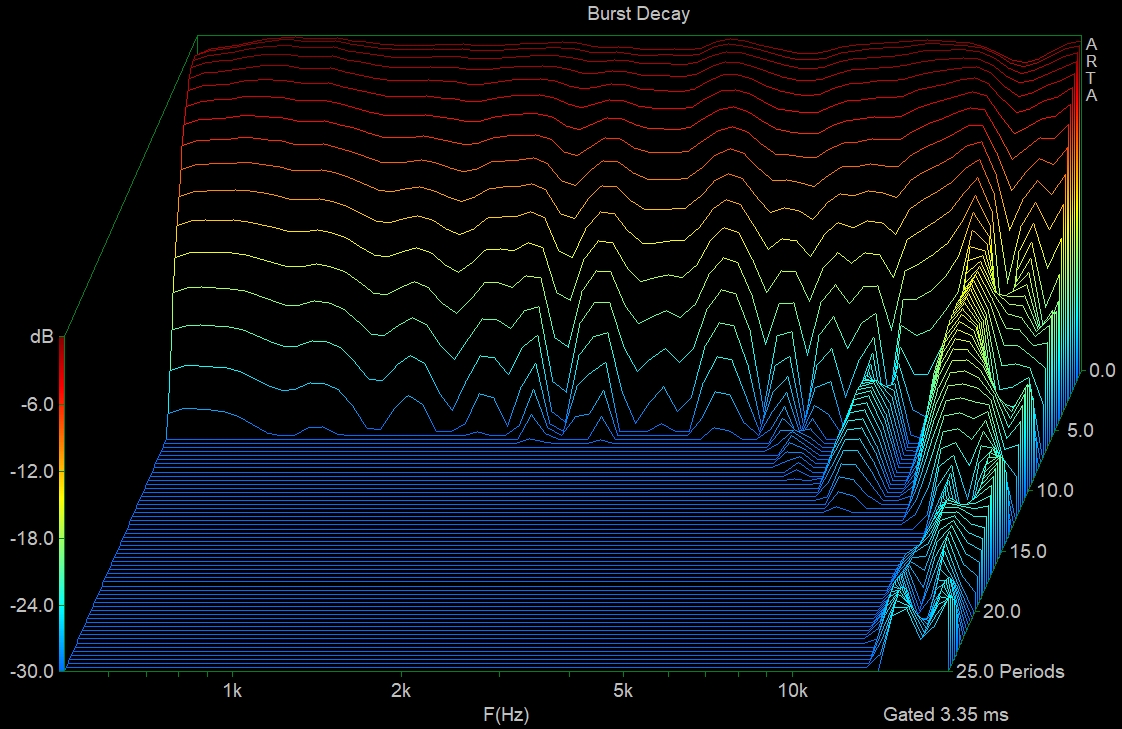
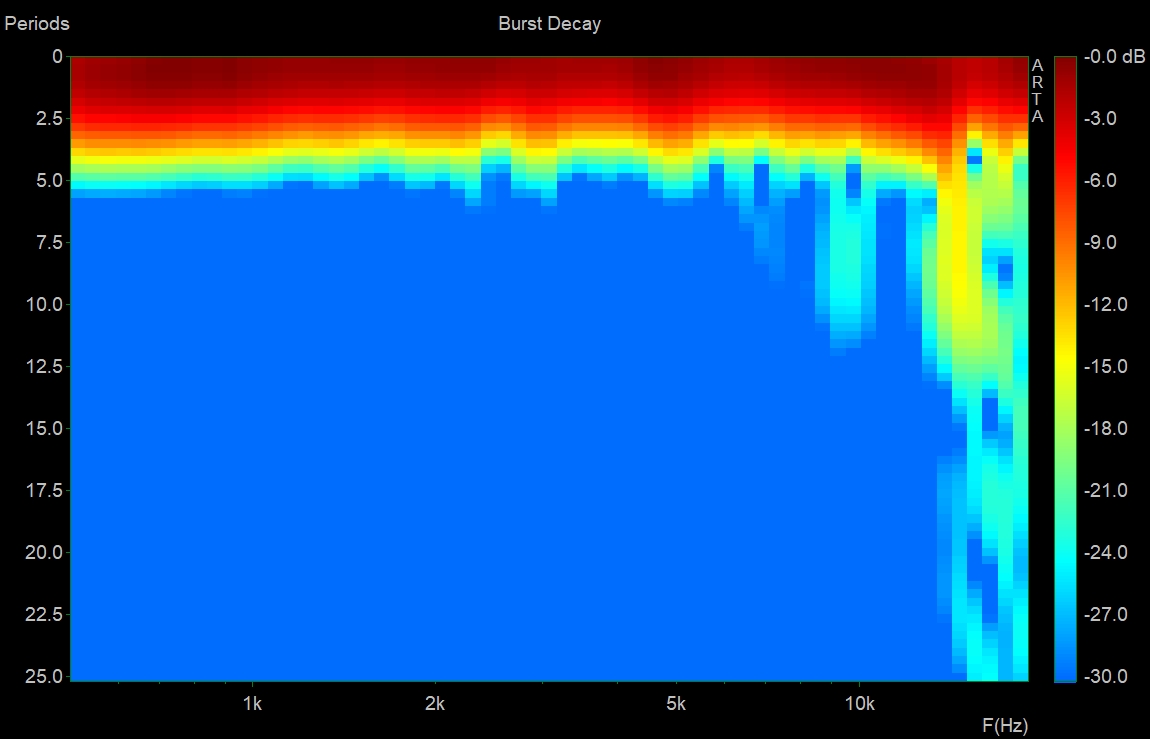
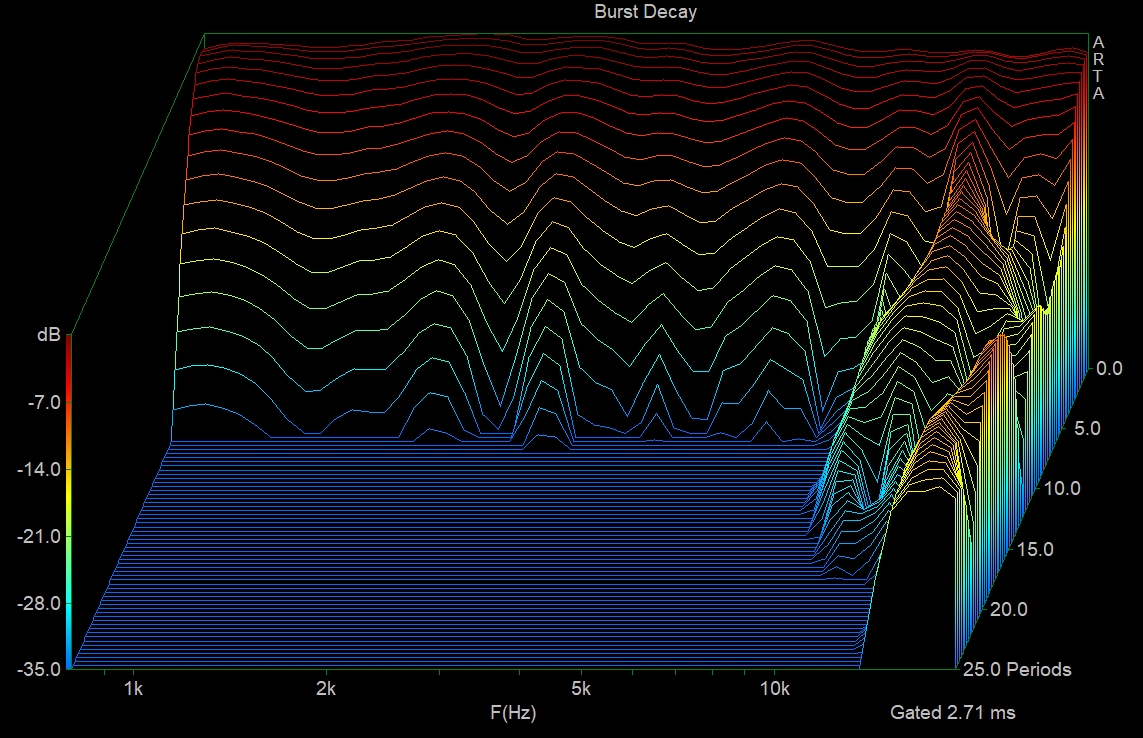
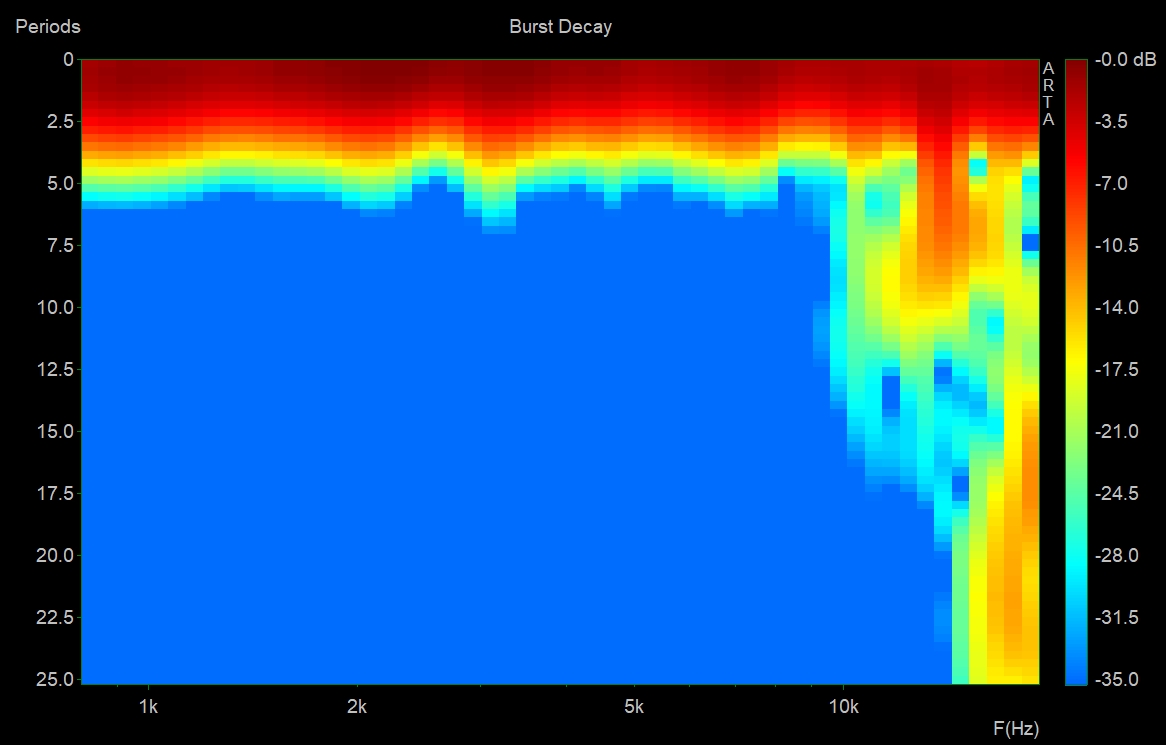
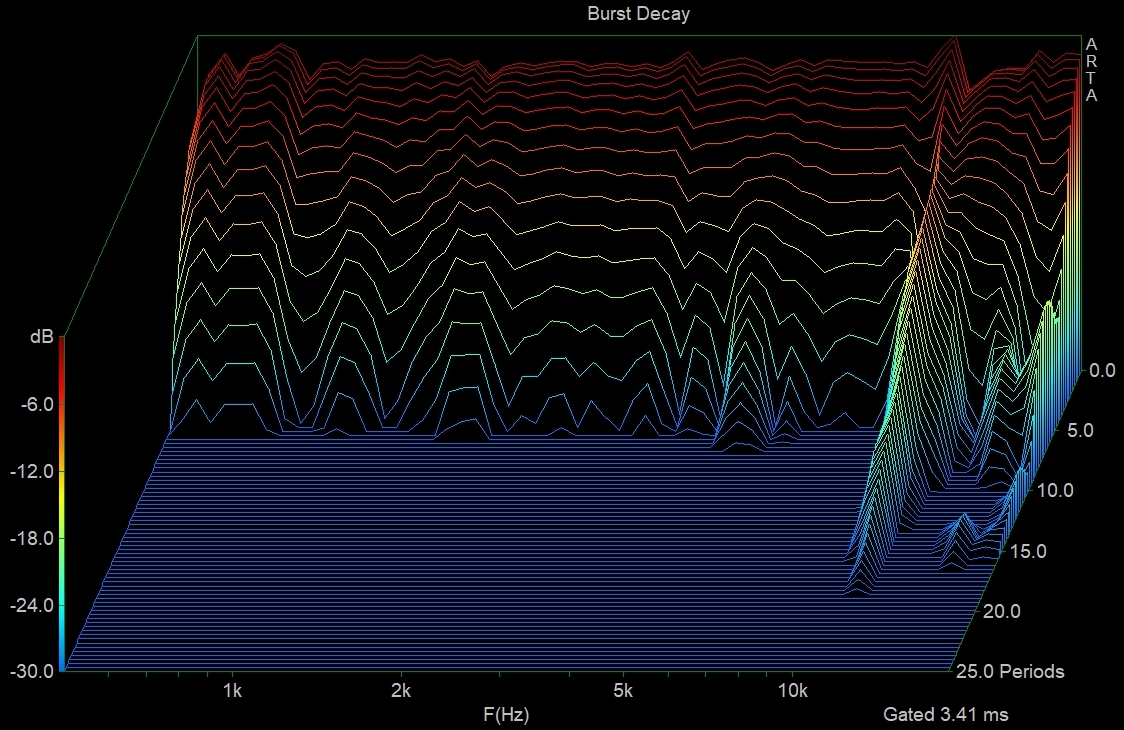
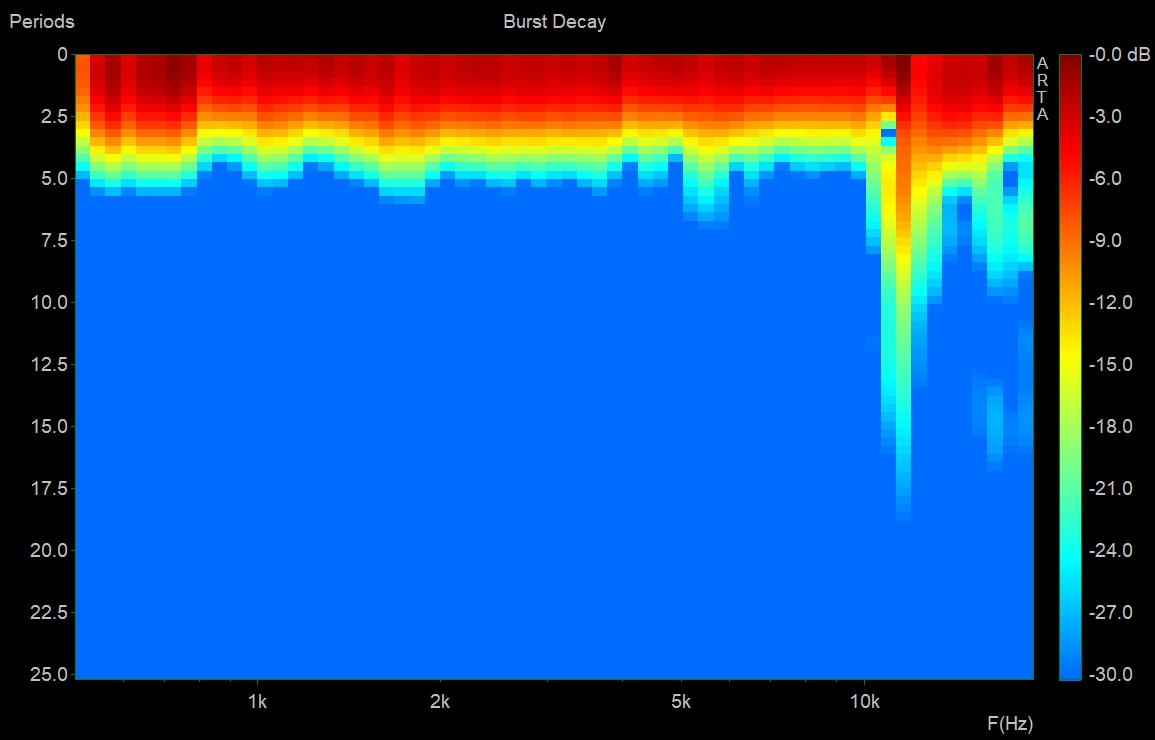
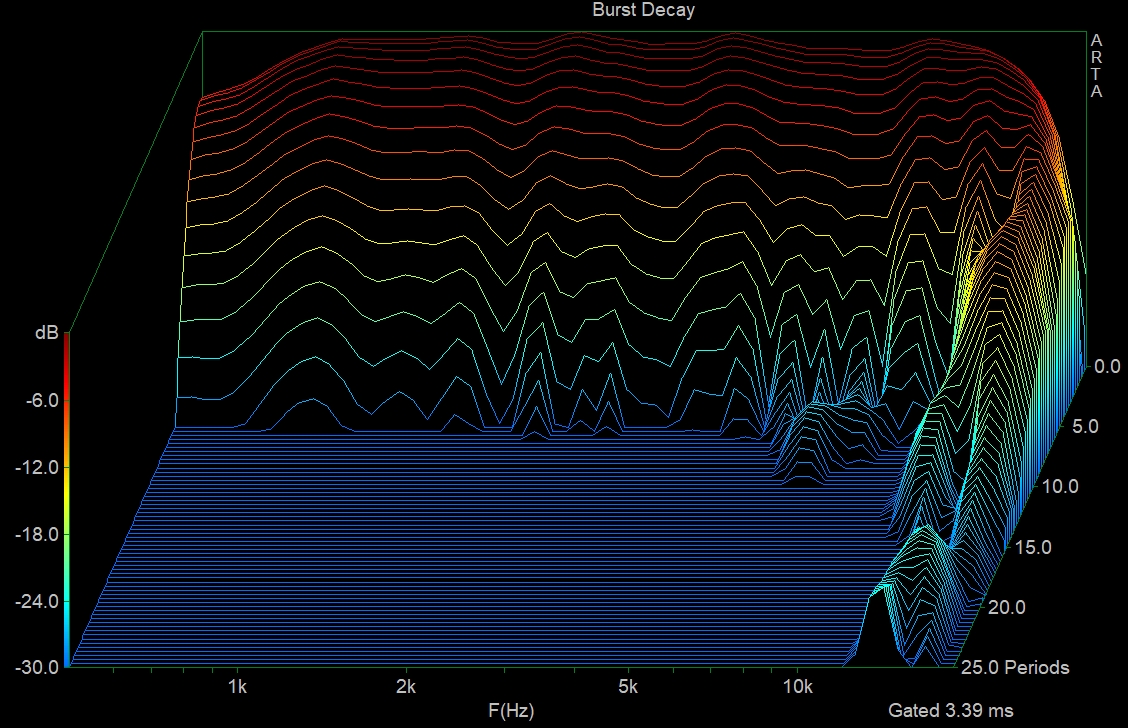
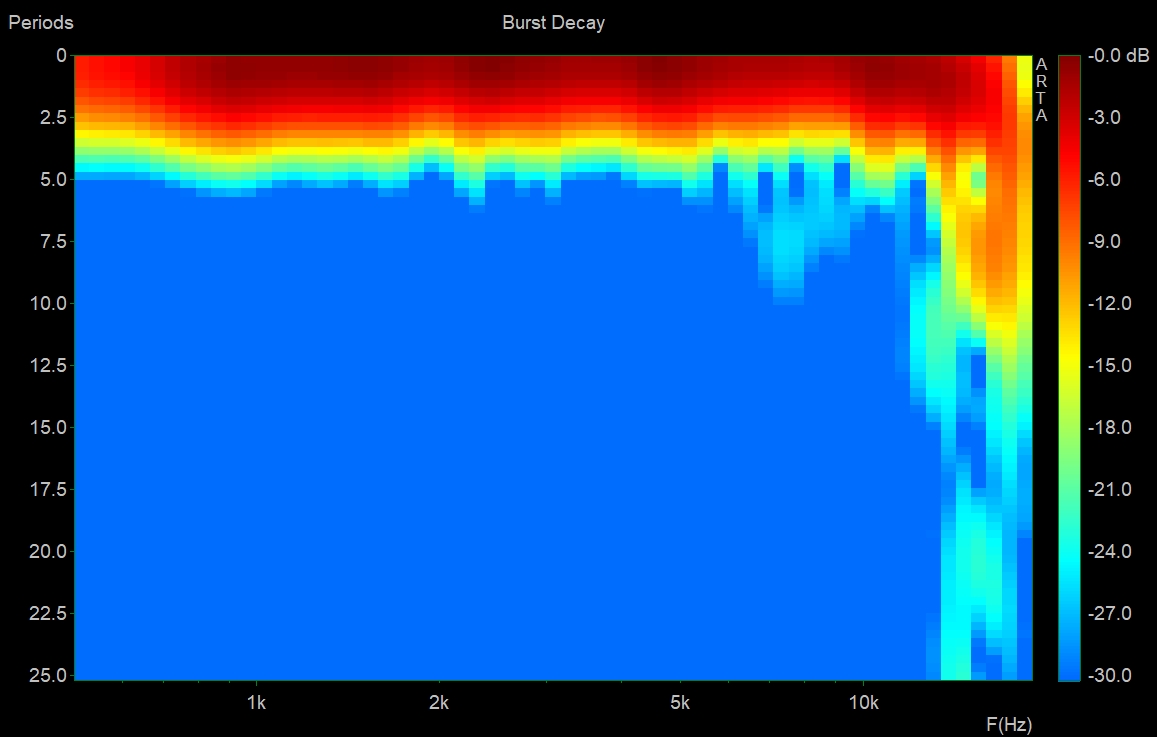
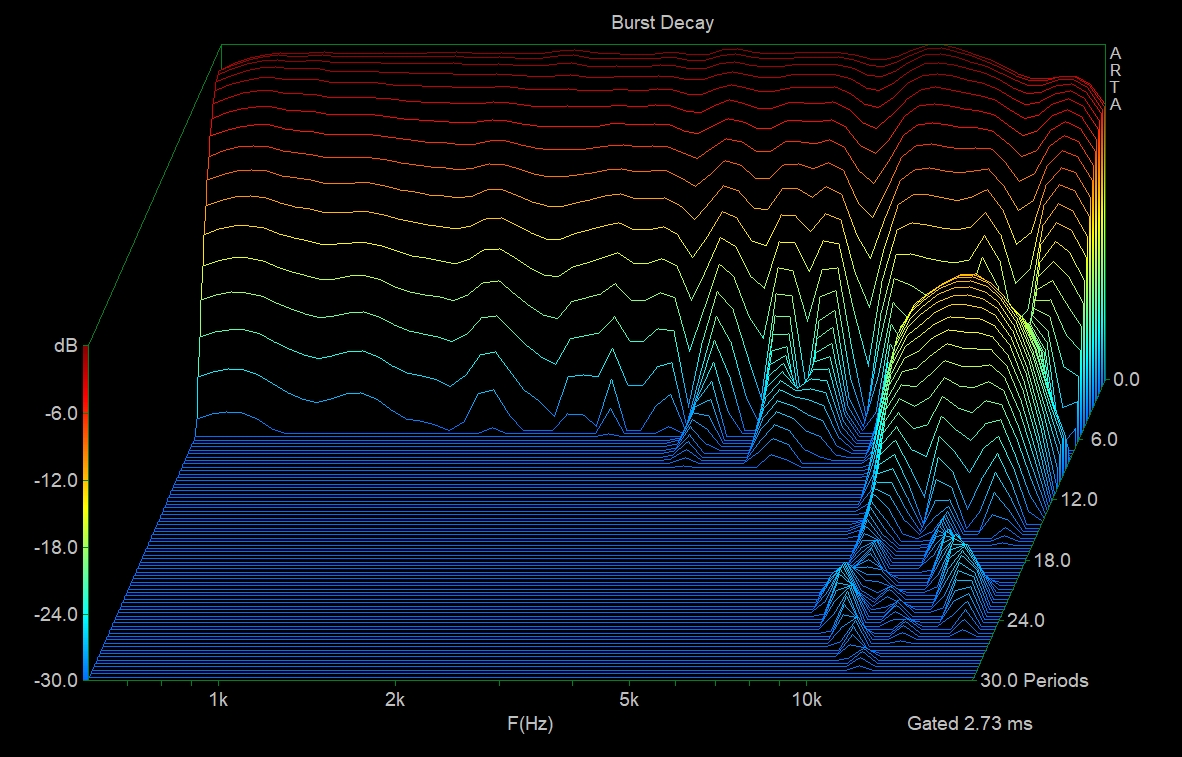
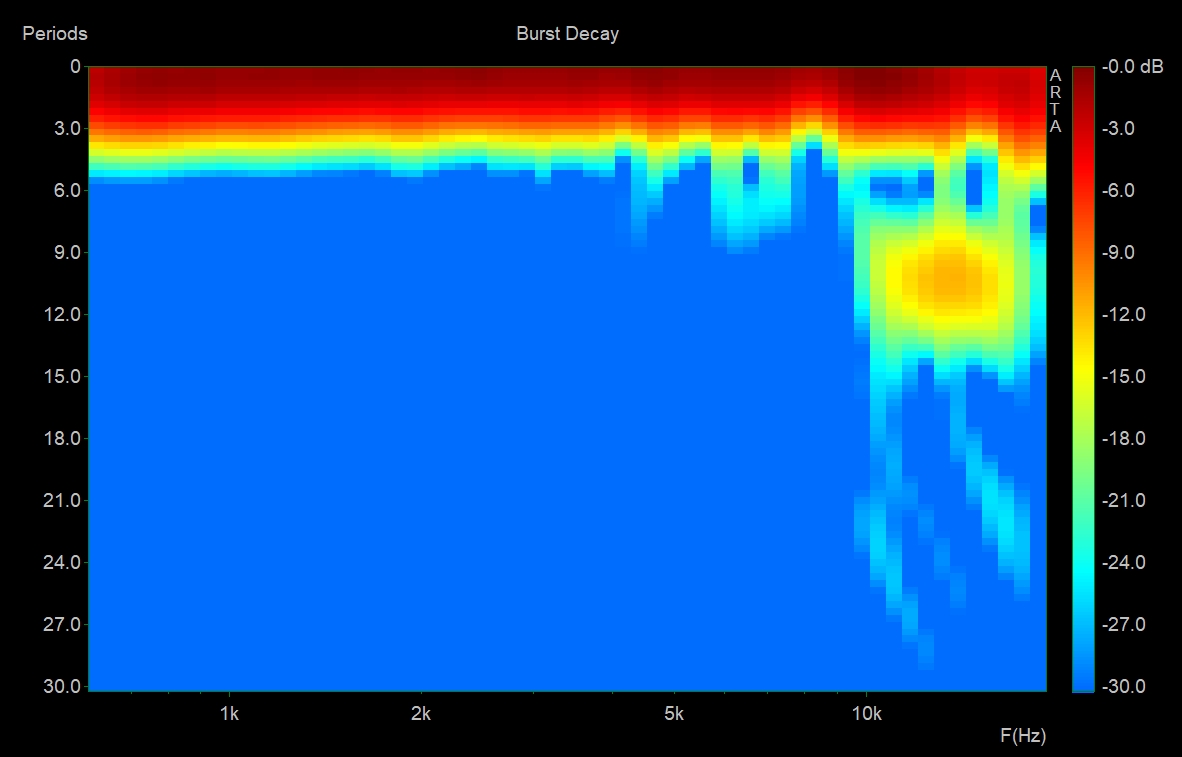
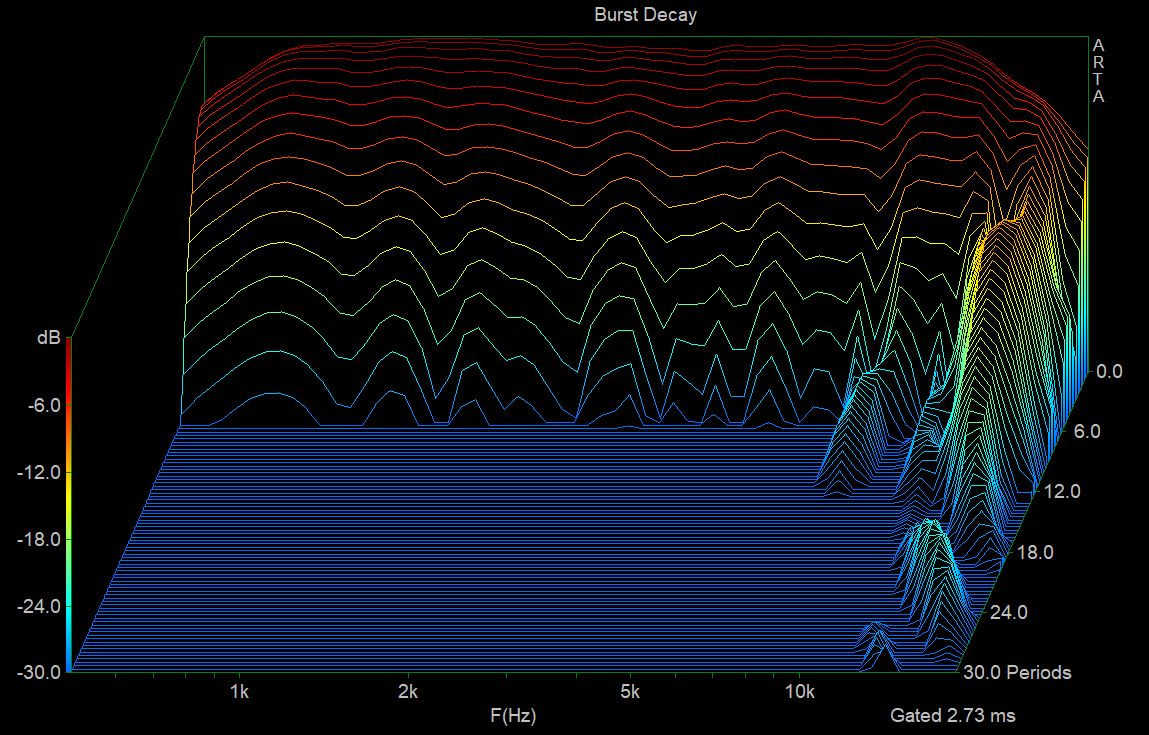
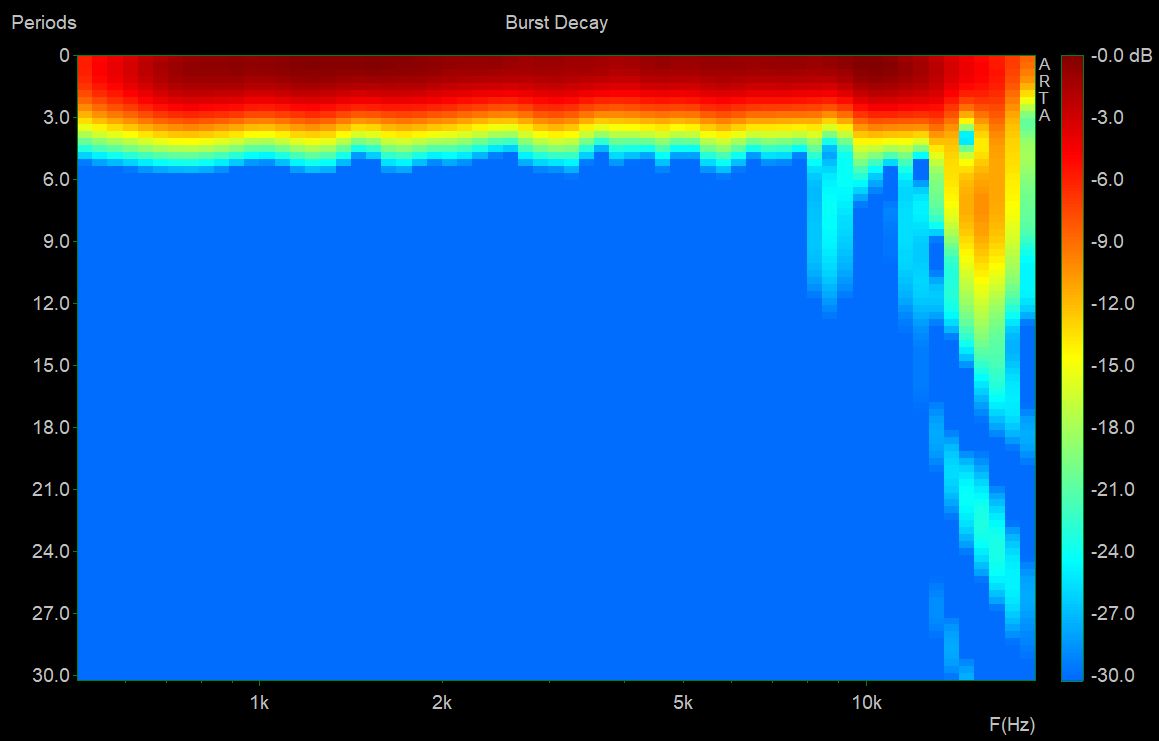
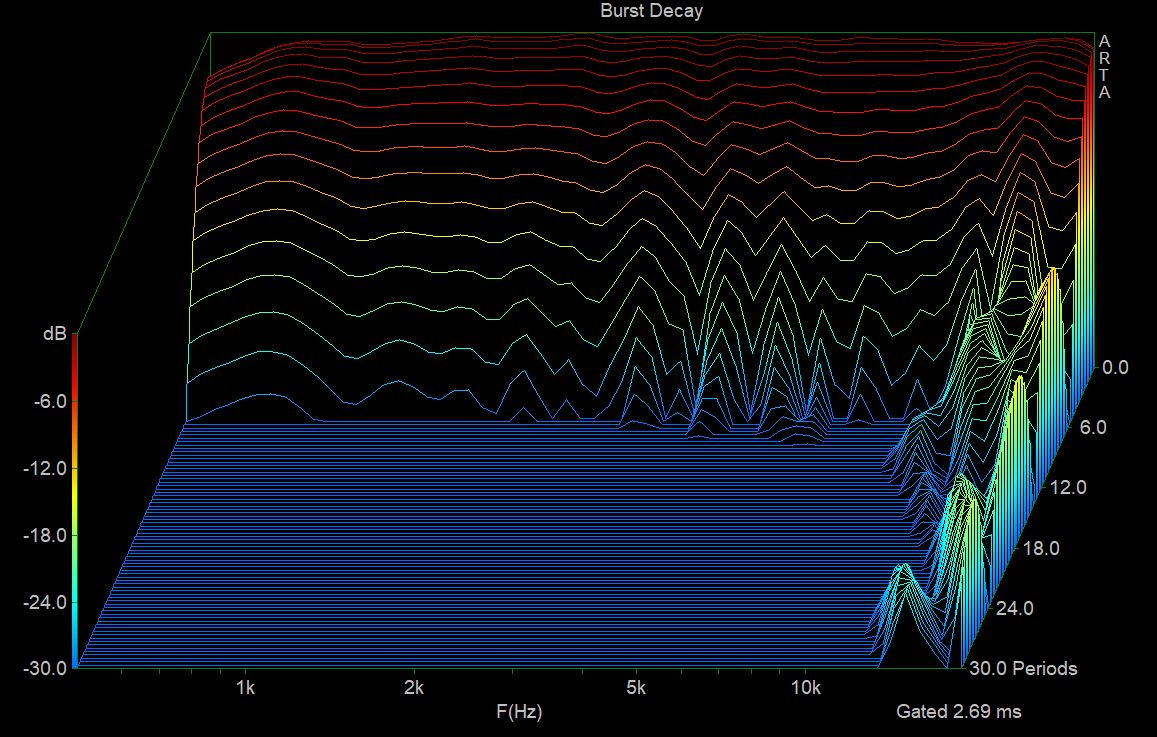
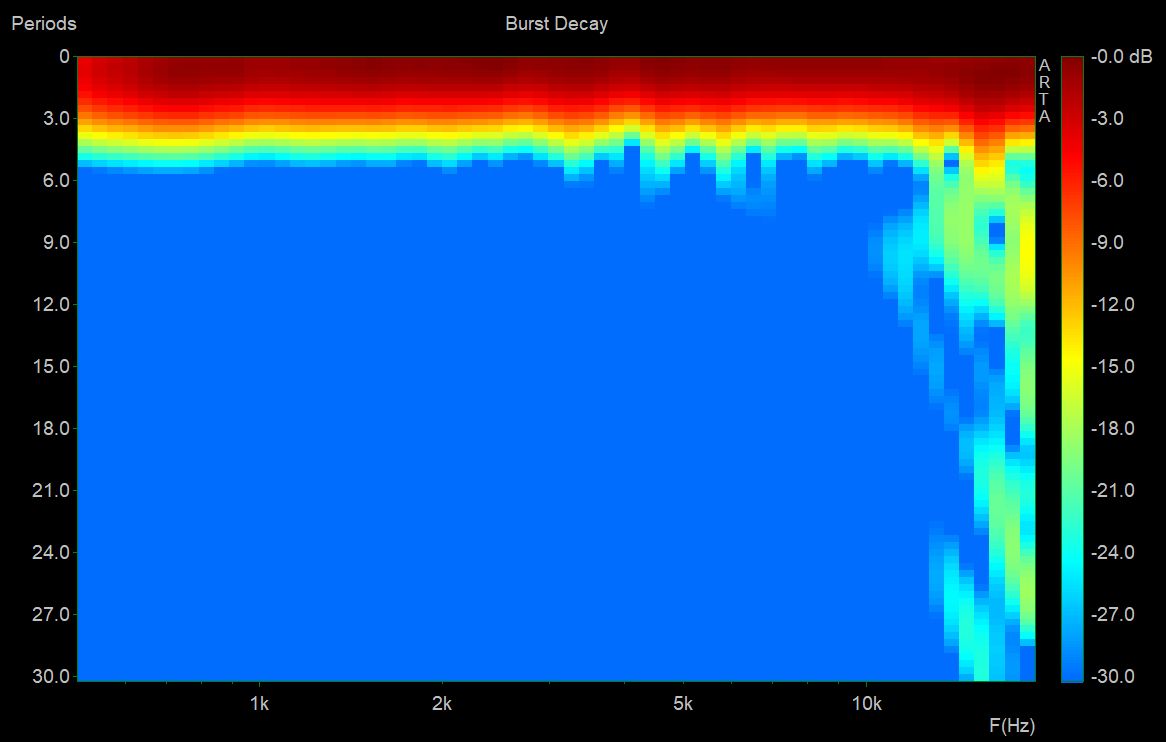
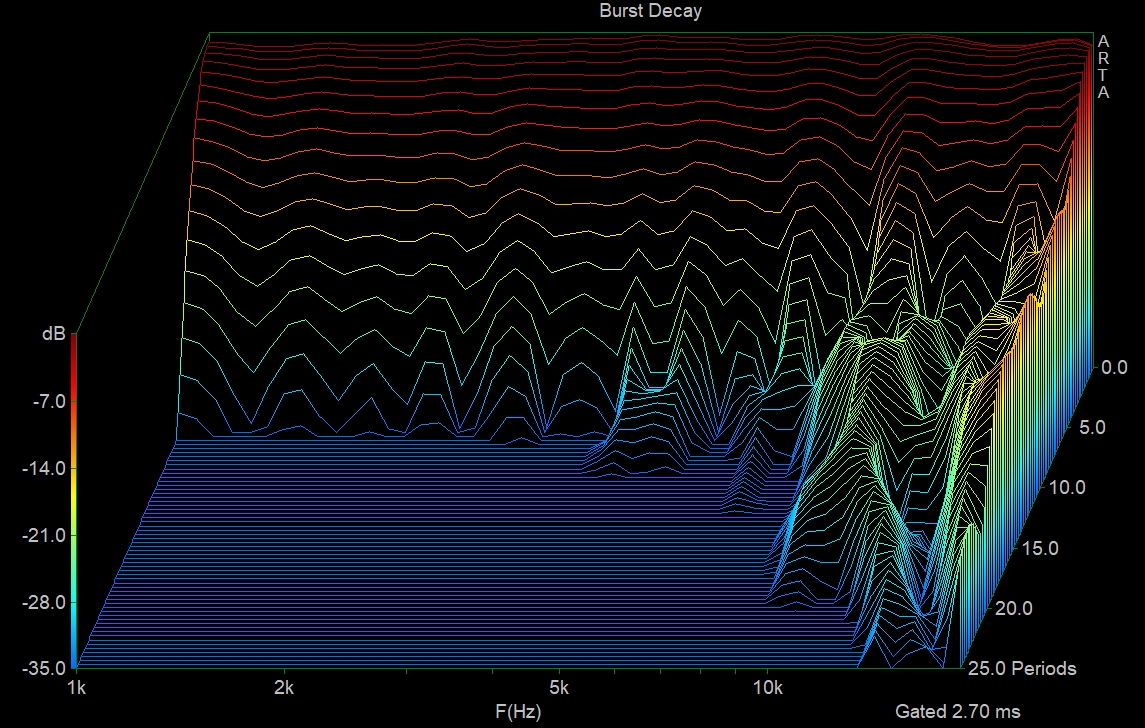
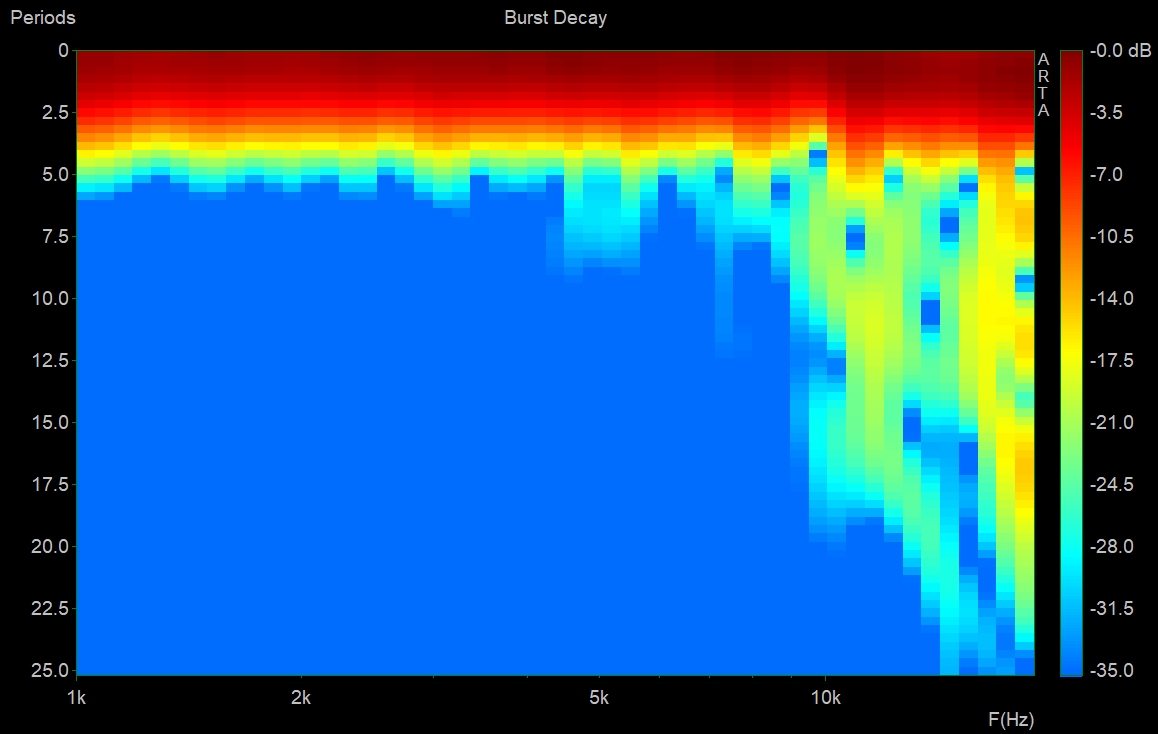
There are pros and cons here. We look for a breakup that does not occur too early, but also does not generate strong temporal artefacts. As always in audio, it is a compromise.
The 18Sound 1460 performs very well and represents a good compromise, as well as the HF1440 and its annular diaphragm.
The HF1460, with its TeXtreme carbon diaphragm, shows a higher breakup mode, but it is extremely violent when it appears.
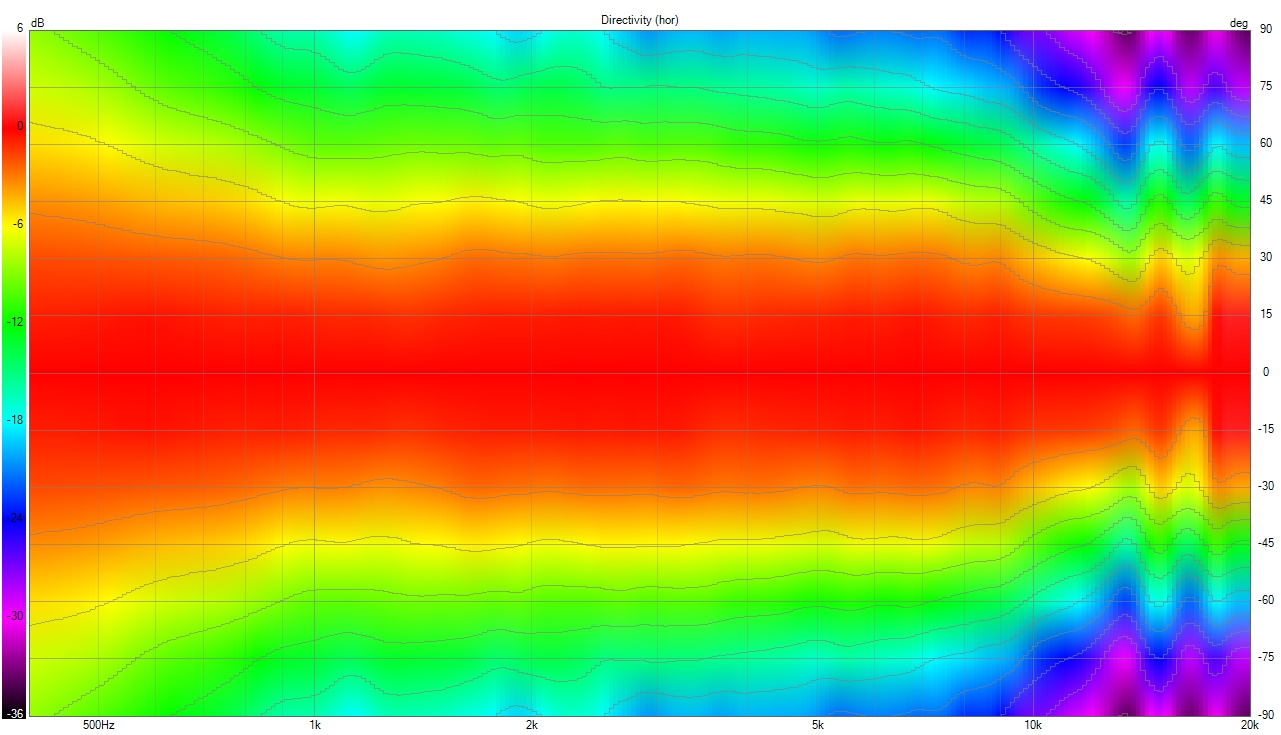
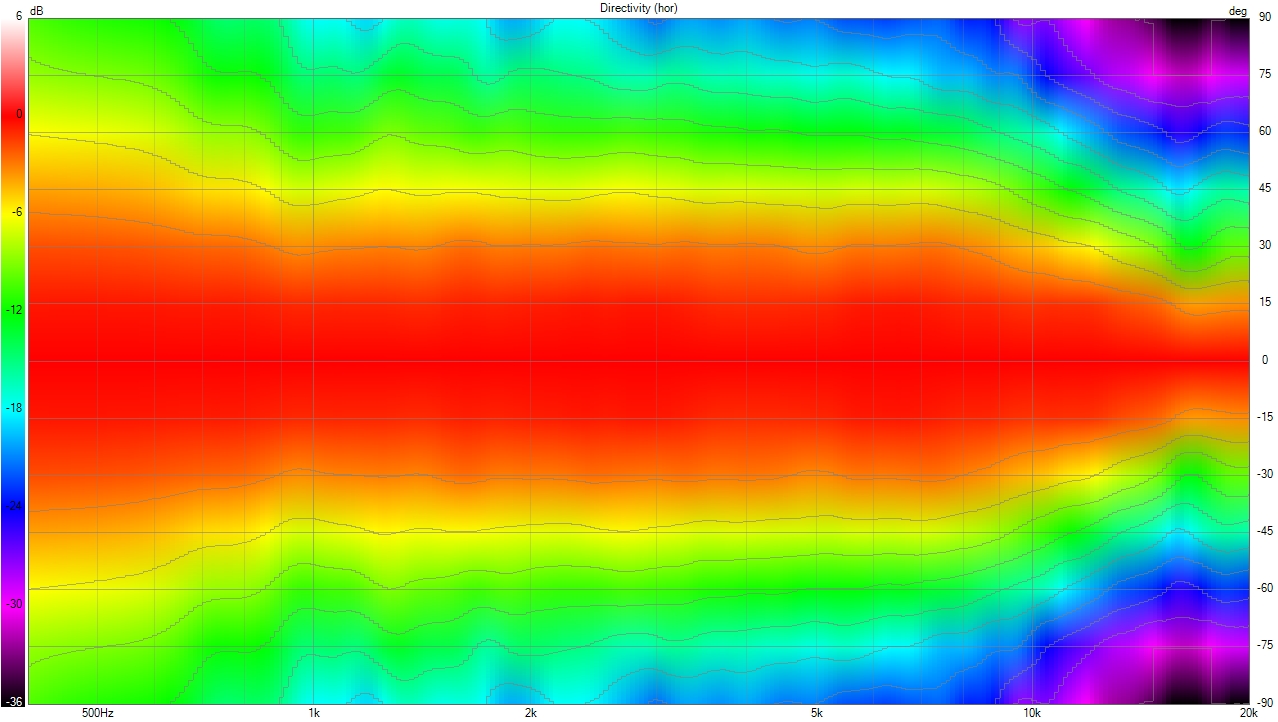
The Faital HF144, on the contrary, exhibits a more present breakup, which will impact its directivity behavior.
Polar Plot
Why show polar on different drivers?
A horn is based on the assumption that the compression driver produces an ideal plane wave at its exit.
However, diaphragm breakup moves the system away from this ideal plane wave behaviour, as shown in breakup and its distortion article.
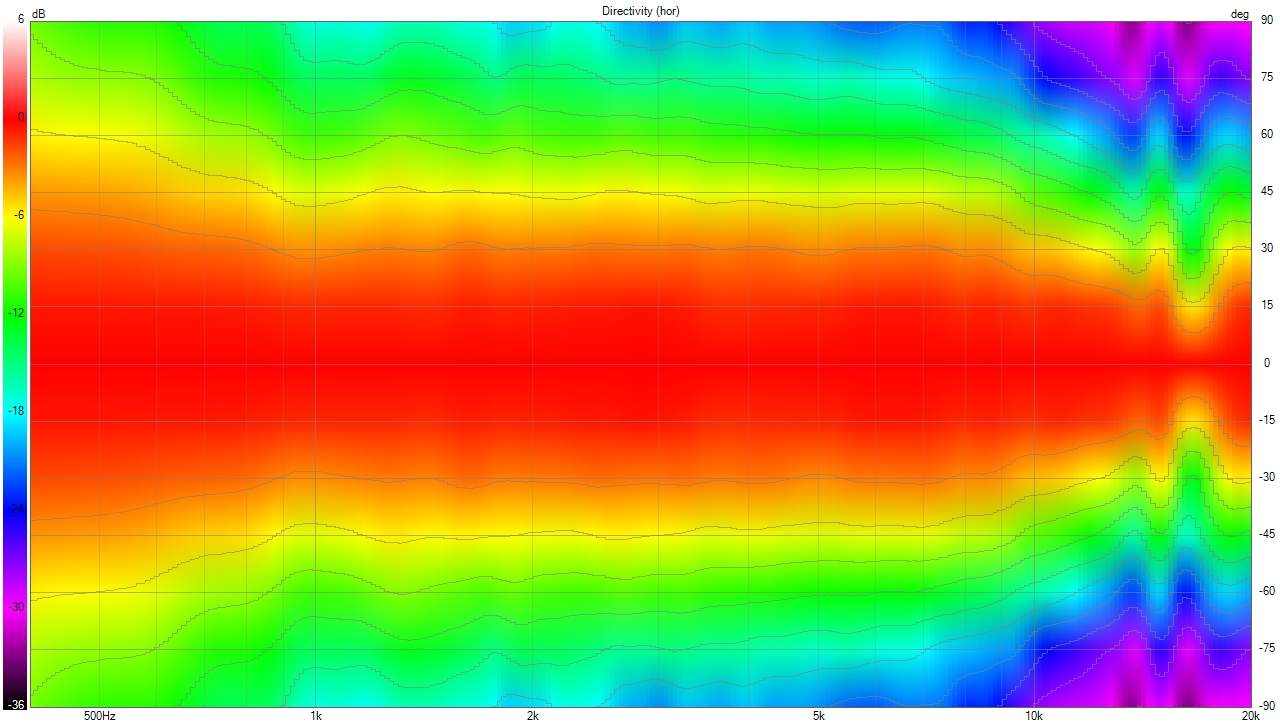
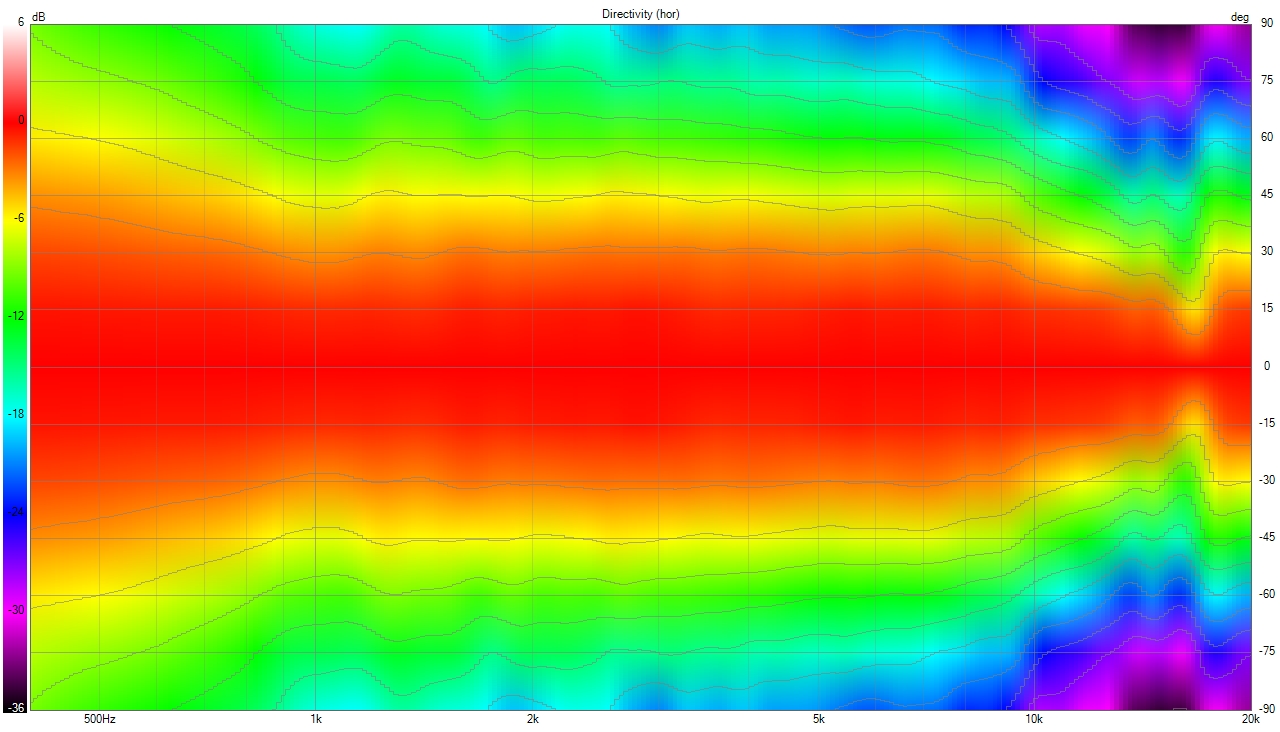
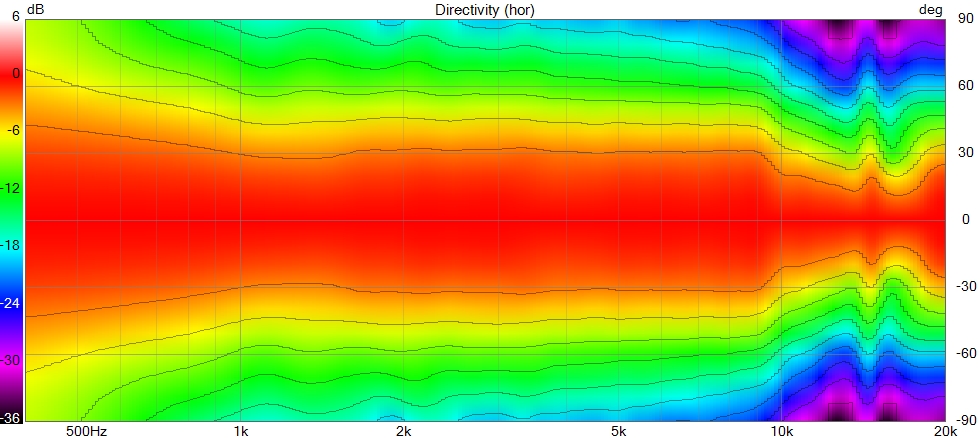
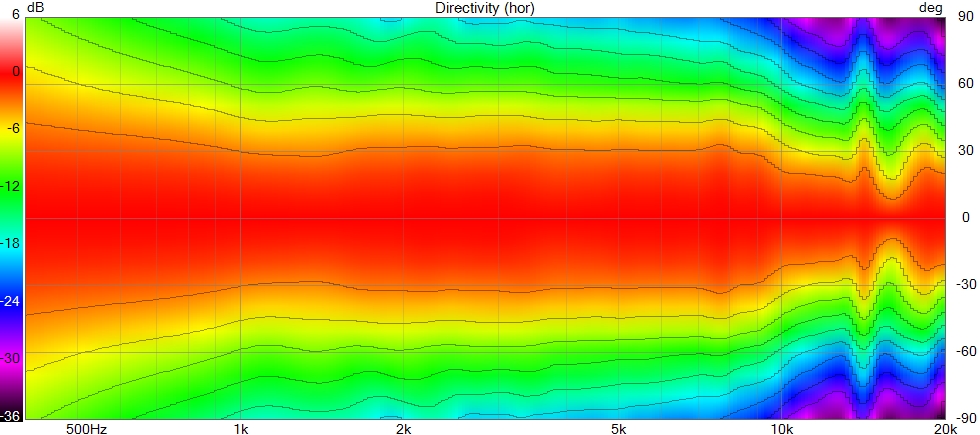
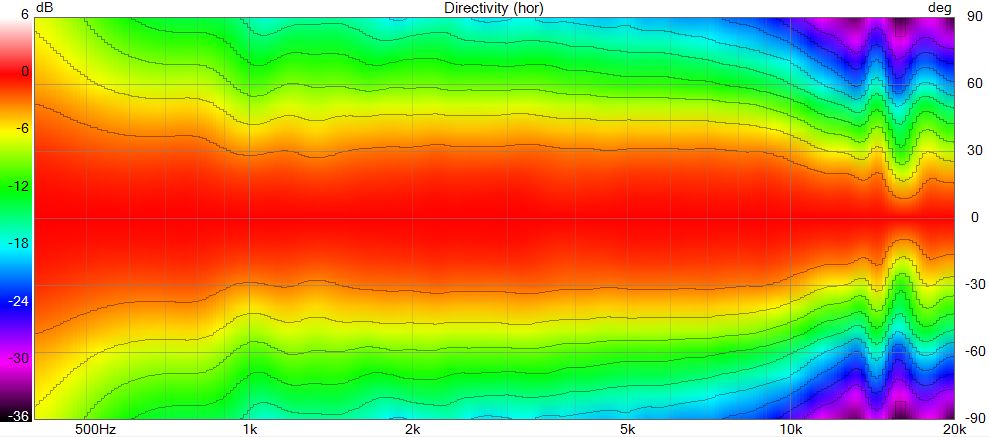
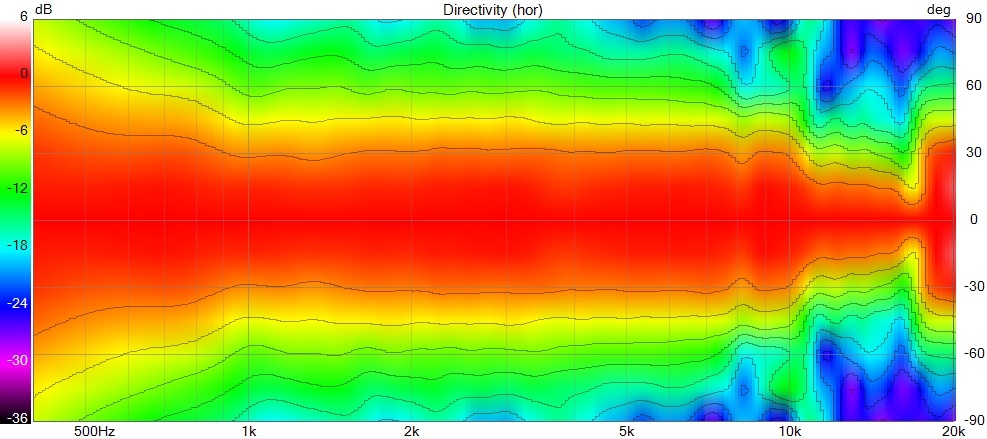
By analysing polar behaviour on a horn designed for near-ideal wave propagation, such as the X-Shape X34, we can identify when and how breakup affects wavefront propagation inside the horn.
From this, we can infer the quality of the propagation and the degree to which the system maintains a plane wave behaviour.
Polar on X-Shape X34
Polar conclusion and breakup impact
Here the logic is well respected, more the diaphragm is Stiffer (“hard”) more the breakup will bring the wavefront too far from plane wave radiation and enter in an impredictible chaotic behavior.
The HF1440 (Ketone) is incredible for a 3.4" diaphragm, she acte like a good 1" one and his breakup almost doesn’t affect it’s plane wave expansion at 12 kHz.
On the other hand, the HF144 is more affected by its breakup, which impacts its directivity behavior.
All drivers perform well overall. The aluminium diaphragm used in the 18Sound ND3A is less interesting than titanium in this context. The 1460 in standard titanium version appears to be the most interesting option in the 18Sound lineup.
Conclusion
Conclusion
As always, it is difficult to define a clear winner, as we are comparing some of the most advanced 1.4" drivers on the market.
It will be interesting to see how TeXtreme (and other carbon-based diaphragms) evolve in the future. It appears that extending carbon materials to the surround of the compression driver can limit low-frequency extension. The HF1460 is interesting, but it does not really bring anything additional compared to its HF1440 sibling or the 18Sound 1460.
The Faital HF1440 (Ketone) is an interesting case. Its main strength is its low distortion behavior, especially in higher-order components, but it shows a slight rise in H2 in very demanding conditions and at low crossover points. This is partly related to the annular diaphragm geometry: the radiating surface is smaller than in other designs. This behavior is typical of annular diaphragms, which tend to perform very well in H3/5/7/9, but are more sensitive in H2 due to the higher excursion required for the same SPL. In extreme real-world conditions (e.g. night-club use, 750hz crossover), the HF1440 can become a limiting factor. In one case of very high SPL usage, it failed (voice coil burn) and was replaced by an 18Sound 1480.
The 18Sound ND1460 and ND1480 both show very good time-domain behavior and high SPL capability. For very high SPL applications, the 1480 remains the preferred choice (e.g. night-club use).
Overall, the most balanced solution depends on the application. The 18Sound ND1460 and the Faital HF1440 represent two strong but different approaches, provided that the system design accommodates their respective constraints.
The HF1440 requires more attention in EQ and low crossover usage, while offering excellent distortion behavior when properly used.
For 1" tests, see our other article: 1" compression driver test.