The 1 Compression Drivers
We will test several 1" exit compression driver in this article:
- 18Sound ND1095N-16: 1.75 inch Nitrided titanium diaphragm
- 18Sound ND1090: 1.75 inch Nitrided titanium diaphragm
- 18Sound ND1TP-16: 1.75 inch titanium diaphragm
- BMS 5530-16: 1.75 Kapton annular diaphragm
- BMS 4552-16: 1.75 Kapton annular diaphragm
- RCF 350ND
- RCF CD350
- Faital HF10AK
- Faital HF108R
- JBL 2426
- Kartesian CMP35 VPA
- Celestion CDX1-1430
- Celestion CDV1-1757
- B&C DE360
- Beyma CP385Nd
For interpreting results about break-up, it is advised to read the breakup article.
In essence: Stiffer materials, like metals, will exhibit a higher but more violent break-up point, while materials with inherent damping, like treated paper or composites (Kapton), will break up at a lower frequency but affect a wider range of frequencies.
It’s all a mater of compromise, the larger the diaphragm is lower he can goes (theoretically) and the sooner the breakup will occur.
The horn used for testing is a X-Shape X33 with his return for doesn’t be impacted with midrange narrowing or beaming.
For the RCF 350ND, as she cannot goes beyond 1250hz a X25 is used.
SPL
Here is the SPL alligned on 4kHz witout EQ of crossover.
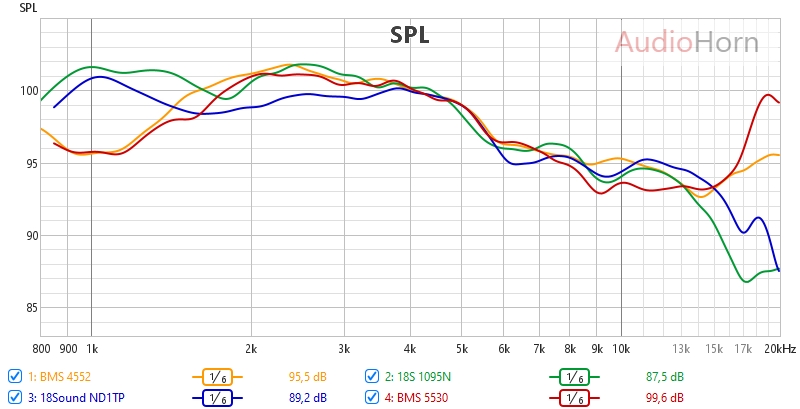
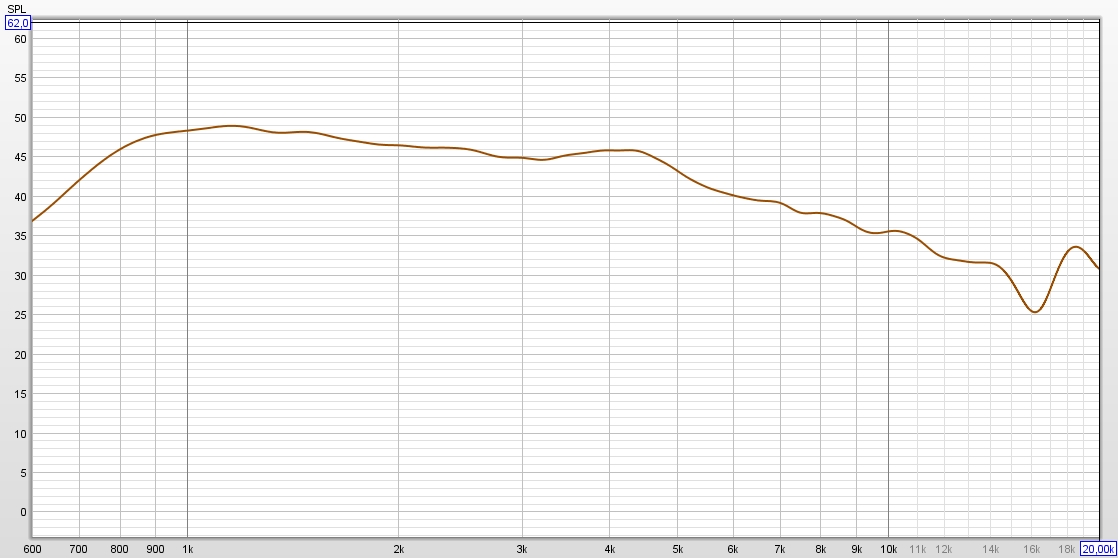
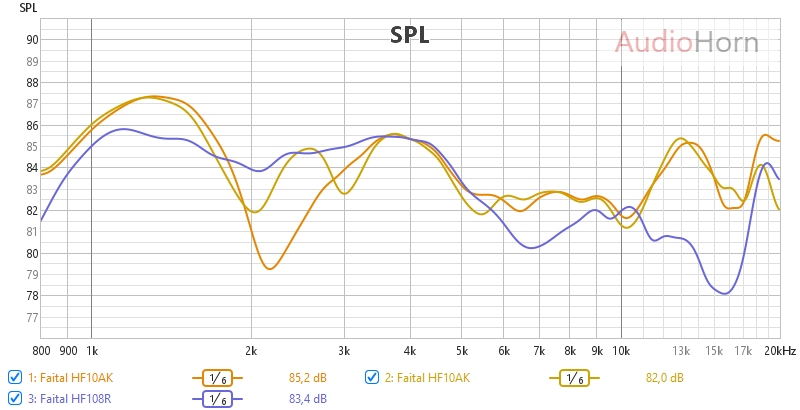
Here there is no “more” or “less” of something, the drivers gives an initial energy then the horn distribute as we have explained it here : Energy in horns.
If a driver was flat it will simply mean that the horn is not constant, exactly what we do not want, however the 18S 1090 exibit a very easy to EQ shape.
So the “bell” response is normal, the two 18sound come from the familly even if the generation is not the same, the shape of the BMS is very different.
We can see that the two Faital HF10AK have problems around 2.1kHz, especially one of the two units, that have even worst distortion than the other one.
The main juge here will be the distortion measurement after have EQ it flat.
The test began to have too many compression drivers to be displayed in the same charts. Therefore, some of them will be disqualified, along with the reason why.
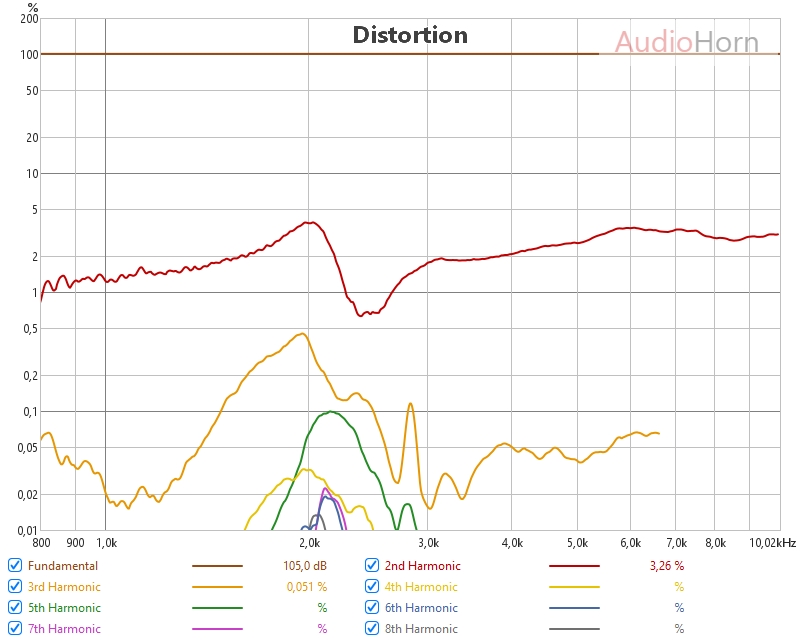
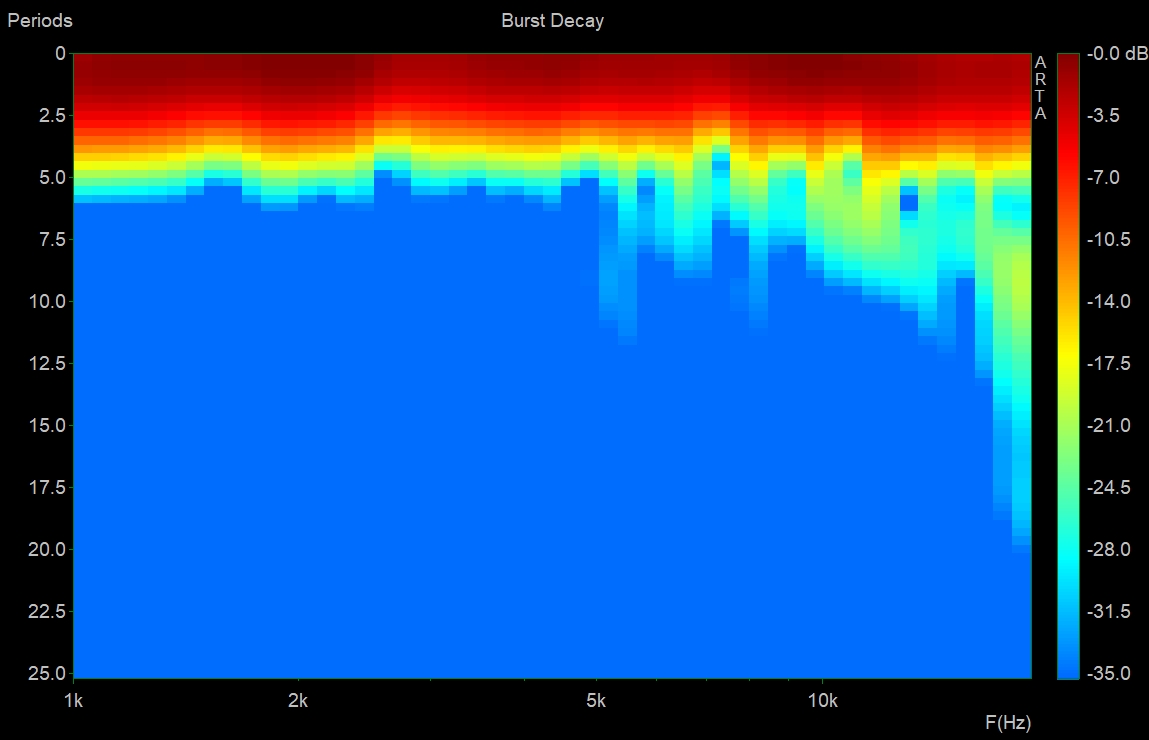
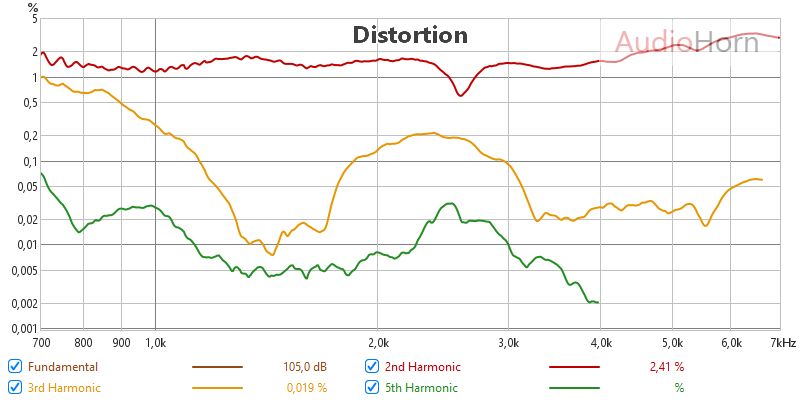
On distortion chart, fundamental shows 105 dB. This is because at 31.5 cm, where the microphone is located, the sound pressure level (SPL) is equivalent to 95 dB SPL, which is equivalent to 1 meter.
Every compression driver in this test has been measured under the same conditions, including SPL, protocol, and a flat EQ across all bandwidths.
- Faital HF10AK
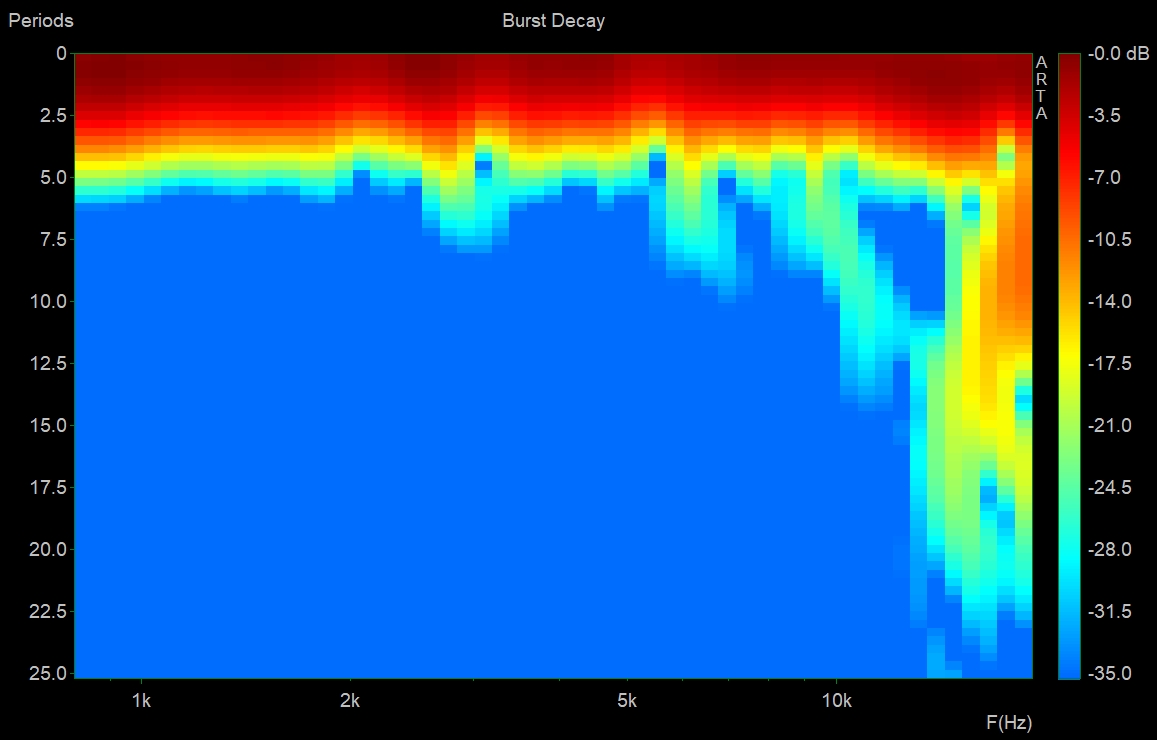
The distortion makes it very hard to use. The rise at 2 kHz,exceeding 0.2%, makes H3 very audible, and its transient response measurements are relatively poor.
- JBL 2426
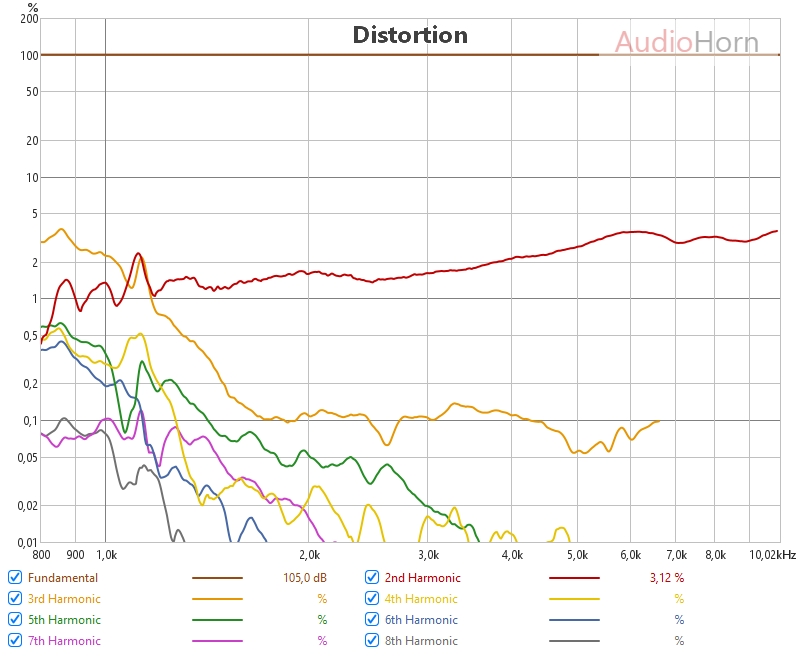
It might be more usable in an X-shape X25 configuration, crossed over at 1300/1500 Hz. However, the transient response is not particularly exceptional for a 1" driver but it’s a old one and a old conception.
- Kartesian CMP35 VPA
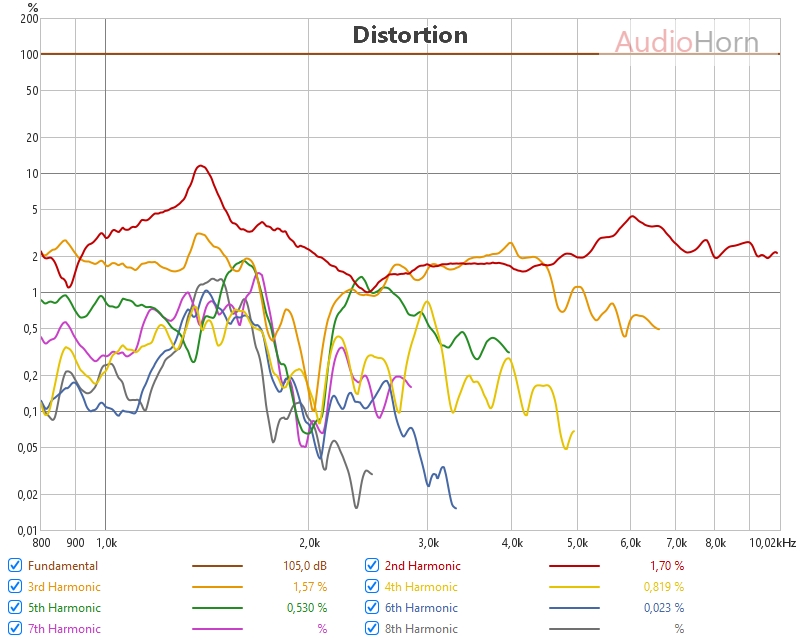
We can see a potential issue with diaphragm centering or a similar problem, as the distortion order appears to be aligned. The transient response relatively poor, and the distortion is very high even at low volumes.
May another unit has perform better.
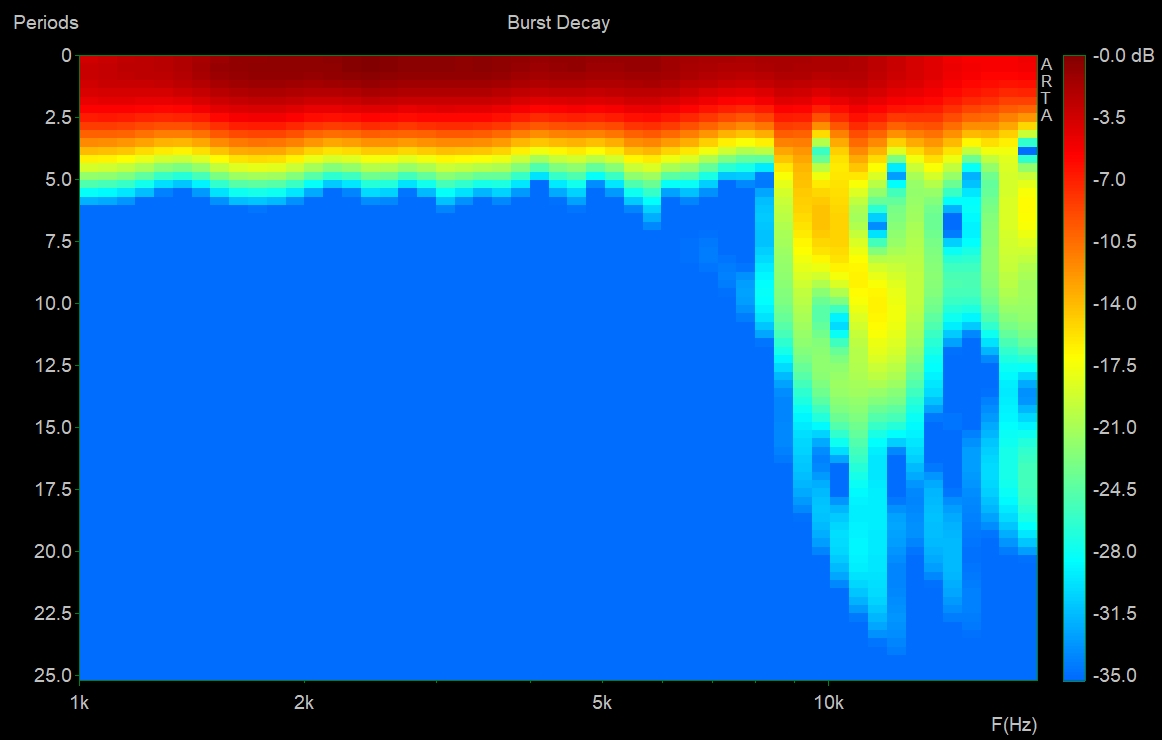
- B&C DE360
The distortion rise very fast making it hard to use in our application even with a X25.
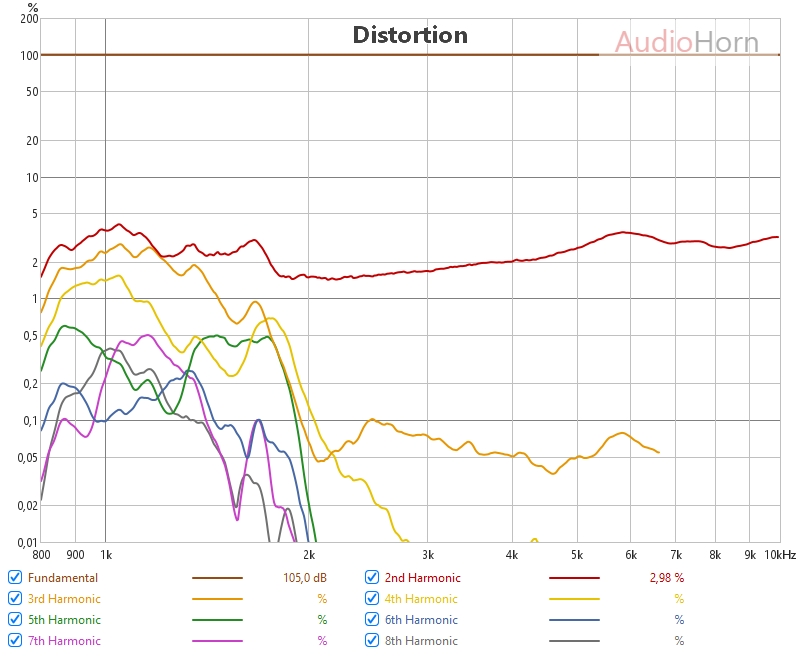
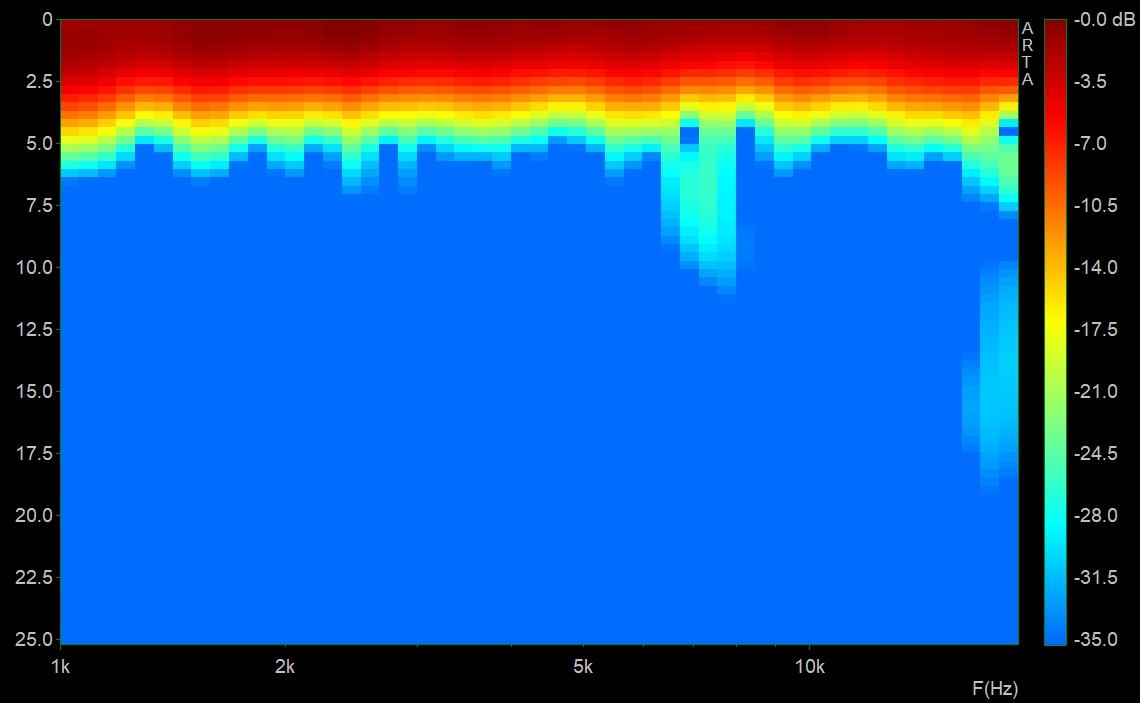
- Celestion CDX1-1430
It’s a very small compression driver. It doesn’t extend to low frequencies, but its transient response is excellent (and so is its polar response). However, for our purposes, the distortion rises quickly in the low end. This is a significant limitation for the X25, but it can work well at medium levels and crossed at 1300/1500 Hz, especially considering its low price.
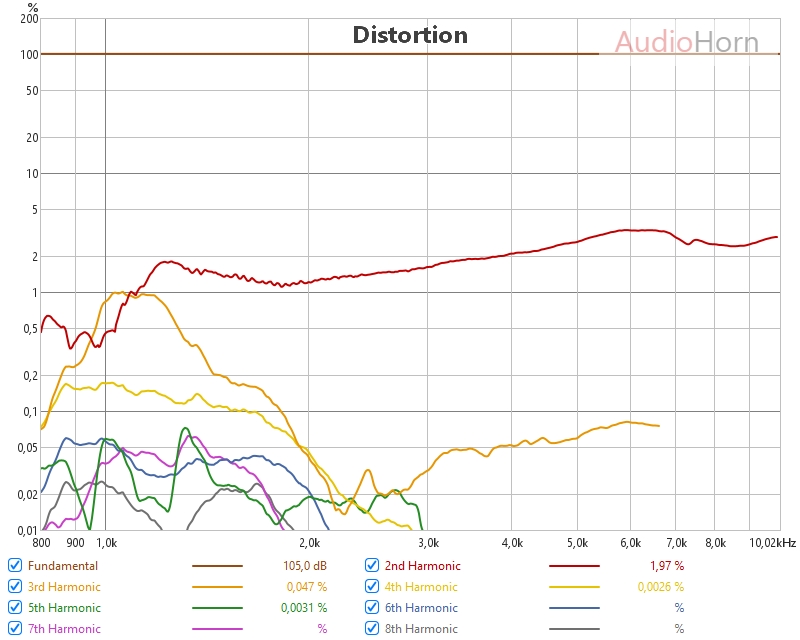

- Beyma CP385Nd
The distortion rise in the mid-band makes it difficult to use in our application, even with an X25. Additionally, the temporal behavior is not as good as modern compression driver.
Distortion
Here is an overlay of all the compression drivers, the measurement is taken at 31.5cm to the horn mouth, every driver is EQ flat, the volume is 95 dB SPL (so the dB at 1m).
A point about audiblity
Our article about audibility and masking effect has explain that a H2 distortion will create a sound at Fr*2, and a H3 at Fr*3.
In conjunction with audibility and masking effects, H2 is likely audible above 2%, and H3 is likely audible above 0.2%.
So some high frequencies rise up in H2 are in fact not audible, we have to put our attention at the low end to the half part of the measurements.
The two 18Sound ND1TP have been let on the graphs for show possible divergence beetween unit, the same divergences occurs with BMS too.
H2
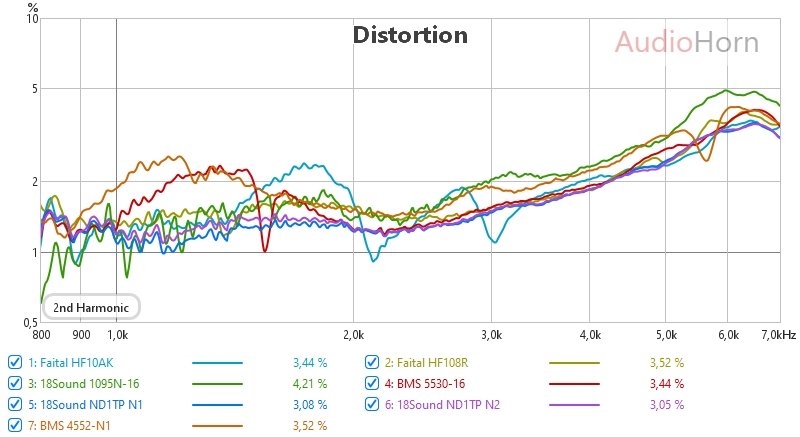
The 18Sound ND1TP are partculary good here, as an improvement of the 1095N, the BMS 5530 a little less.
H3
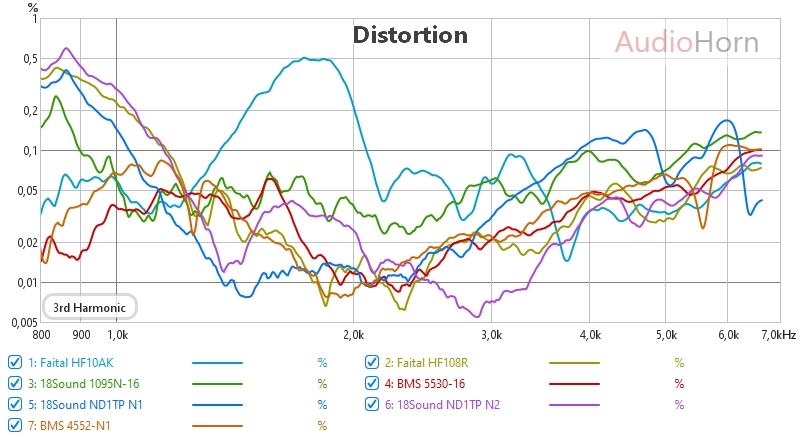
The HF108R is good but not very low, so in a X-Shape X25 but not with a bigger horn.
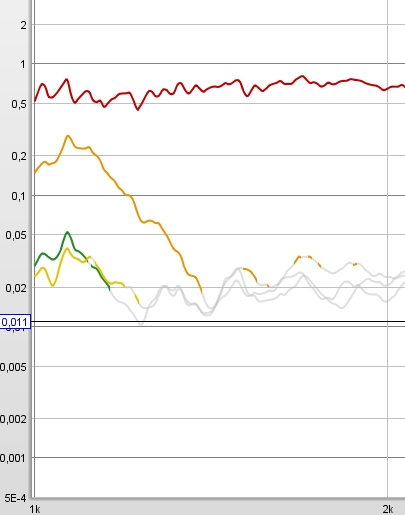
For the RCF 350ND I have lost the measurement and I don’t have the compression anymore, it remain a lower measurement one that just show that H3 goes up very fast after 1250/1300hz :
Here we see the an advantage of the ND1TP but in fact all performed very well.
 It’s now time to talk about divergences on the same unit and diaphragm adjustment.
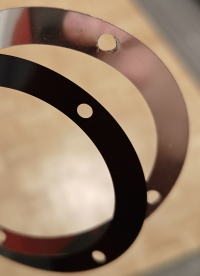
When I receive brand new ND1TP pair with one producing 2% of THD at 80 dBSPL, she was sounded broken, both unit have been re-tuned about diaphragm height, as 18sound diaphragm are auto-centred it’s easy to tune diaphragm height.
More a compression driver is tiny more it will be sensitive to it, even between my several BMS 5530 there is differences in THD and polar.
18Sound use 3 shim: 0.2, 0.1 and 0.05 mm, to have these performances in the test I remove 0.05mm on one and 0.1mm on another, a difference of 0.05 completely change THD but also polar map as we will se it just after.
Time-domain measurements
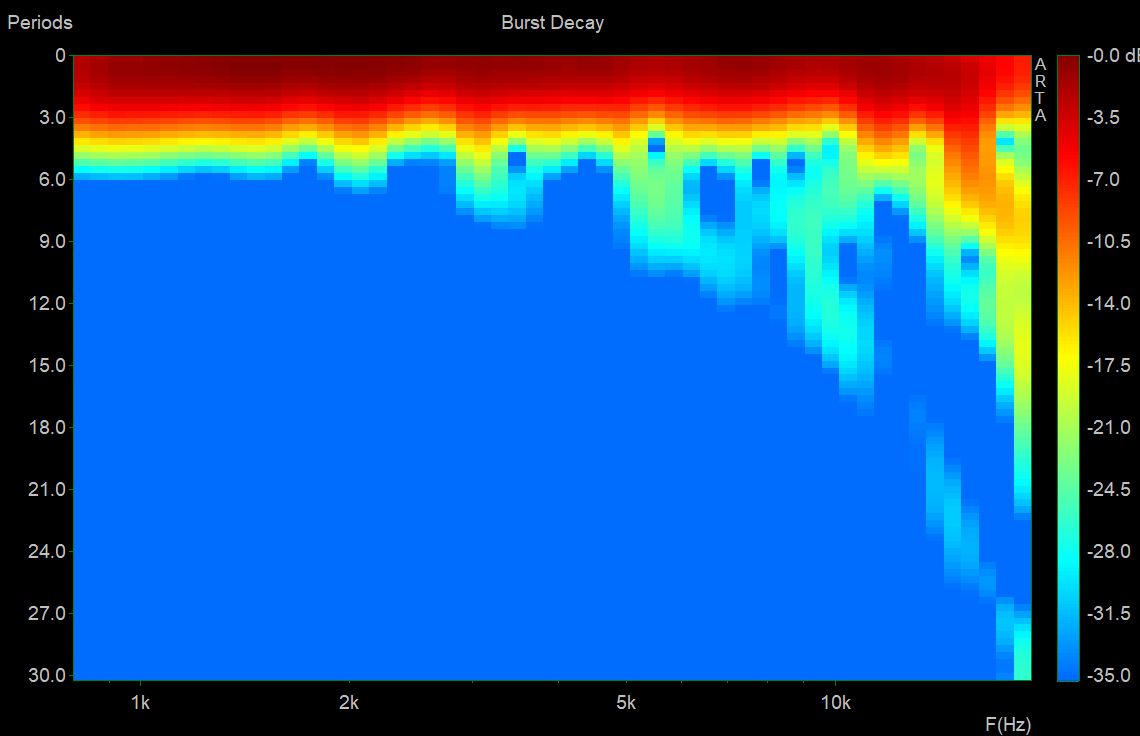
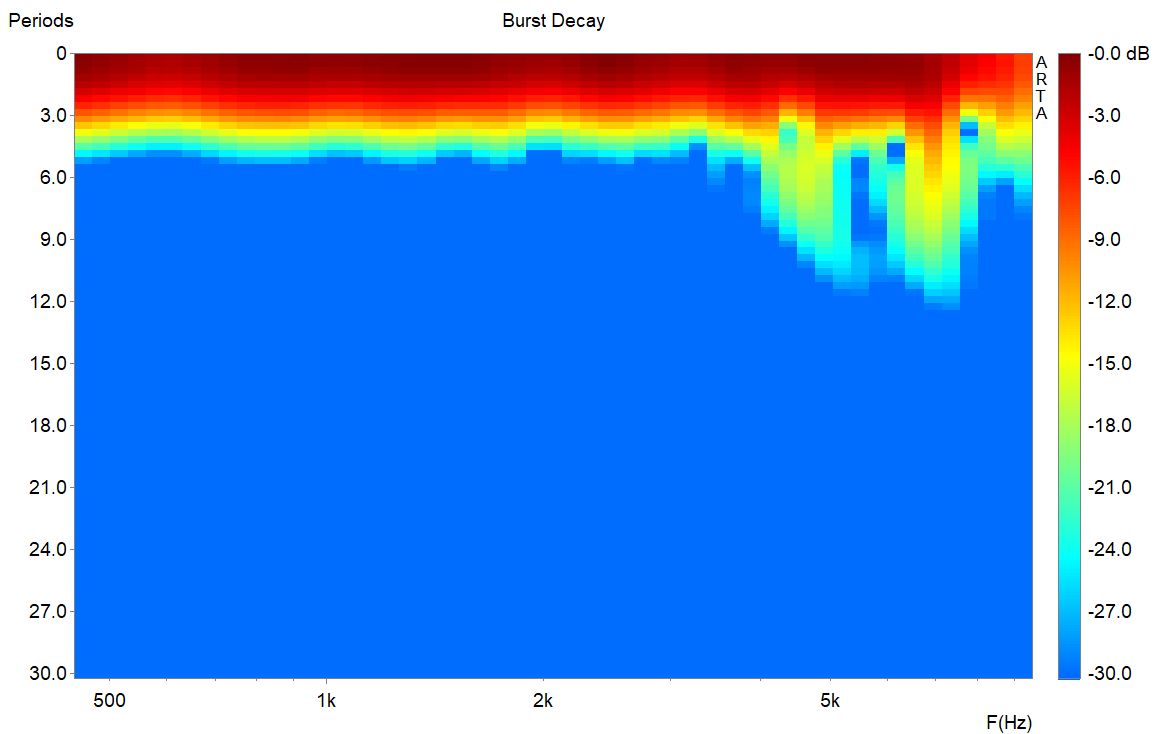
Here we will do Burst Decay at 32cm of the mouth with all driver EQ flat, we will see here the breakup impact on Time-domain measurement.
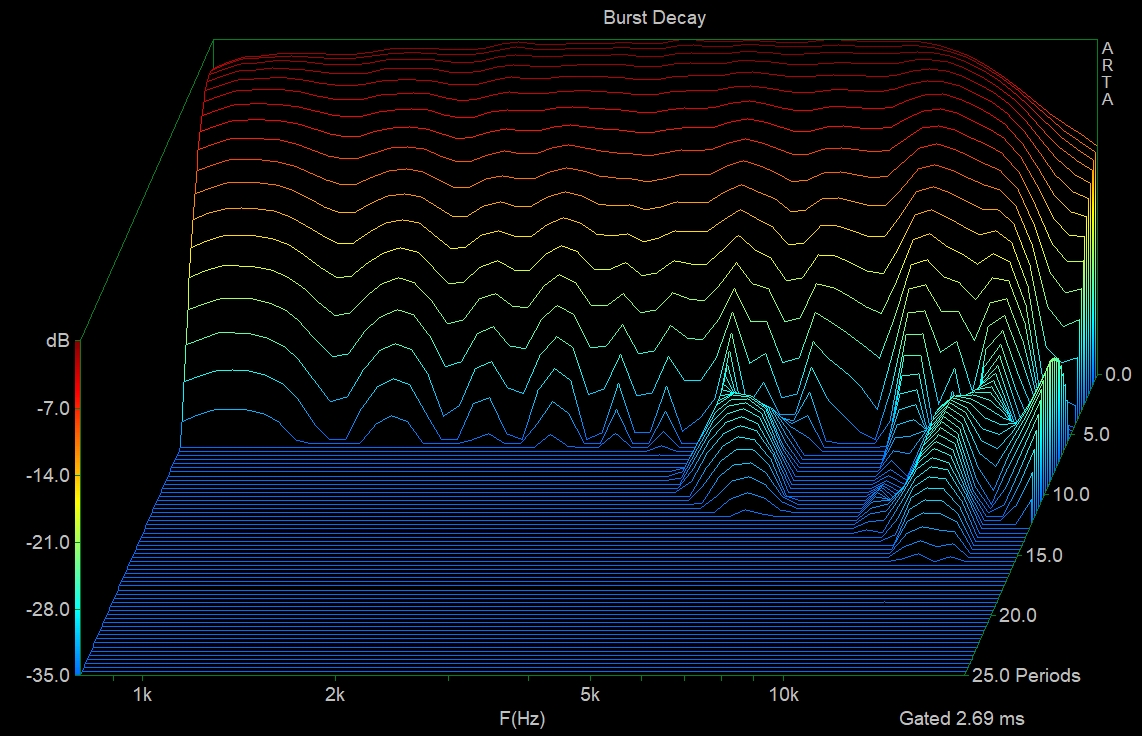
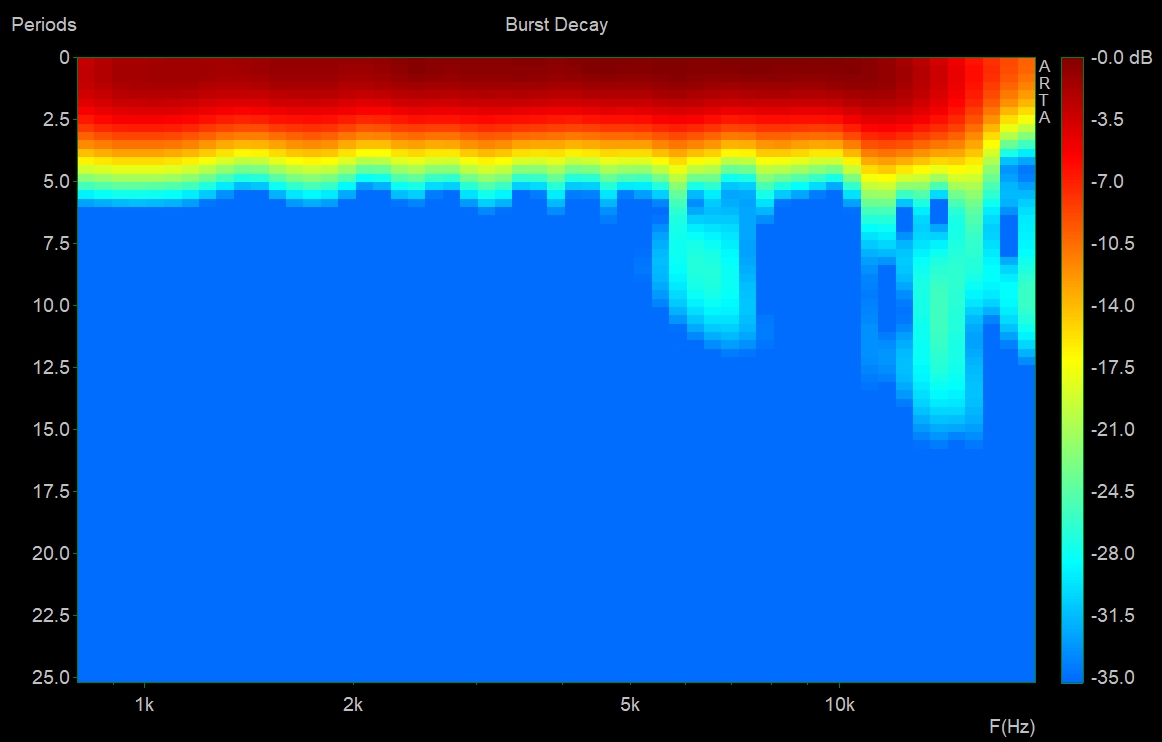
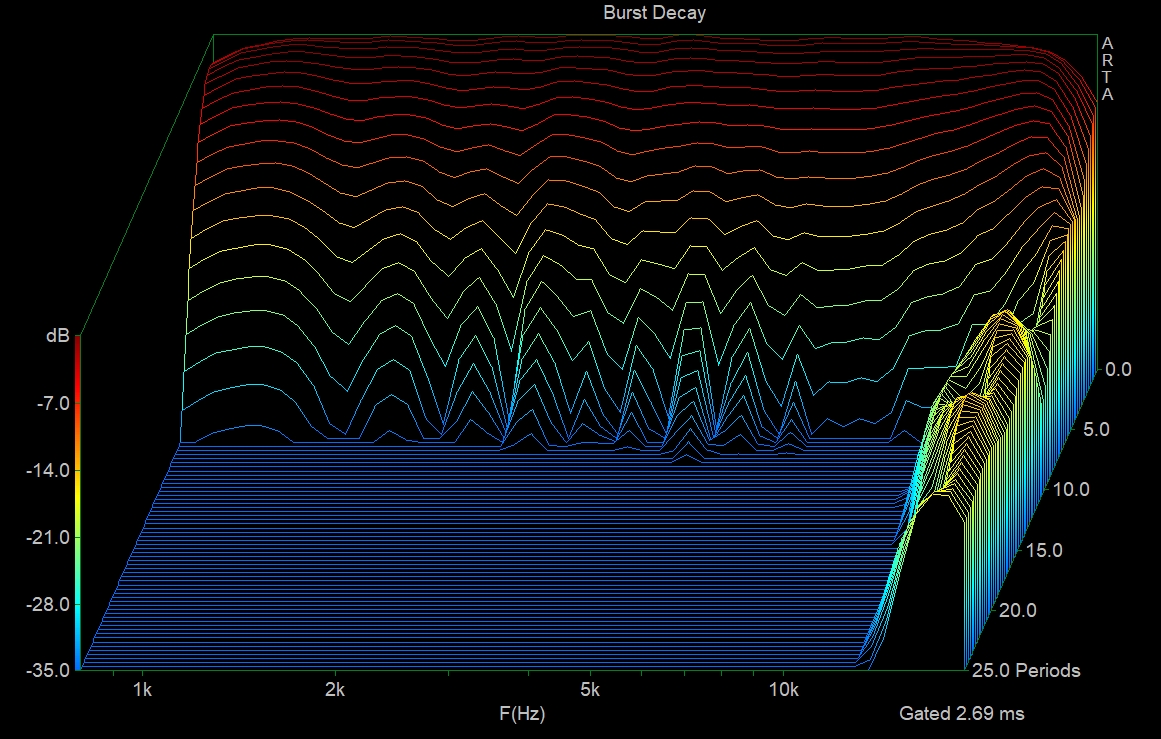
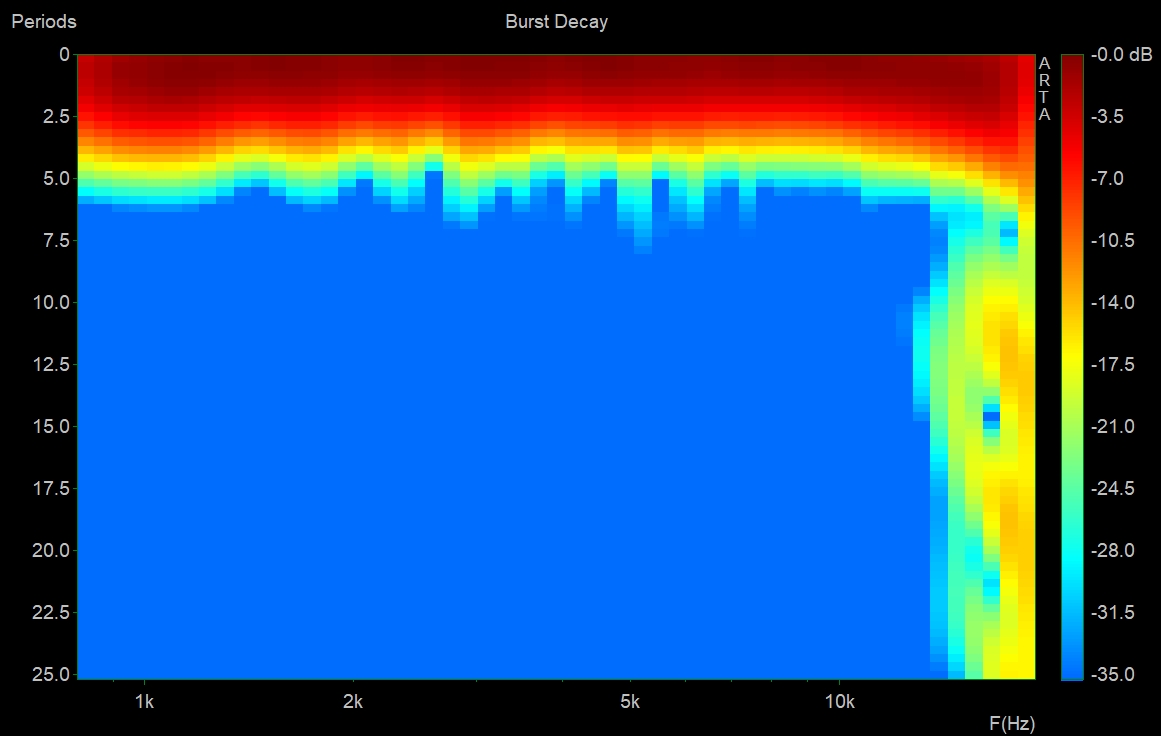
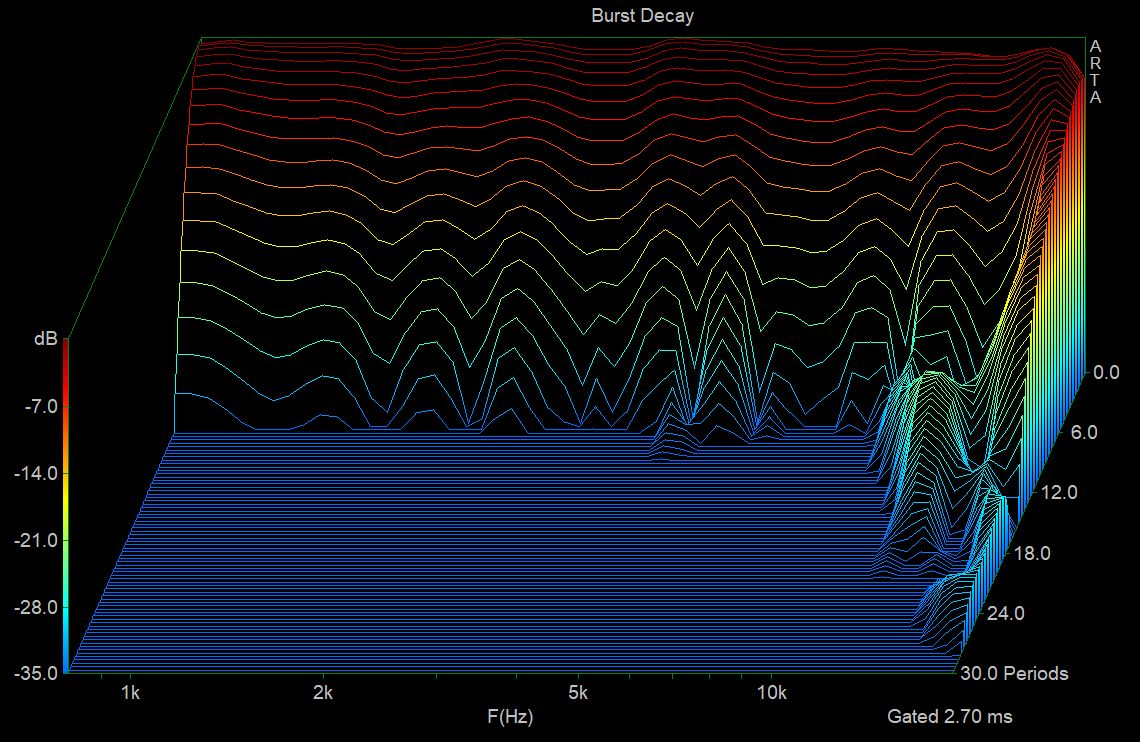
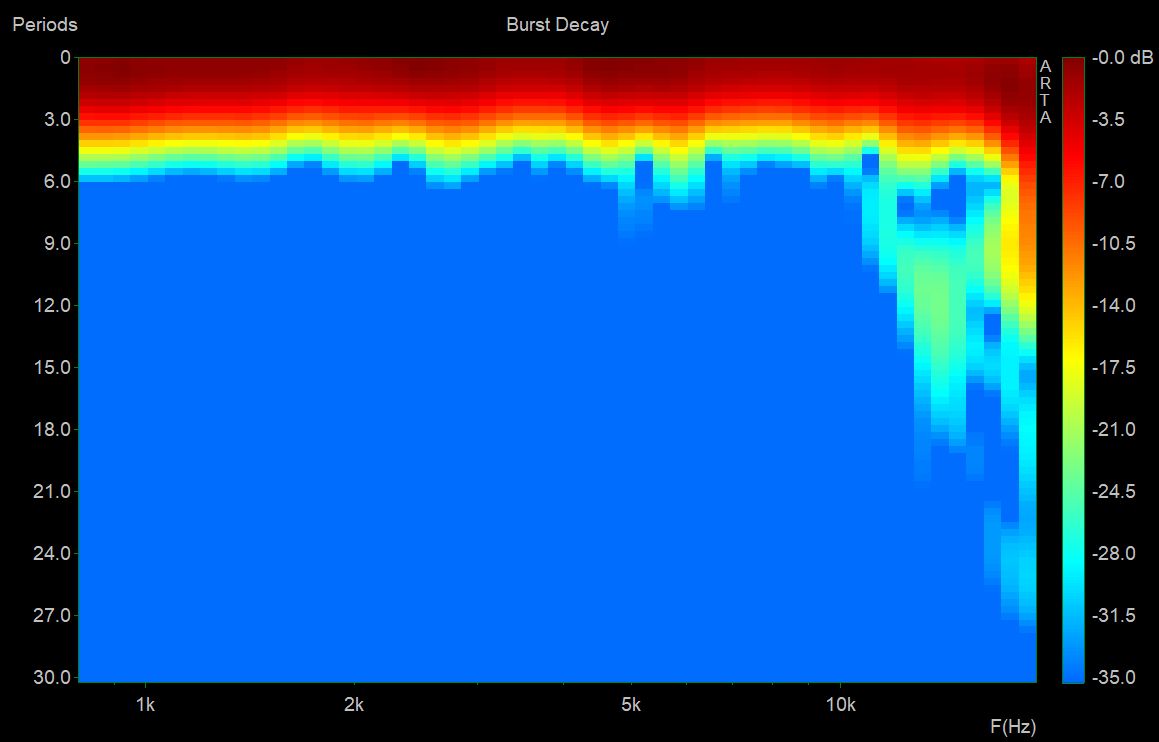
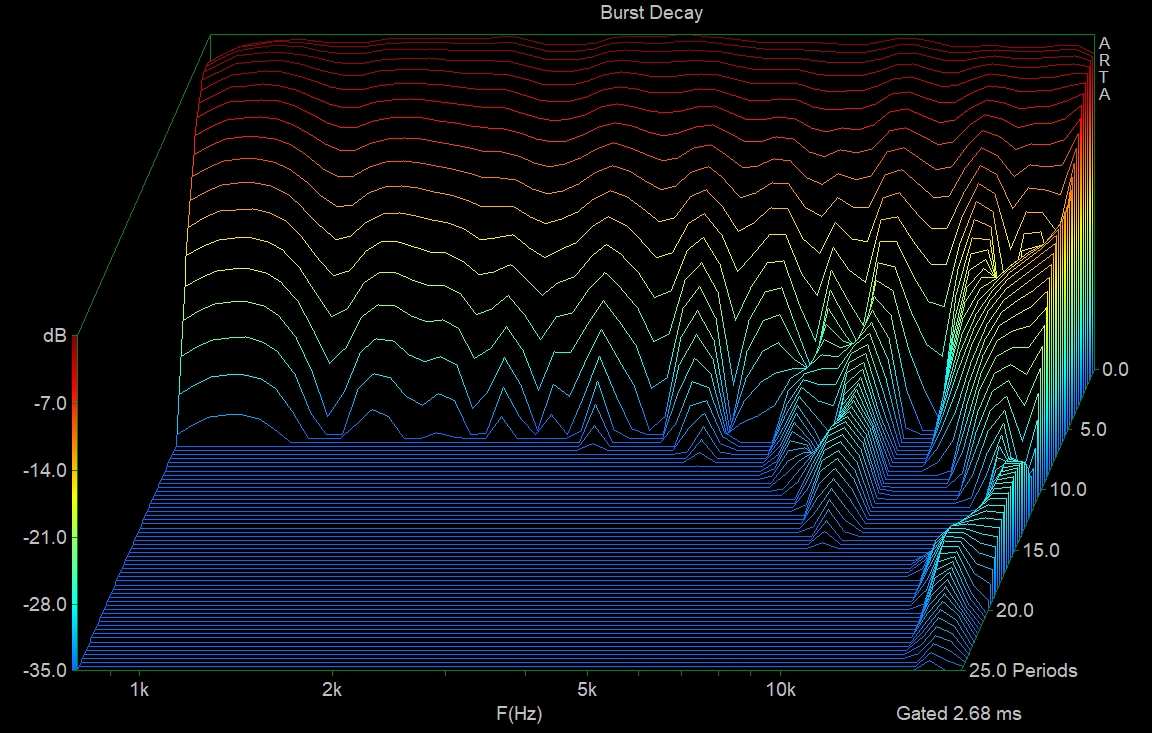
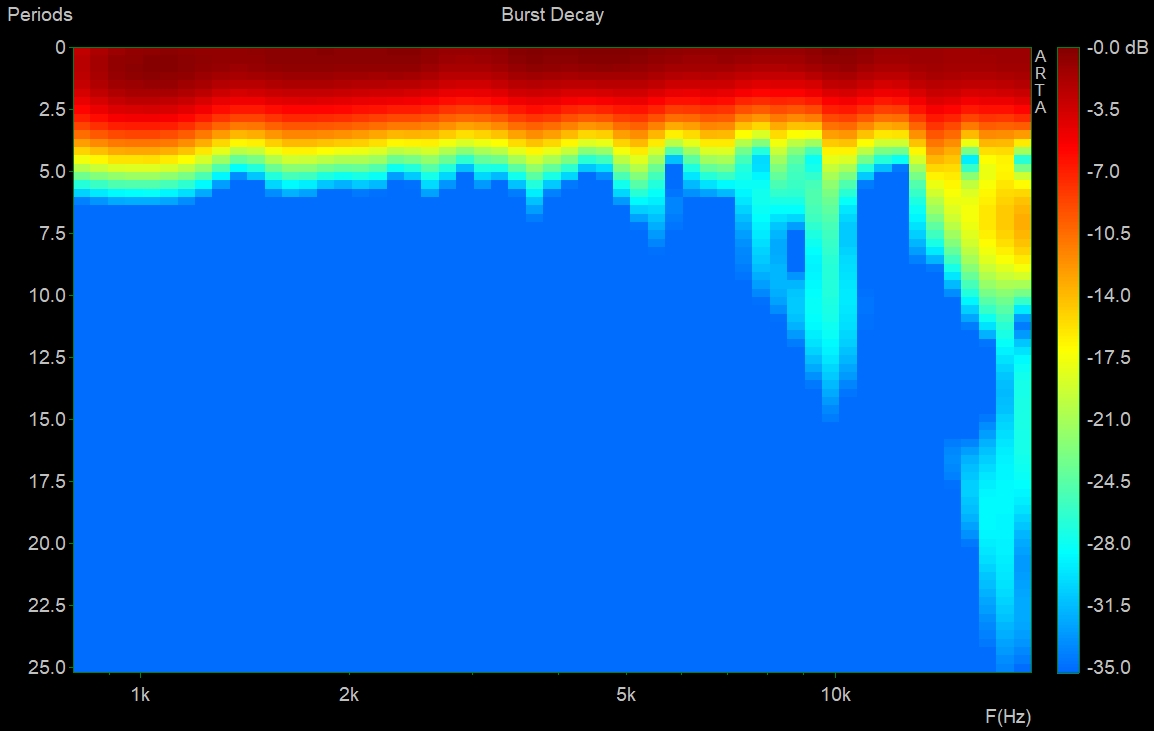
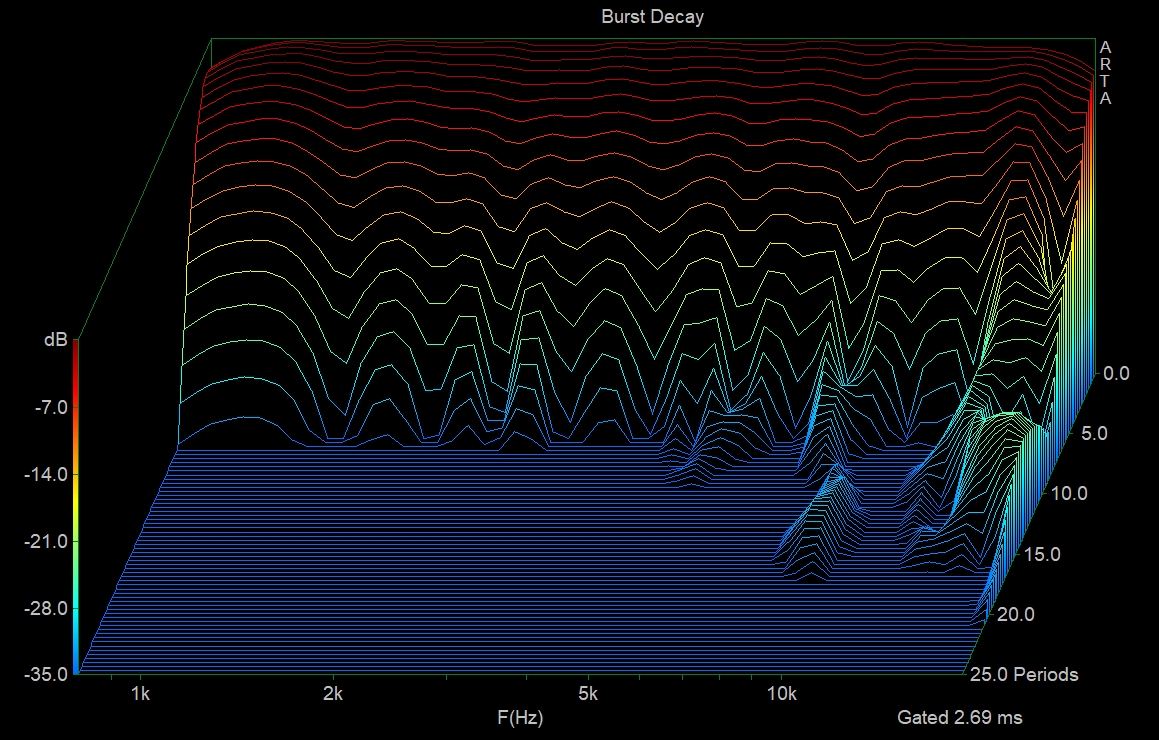
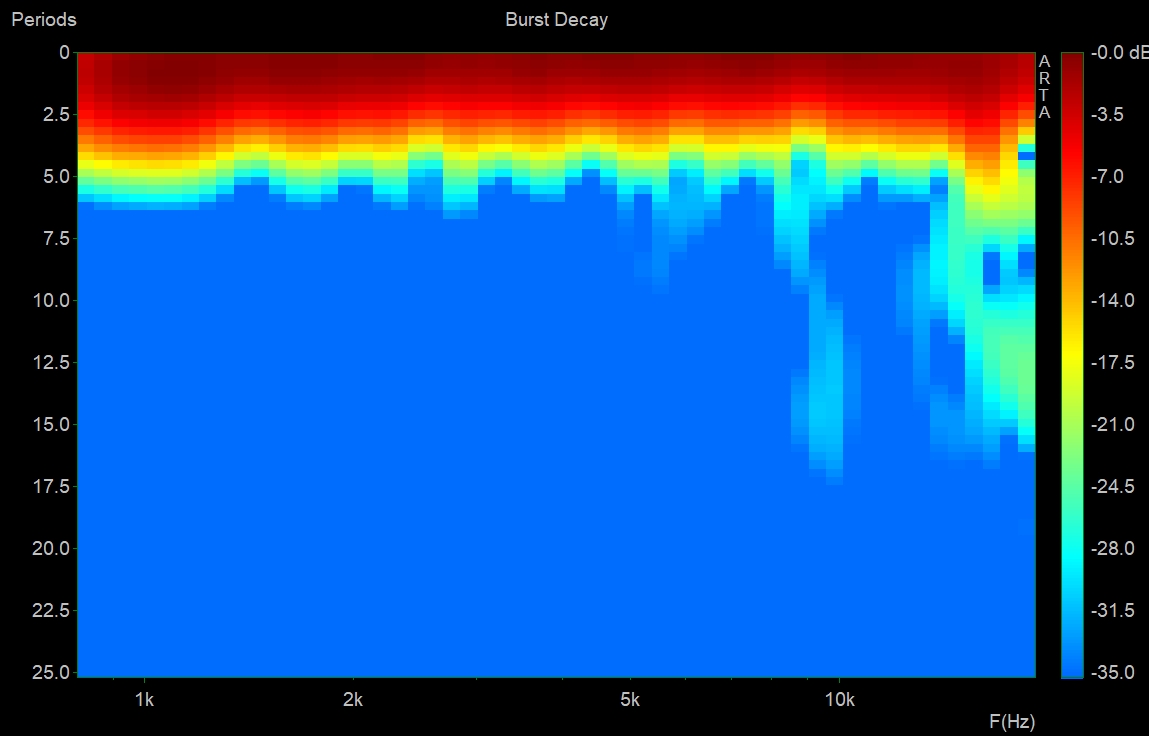
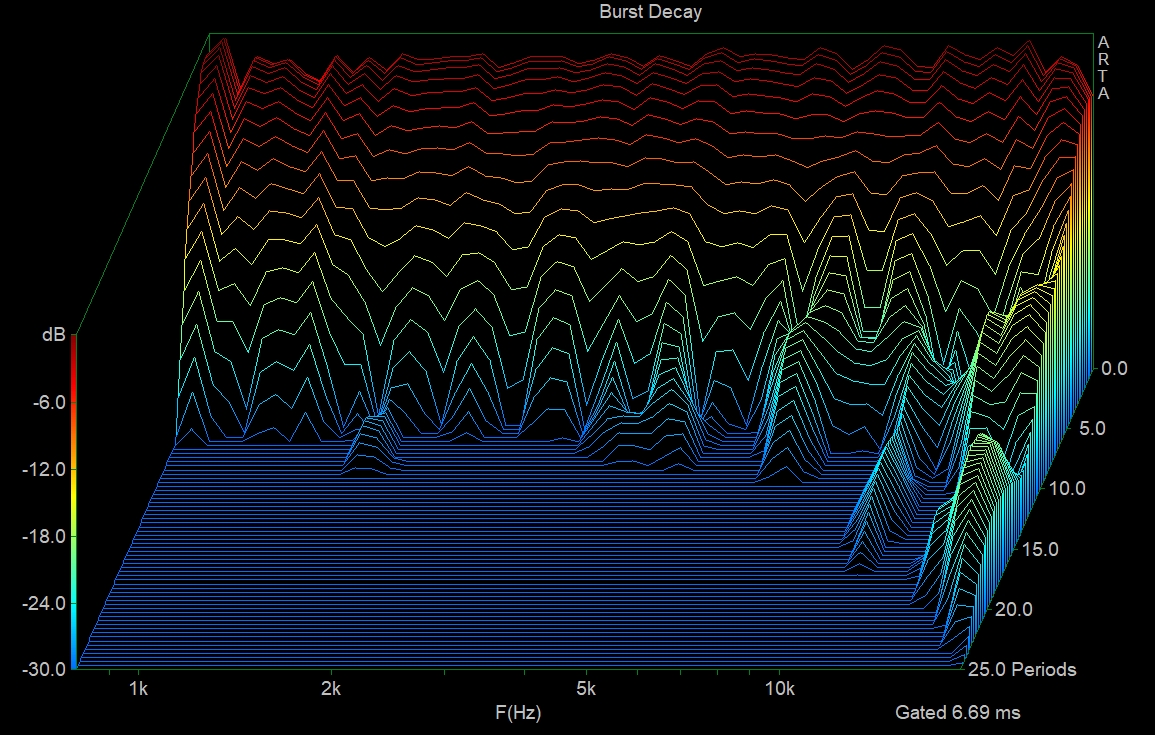
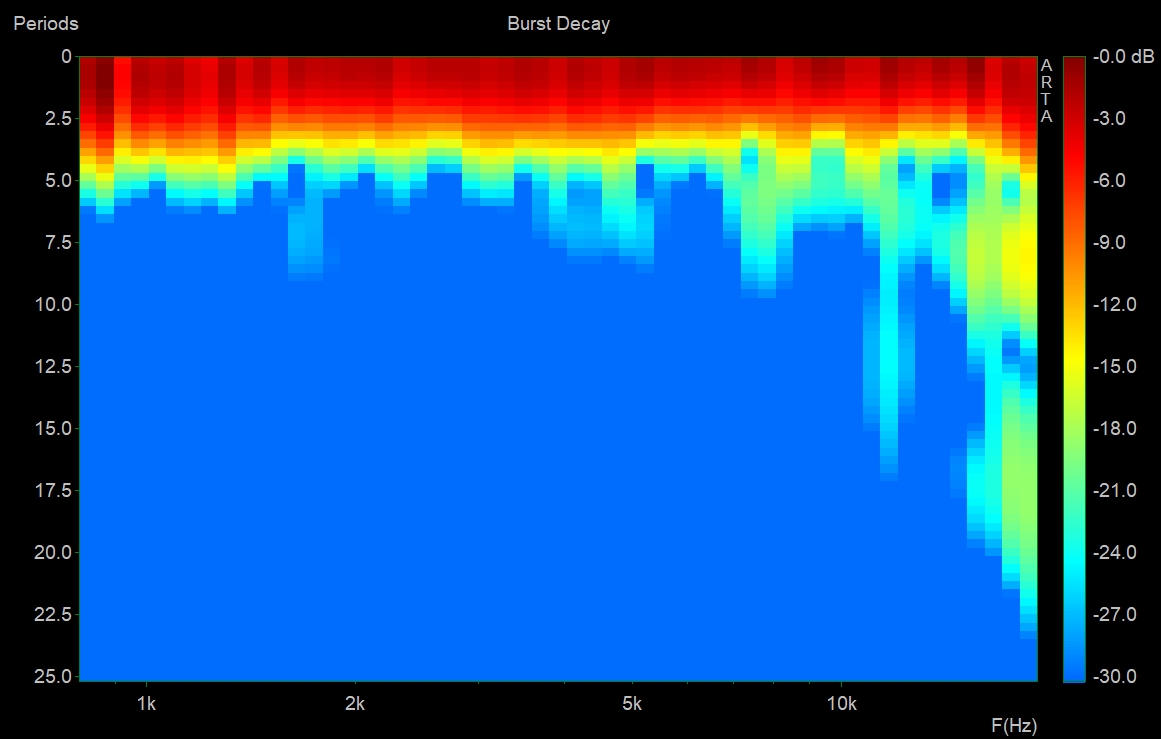
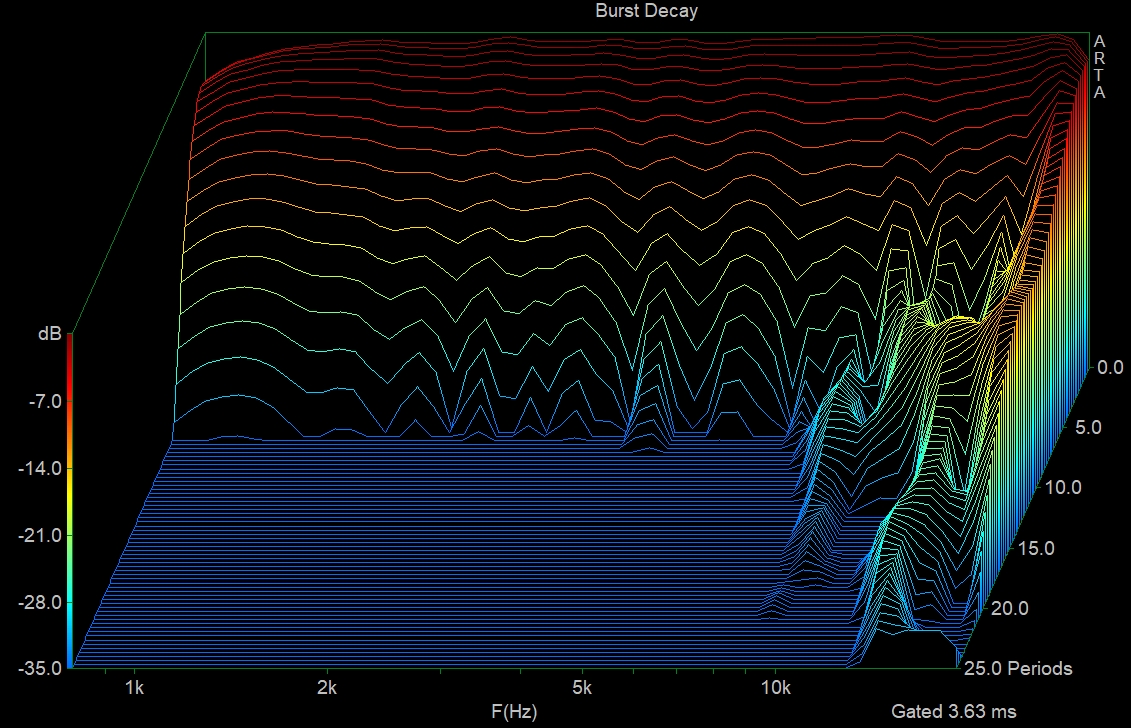
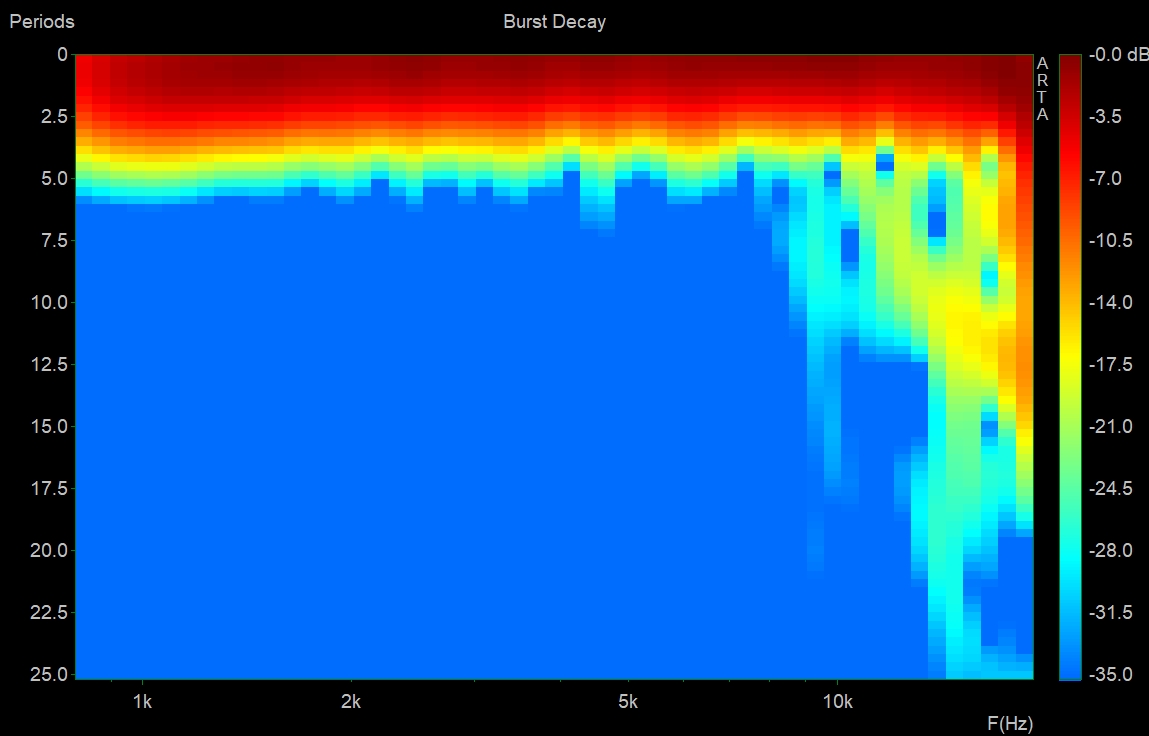
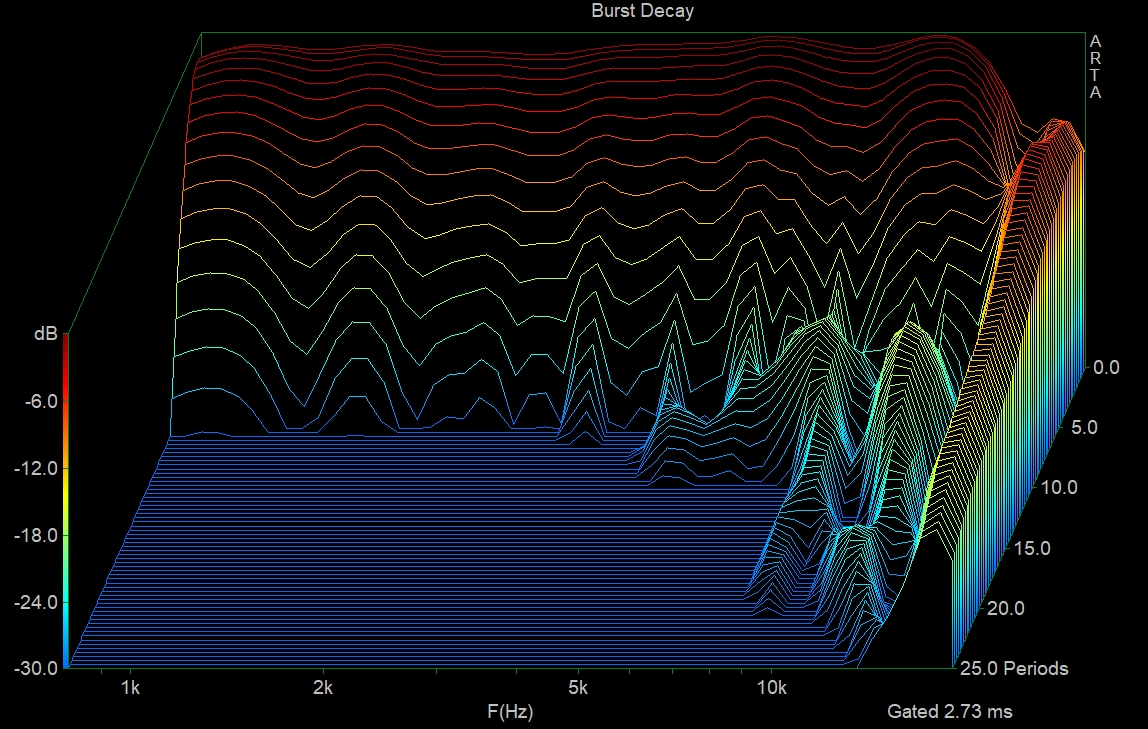
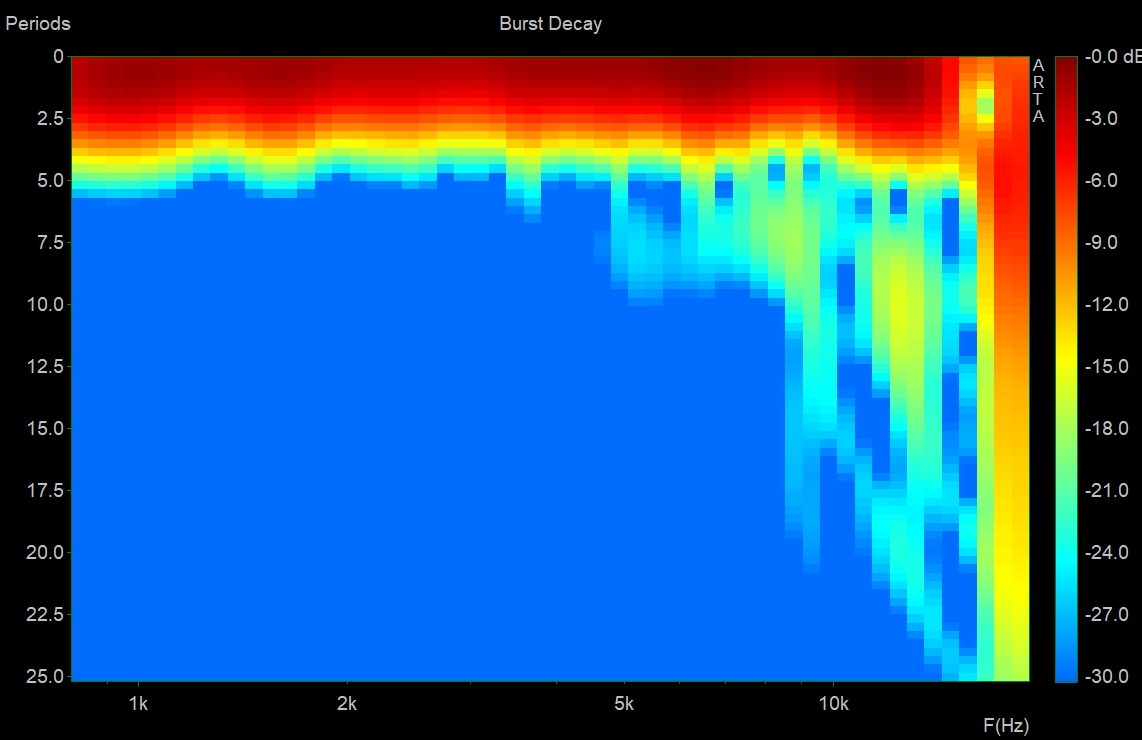
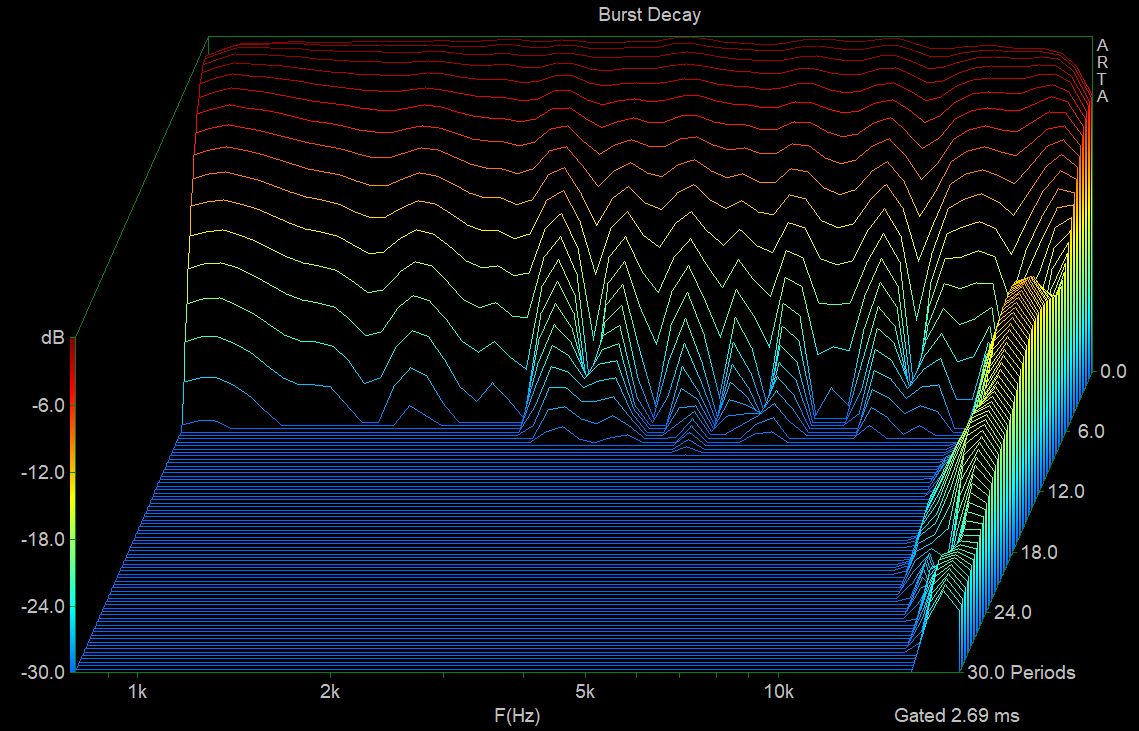
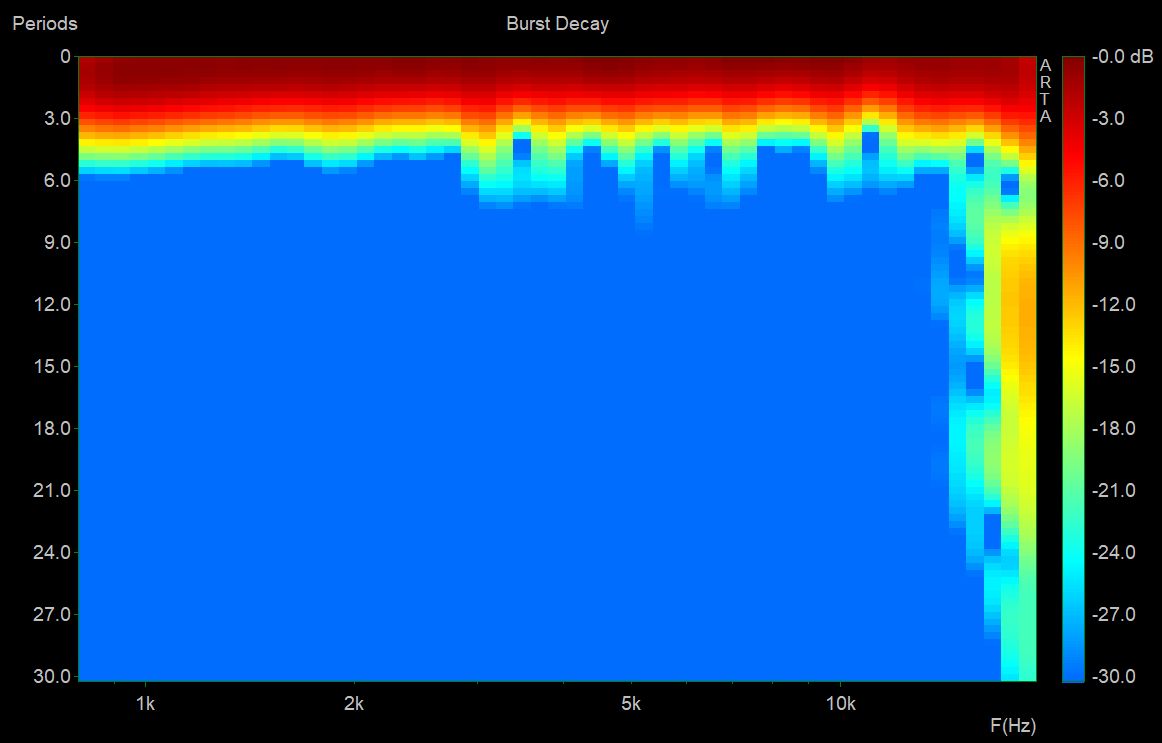
Nothing audible on 18Sound and BMS, but on the RCF it’s not very good even if it’s also not really in audibility range, the BMS 5530 is a champion on this test.
The BMS 4552 has a little problem around 10kHz and we will see later that that has an impact on the polar map, as always.
The Faital HF108R is not very good and we will see that this will not help for his polar measurement.
Polar Plot
Why show polar on different driver?
A horn starts from the principle that the compression driver is a perfect plane wave radiation on his exit.
But the breakup put the driver out of plane wave radiation as we have seen in breakup and his distortion.
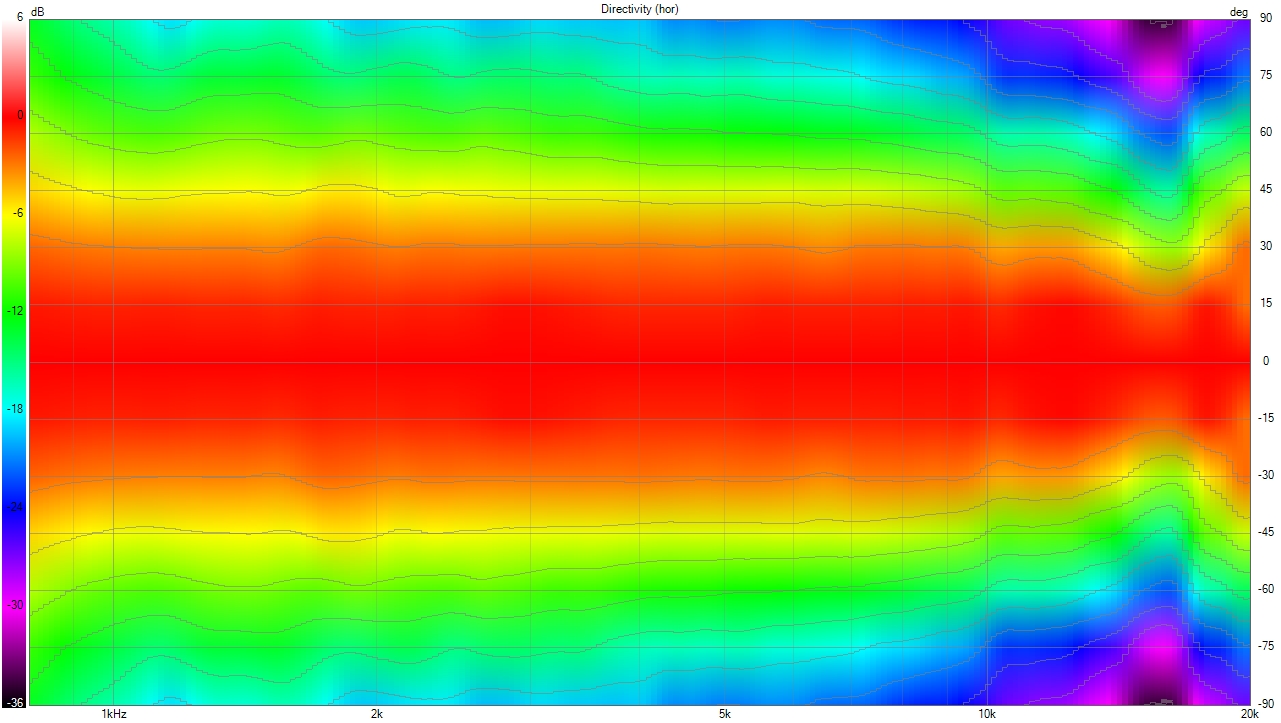
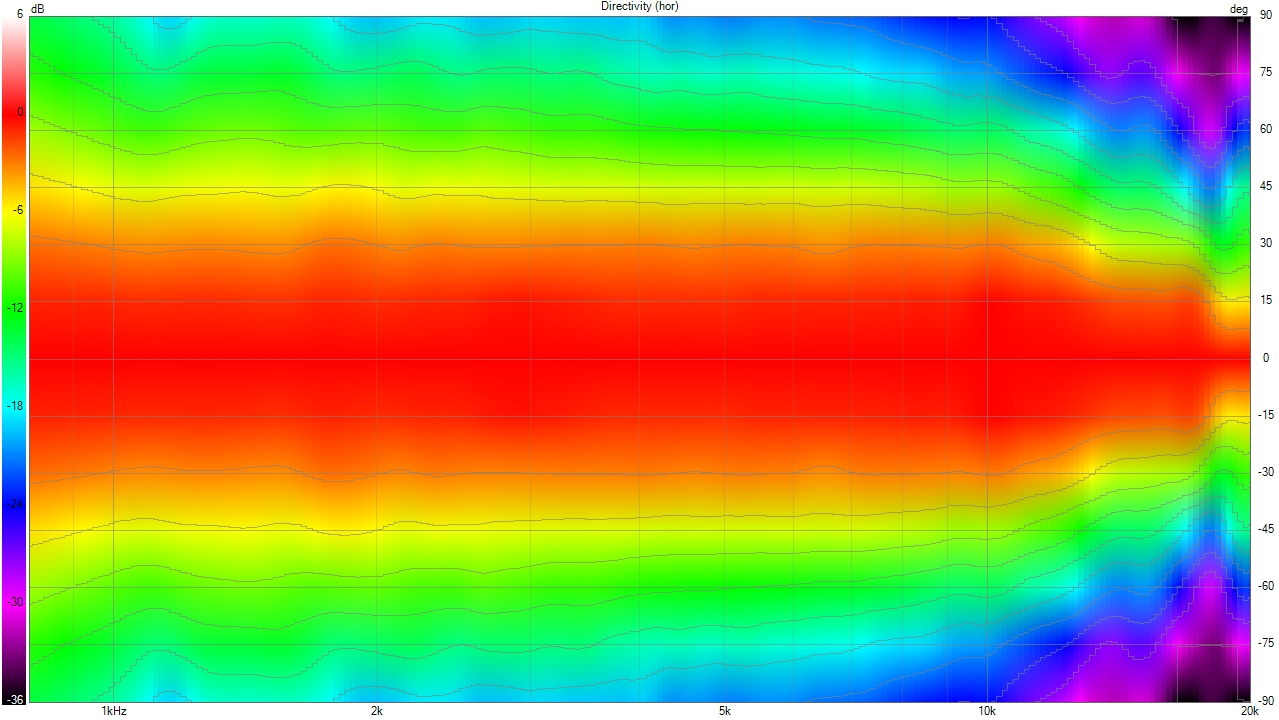
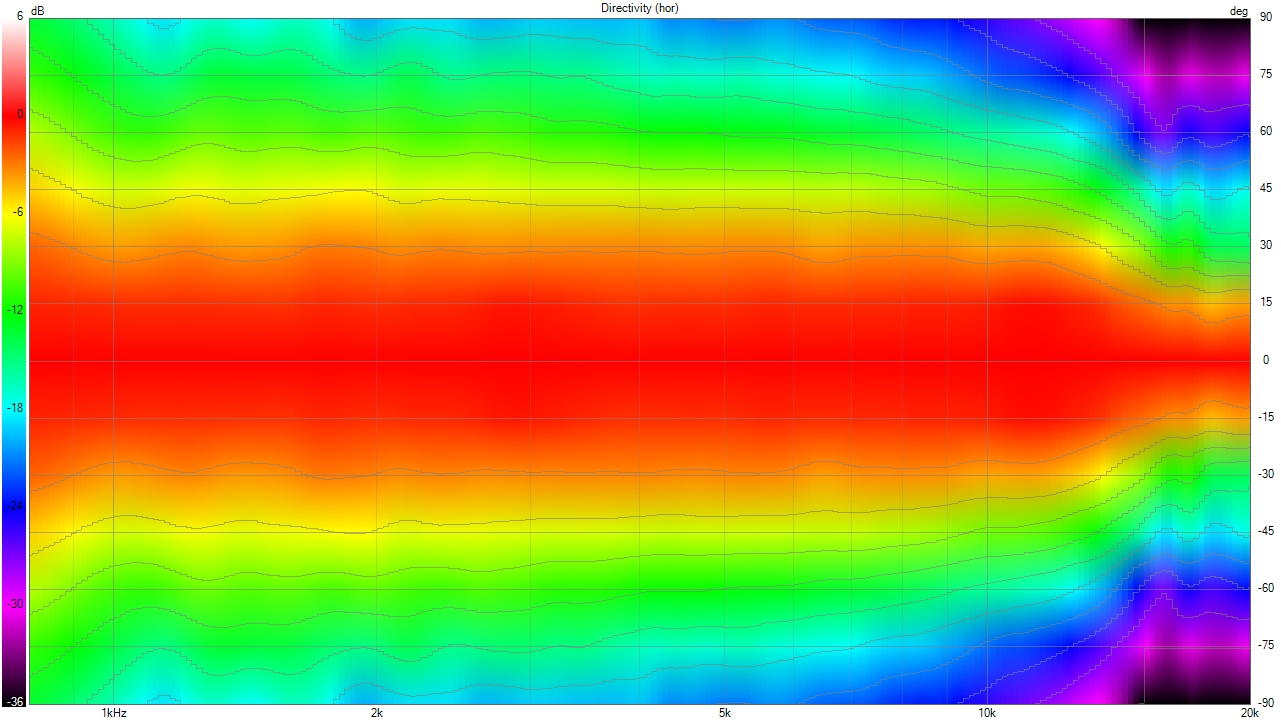
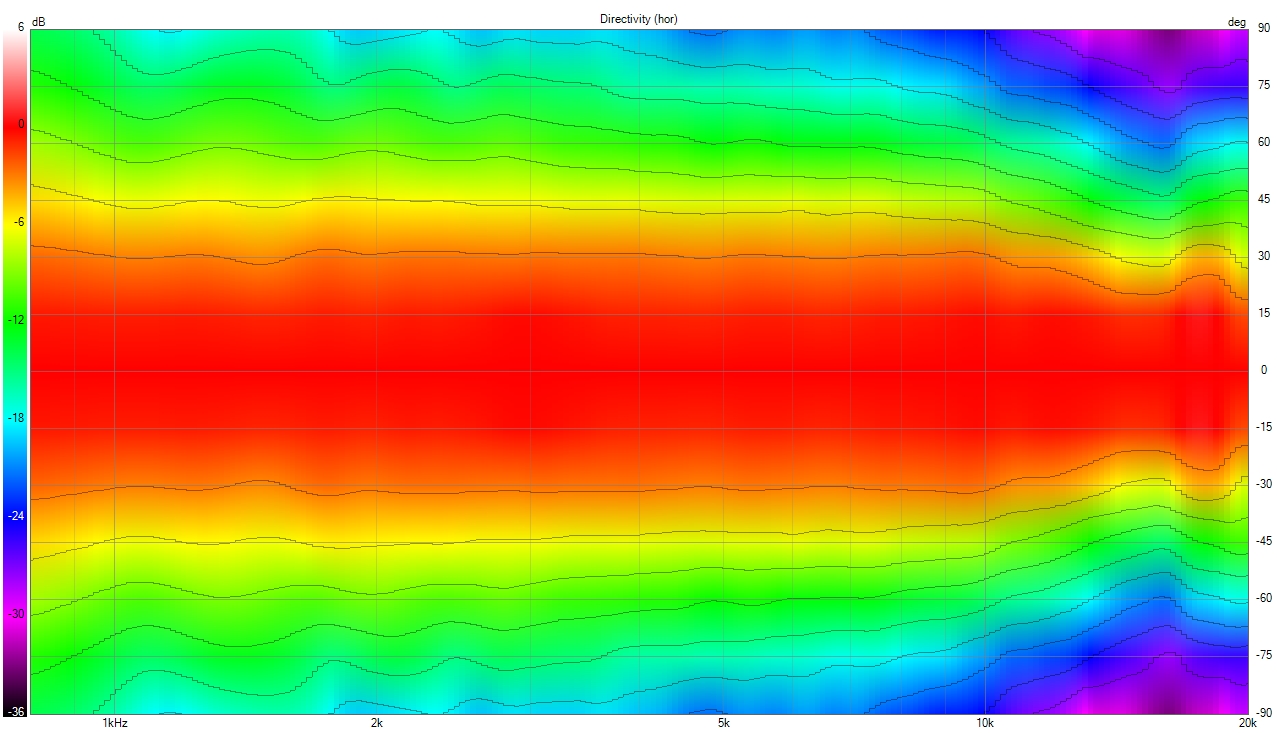
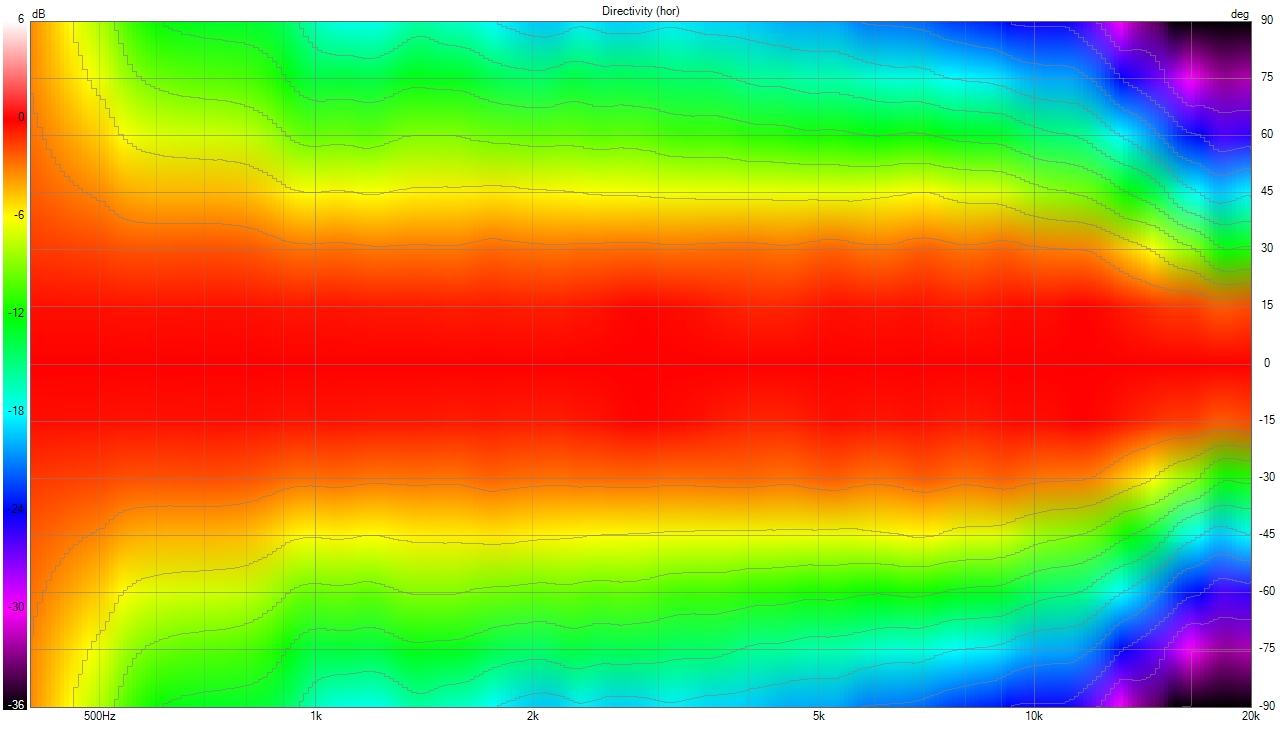
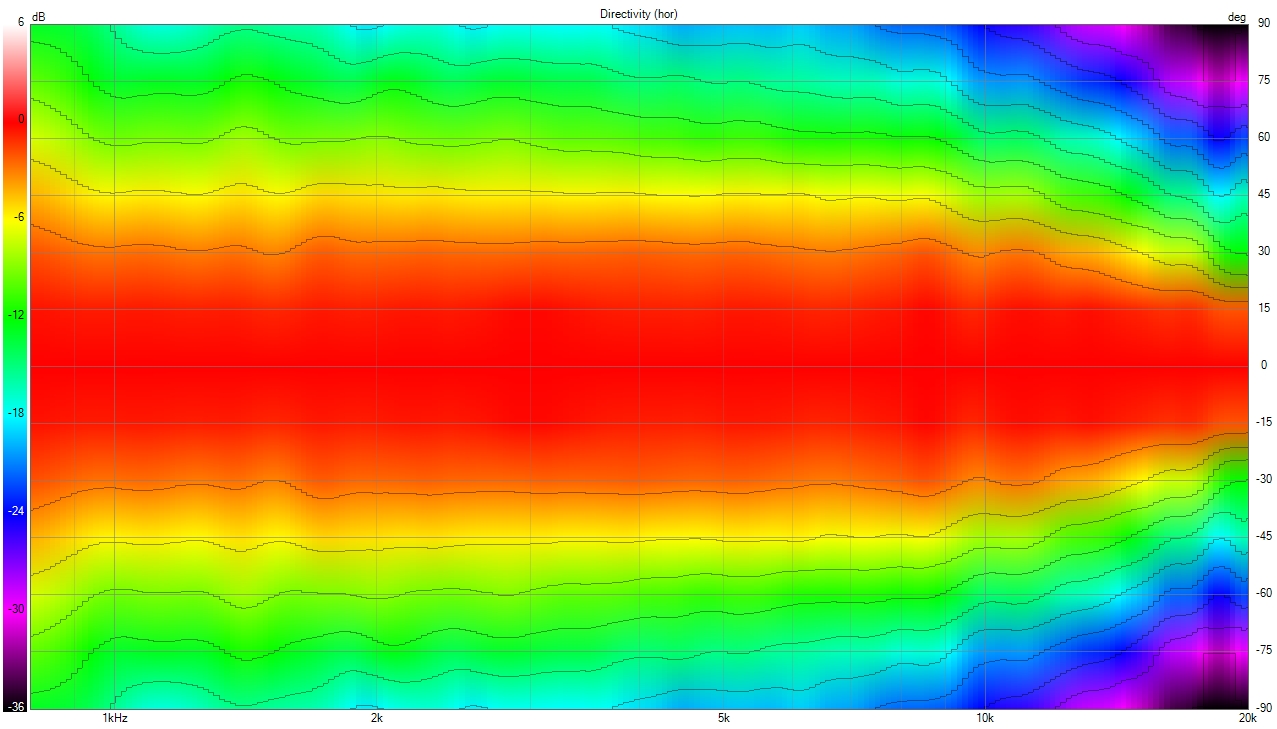
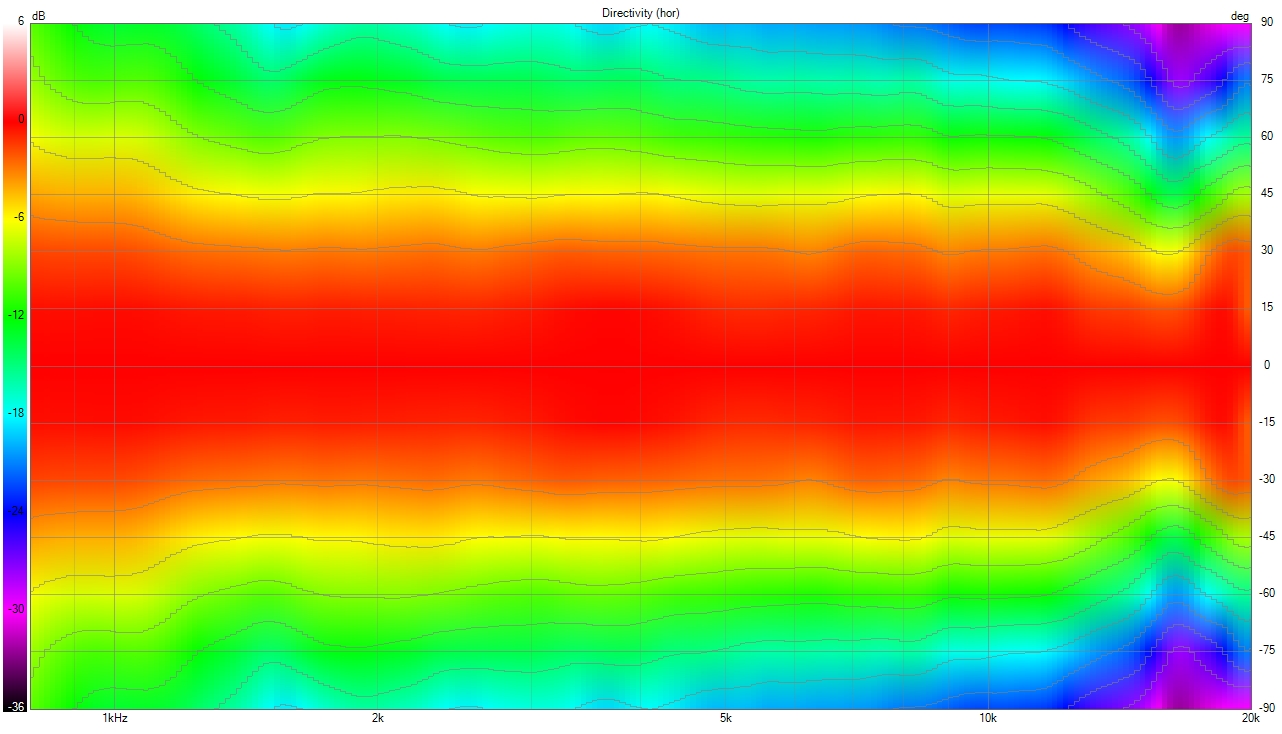
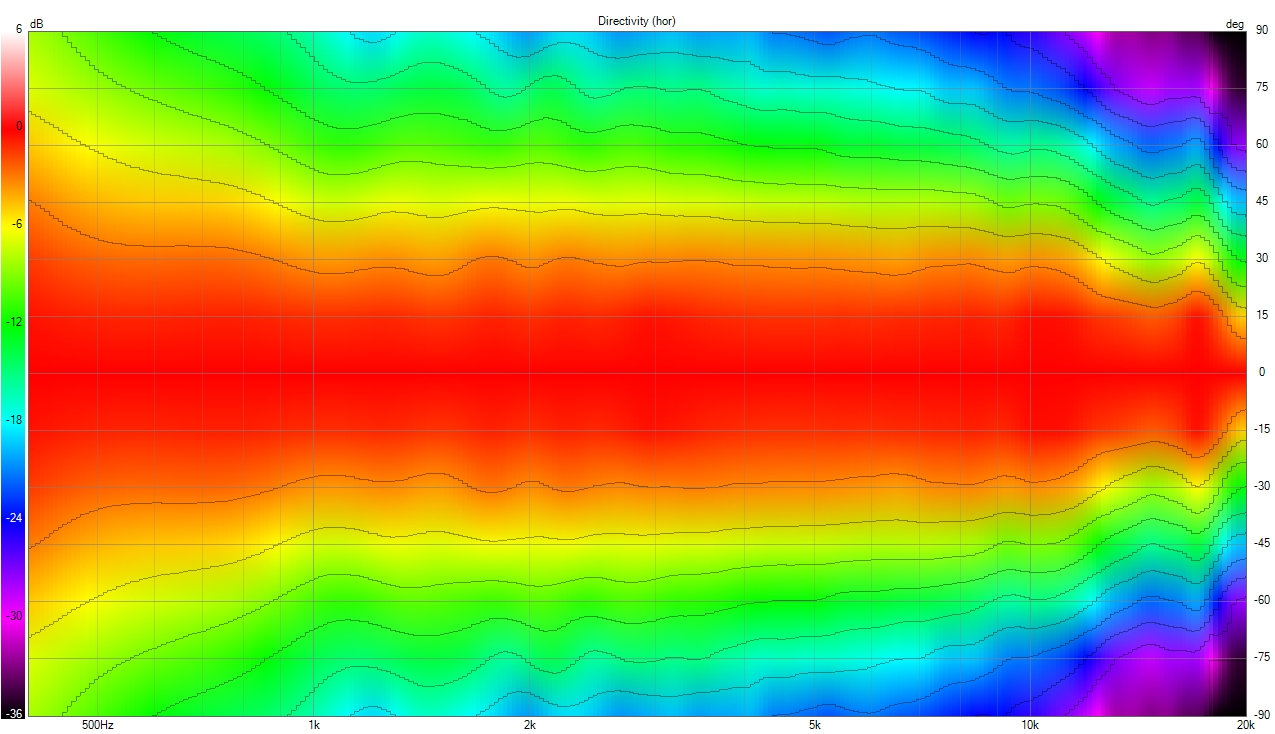
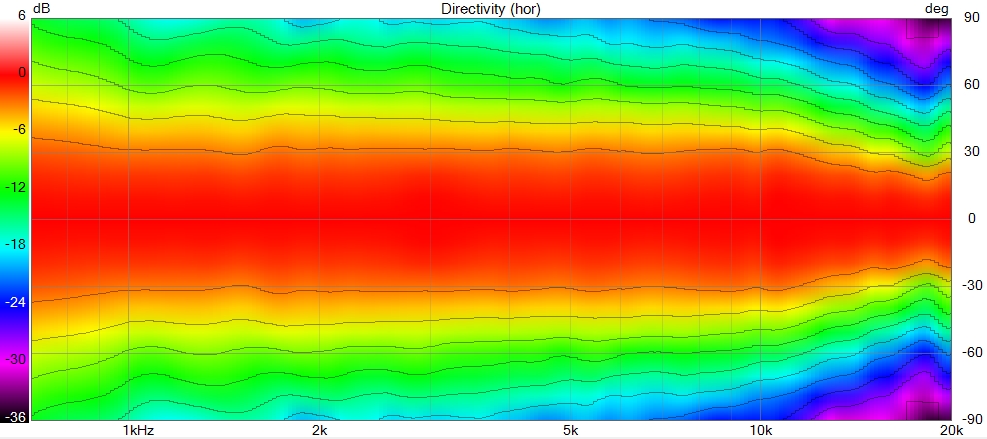
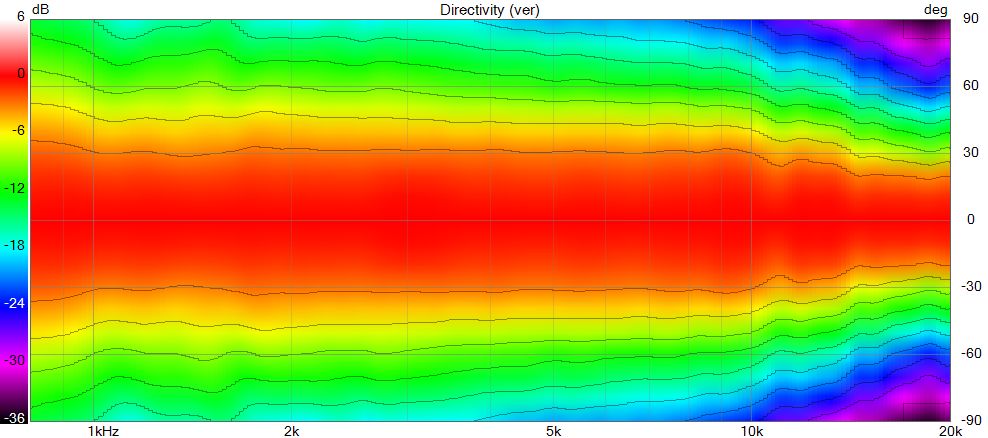
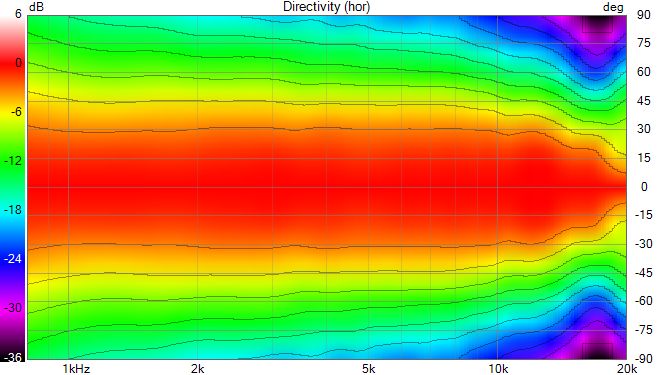
By analysing the moment when breakup occurs on a perfect wave propagation horn as the X-Shape X33 is we can detect when and how breakup affect wave-front propagation in the horn, and by deduction the quality of this propagation and the respect of plane wave radiation.
Polar on X-Shape X33
Polar conclusion
We can see a huge difference is very high frequencies if the diaphragm is not at the right height, after tuned diaphragm height on the ND1, his polars are better than 1095N, the 5530 and 4552 unit show a very low variation between unit so I let just one the both polar for each.
The RCF 350ND is not the better in this test, it’s a driver that goes out of plane wave radiation sooner than others, but on an X25 she goes out of plane wave radiation very high.
The BMS 4552 has a very little Time-domain problem around 10kHz as we see above, we can see that the new BMS 1" driver generation (the 5530) is a little bit better and that is linked to the Time-domain behavior so the plane wave behavior.
Diaphragm tuning impact
Polar plots offer the most precise method for detecting tuning issues, with an accuracy of 0.05mm (the height of the finest tuning ring). However, a simple sweep test can also provide valuable information.
If you observe all distortion harmonic orders centered at the same frequency, forming a distinct peak or ‘spade’ shape, this often indicates a diaphragm centering issue.
I may have encountered an unfortunate instance, as other customers may not have experienced the same problem out of the box. Furthermore, this type of issue can occur with any brand.
Dust, metal shavings, or particles in the voice coil can also exhibit similar symptoms. However, we will observe the distortion changing at each measurement, particularly at the low end, as the responsible element moves within the voice coil and changes position during each sweep.
Conclusion
The 1090 is a clear winner, followed by to the 1095N and ND1-TP. The BMS 5530 also performs very well, as does the RCF CD350 (which we prefer over the RCF 350ND).
The 1090 is particularly suitable for passive filtering or reducing the need for EQ. It is also less expensive than the 1095N, while its polar response remains good and representative of that of a titanium diaphragm.
The 1095N has a more violent breakup compared to the 1090, and its temporal advantage is very small, falling below the threshold of human hearing. It also shows a more pronounced slope in the high frequencies, making the 1090 the best compression driver in this test, ahead of the BMS 5530.
If very high SPL is needed and the system requires cutting very low, the 1090/1095N and the ND1-TP have a slight edge over the BMS 5530.
The surprise is the RCF CD350—this inexpensive driver combines high-frequency breakup with some spreading. Its plastic diaphragm reaches high frequencies like a hard diaphragm but with a bit of the spreading typical of plastic ones, though much less than usual. This highlights a plastic diaphragm that is stiffer than normal, offering an excellent balance between rigidity and damping.
It has a maximum crossover point at 1150Hz with a steep slope. Its “partially” spread breakup is visible in the polar response around 11kHz but remains very controlled. Temporal measurements also show some movement, but it is surprisingly well-managed for a full 1.75" plastic diaphragm.
The Faital HF108R is fine, even if there are better options.
The 4552 is good and is an older generation of the 5530; we can see the improvement in plane-wave radiation behavior and time-domain measurements.
The BMS 5530 annular diaphragm does a good job in terms of breakup and plane-wave radiation (as seen in polar measurements), as is always the case with annular designs. However, this comes with slightly more second harmonic distortion at 1kHz due to the smaller diaphragm surface compared to standard diaphragms. If very high SPL is required (e.g., in a nightclub), it is recommended not to use an annular diaphragm.
The Celestion CDV1 exhibits very good distortion performance and extends relatively low in frequency. However, its time-domain behavior is significantly degraded. This driver benefits from the advantages of its plain plastic diaphragm, which allows for good low-frequency extension, but typically results in less ideal time-domain measurements due to the inherent characteristics of non-annular plastic diaphragms.
The best 8/9.5" woofers for be used with these compression drivers are here: 8/9.5 inch woofer test.

The 1.4 Compression Drivers
We will test several 1.4" exit compression driver in this article:
- 18Sound ND3ST-16: 3 inch titanium diaphragm
- 18Sound ND3SN-16: 3 inch Nitrided titanium diaphragm
- 18Sound ND3A-16: 3 inch Aluminium diaphragm
- 18Sound 1480N: 3 inch Nitrided titanium diaphragm
- 18Sound 1460: 3 inch titanium diaphragm
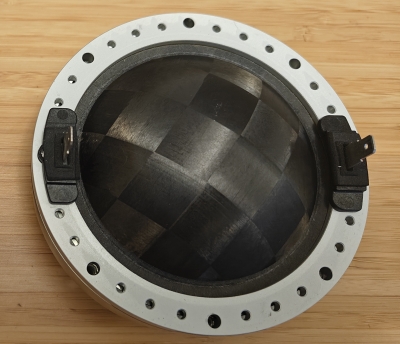
- FaitalPro HF1440-8: 3.4 inch Ketone annuar diaphragm
- FaitalPro HF1460-8: 3 inch TeXtreme (woven carbon) diaphragm
- FaitalPro HF144-8: 3 inch Ketone diaphragm
For interpreting results about break-up, it is advised to read the breakup article.
In essence: Stiffer materials, like metals, will exhibit a higher but more violent break-up point, while materials with inherent damping, like treated paper or composites (Ketone), will break up at a lower frequency but affect a wider range of frequencies.
It’s all a mater of compromise, the larger the diaphragm is lower he can goes (theoretically) and the sooner the breakup will occur.
The horn used for testing is a X-Shape X34 with his return for doesn’t be impacted with midrange narrowing or beaming.
SPL
Here is the SPL alligned on 1kHz witout EQ of crossover
On X-Shape X34:
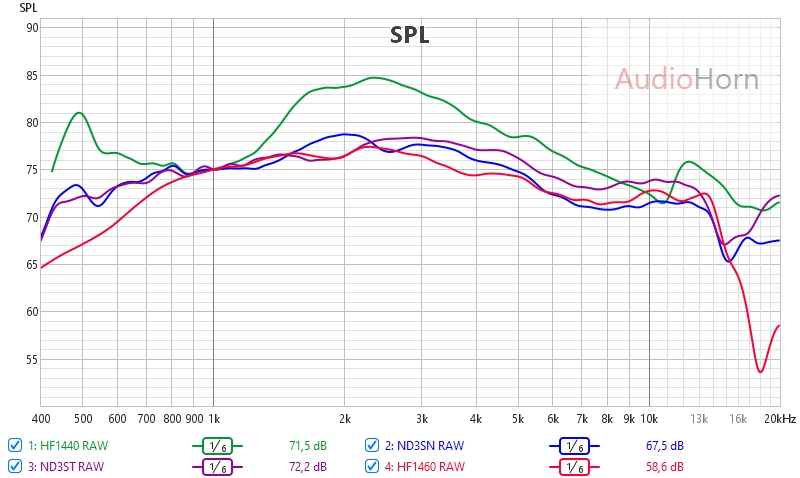
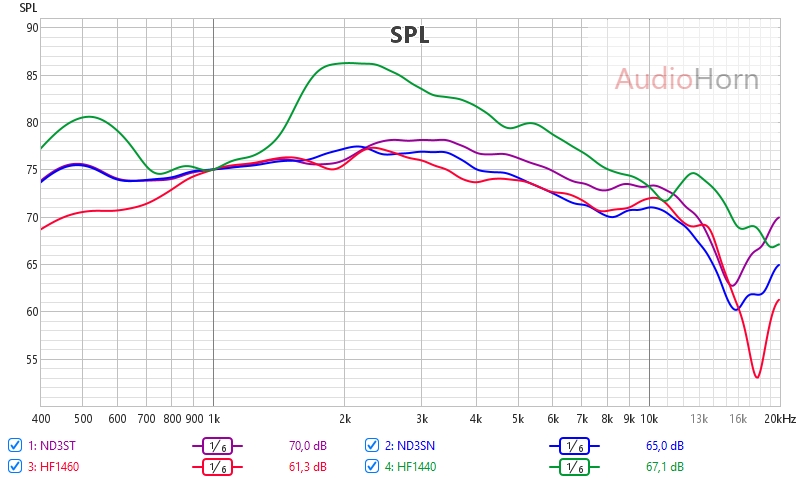
There is no notion of “more” or “less” energy here. The driver provides an initial energy, and the horn distributes it, as explained in detail here: Energy in horns.
If a driver showed a flat response without EQ, it would simply indicate that the horn is not constant, which is exactly what we do not want.
So the typical “mountain-shaped” response is normal. The only unusual aspect is the high-frequency roll-off of the HF1440 (Keton), but this will later prove to be a significant advantage in another type of measurement.
At the low end, the HF1460 (Carbon) clearly shows that it does not naturally extend very low. However, this can actually be beneficial in the context of a passive crossover.
Additionally, the HF1440 (Keton) exhibits almost exactly the same response on an RCF 950. As mentioned earlier, when the coverage remains constant and similar across different horns (X-Shape X34, MX-Shape, RCF950…), the on-axis response also remains consistent.
The idea that a compression driver must be specifically “matched” to a horn is largely a misconception. What can be matched, however, is the compression chamber flare to the horn. In this case, all drivers use relatively slow flare geometries.
Since the total energy remains the same, no fundamental change in response should be expected from this aspect alone.
The HF144 shows an unusual dip around 2.5 kHz. This clearly originates from the driver itself and requires EQ. There is also a sign of strong breakup mode higher in frequency. This will become more evident in the temporal measurements.
Ultimately, the main evaluation criterion will be distortion measurements after applying EQ to achieve a flat response.
Distortion
Here is an overlay of all the compression drivers. The measurement is taken at 31.5 cm from the horn mouth. Every driver is EQ’d flat, and the level is 95 dB SPL (referenced at 1 m).
A point about audibility
Distortion refers to unwanted components added to the original signal by a system. In audio, these components are often perceived as harmonics and their audibility depends strongly on masking effects and human hearing sensitivity.
For a more detailed explanation of how distortion becomes audible, see our article about audibility and masking effect. The following is a short overview of the key ideas.
H2 (2× the fundamental frequency) is closer to the fundamental than H3 (3× the fundamental frequency), and the closer this unwanted component is to the fundamental, the more it tends to be masked by the masking effect of that fundamental.
Moreover, when this unwanted energy moves above roughly 8 to 12 kHz, it enters a region where hearing sensitivity drops significantly:
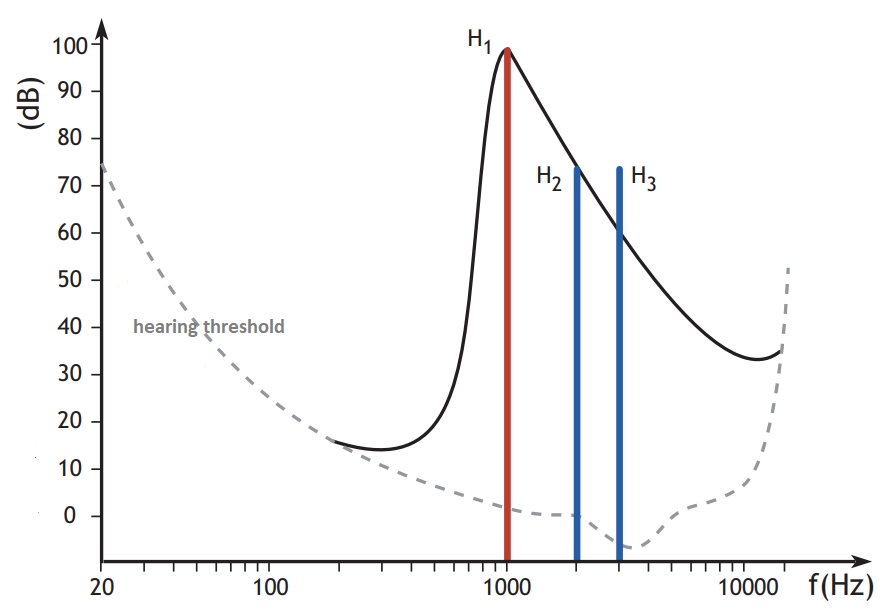
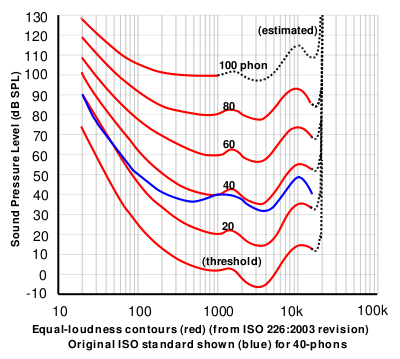
As a result, some high-frequency increases in H2 are not actually audible and typically require more than ~2 or 3% in the low range to become noticeable, whereas for H3 this threshold is closer to ~0.3%. This threshold is dependent on the audibility of the harmonic frequency itself (harmonic order × fundamental frequency).
This is why attention should primarily be focused on the low end through the mid section of the measurements, keeping in mind that the upper boundary of this mid region will move lower as harmonic order increases.
H2
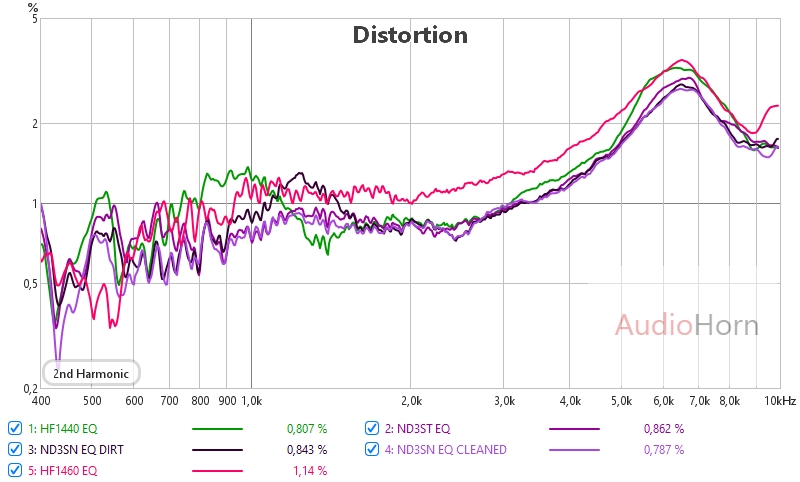
The 18Sound are partculary good here, the two Faital a little less but everybody is bellow 3%, so almost not audible.
In the higher frequency range, the harmonic falls into a less sensitive region of the hearing system and is therefore not audible.
H3
H3 is the most important component to look at when evaluating distortion.
Top 4:
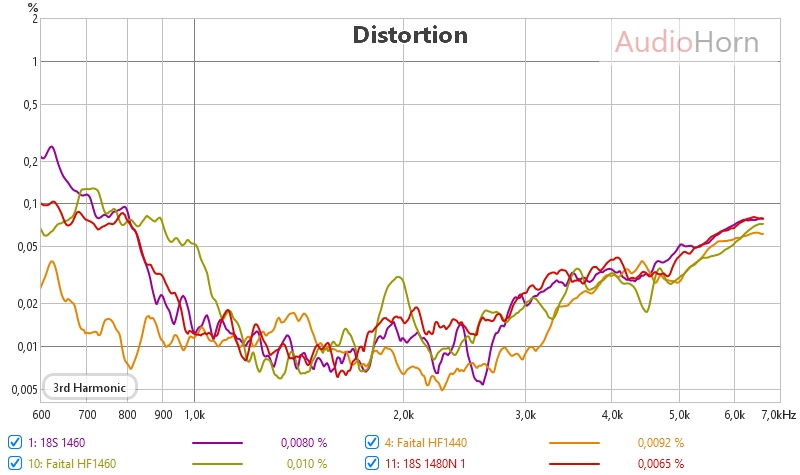
Here we see a major advantage of the 3.4" Ketone diaphragm of the Faital HF1440: it extends lower without forcing. On the contrary, the Faital HF1460 does not naturally go down as low, and in comparison we can observe more H3 at the low end.
Note that I am showing the best measured response for the HF1440, and some units may not perform as well.
The 18Sound 1460 and 1480 are very good performers.
Non-leading results
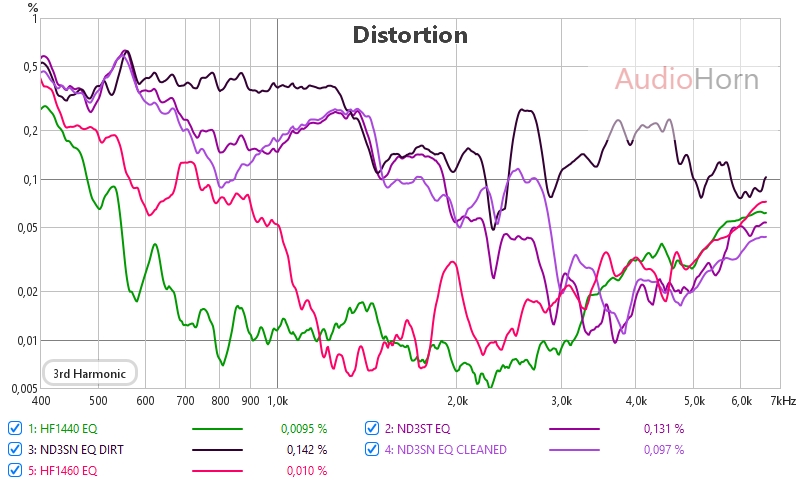
The three 18Sound ND3 drivers are almost identical. They all pass the ~0.2% H3 threshold, which is where distortion starts to become audible.
The ND1460 and ND1480 perform better compared to the ND3 family, which is somewhat surprising.
In the 1" range, the 18Sound ND1 is very close to the 18Sound 1090 or 1095N, all are excellent performers.
The Faital HF144 is also close to its limits, and shows significant H3 distortion relative to its SPL behavior, with variation between units.
Temporal Behavior
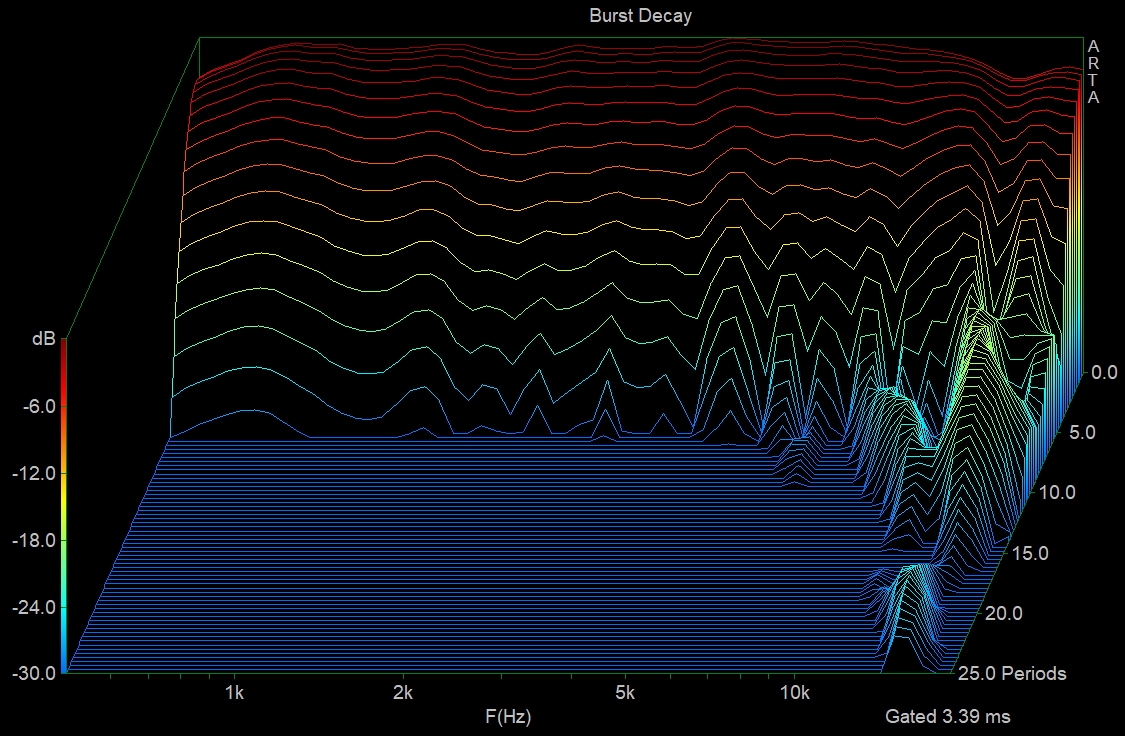
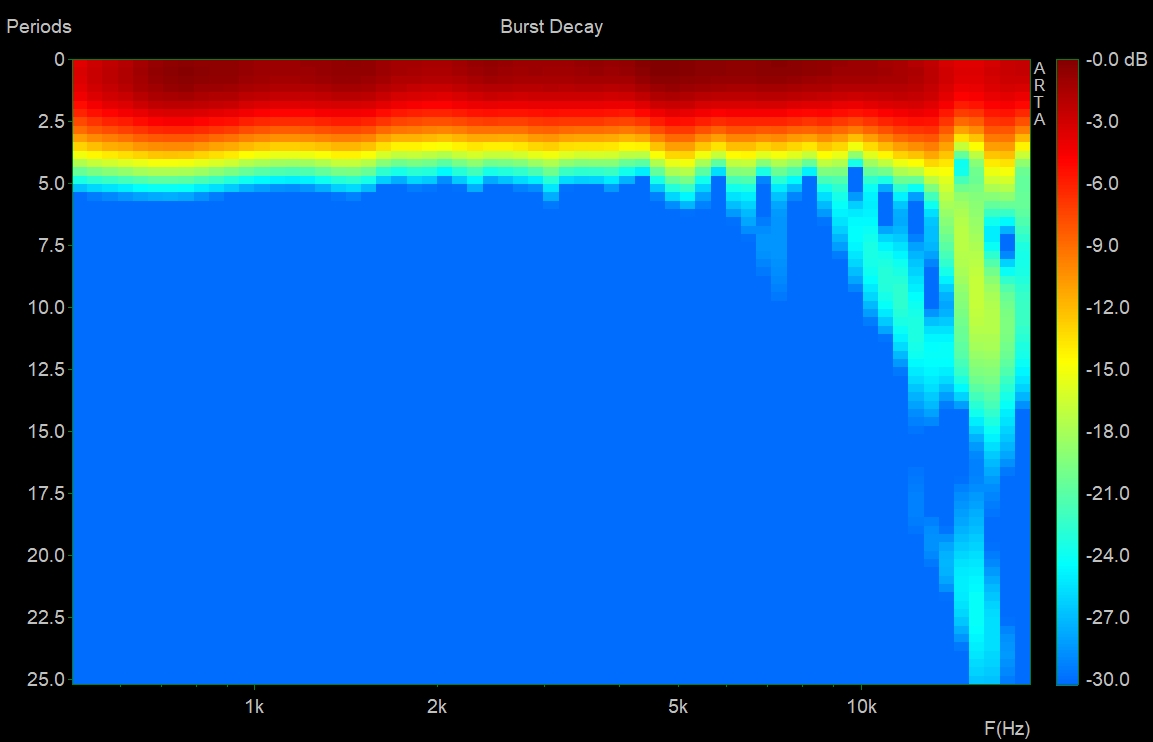
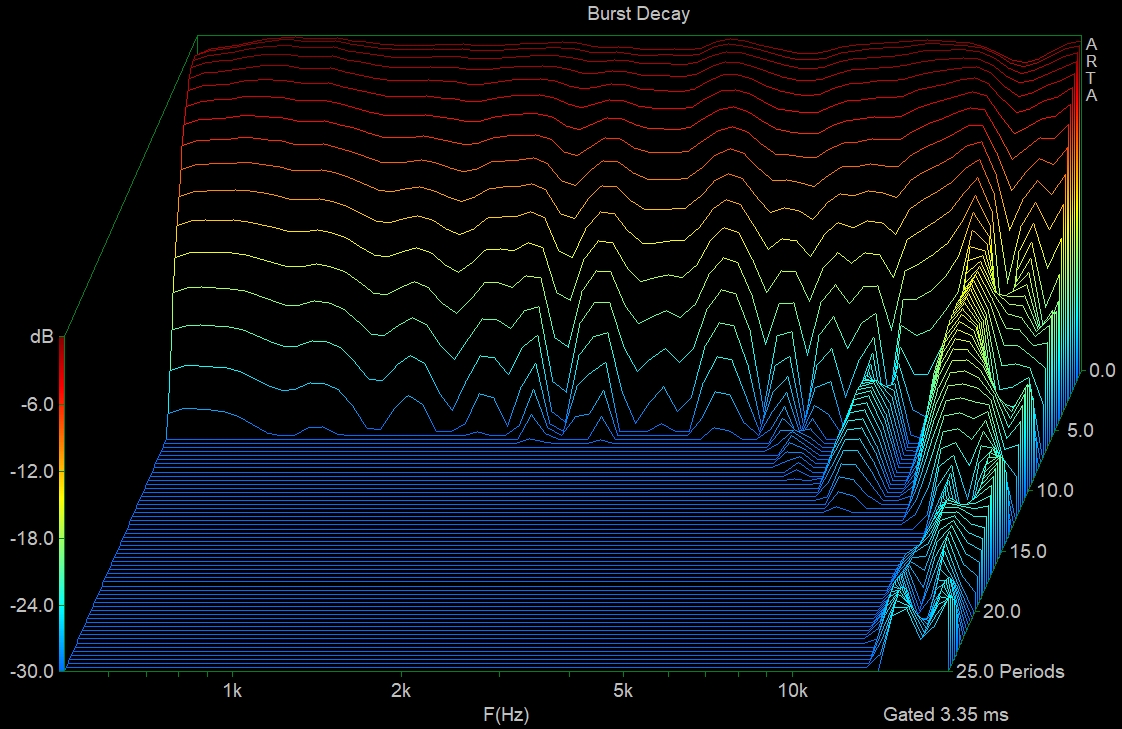
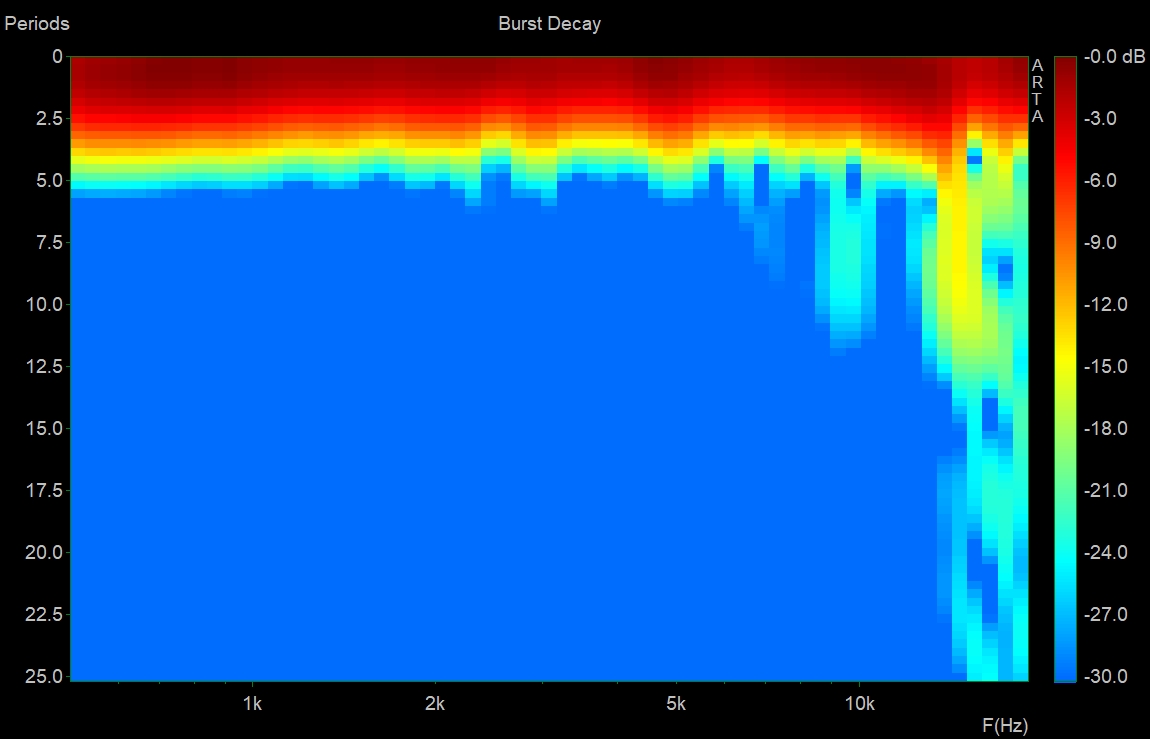
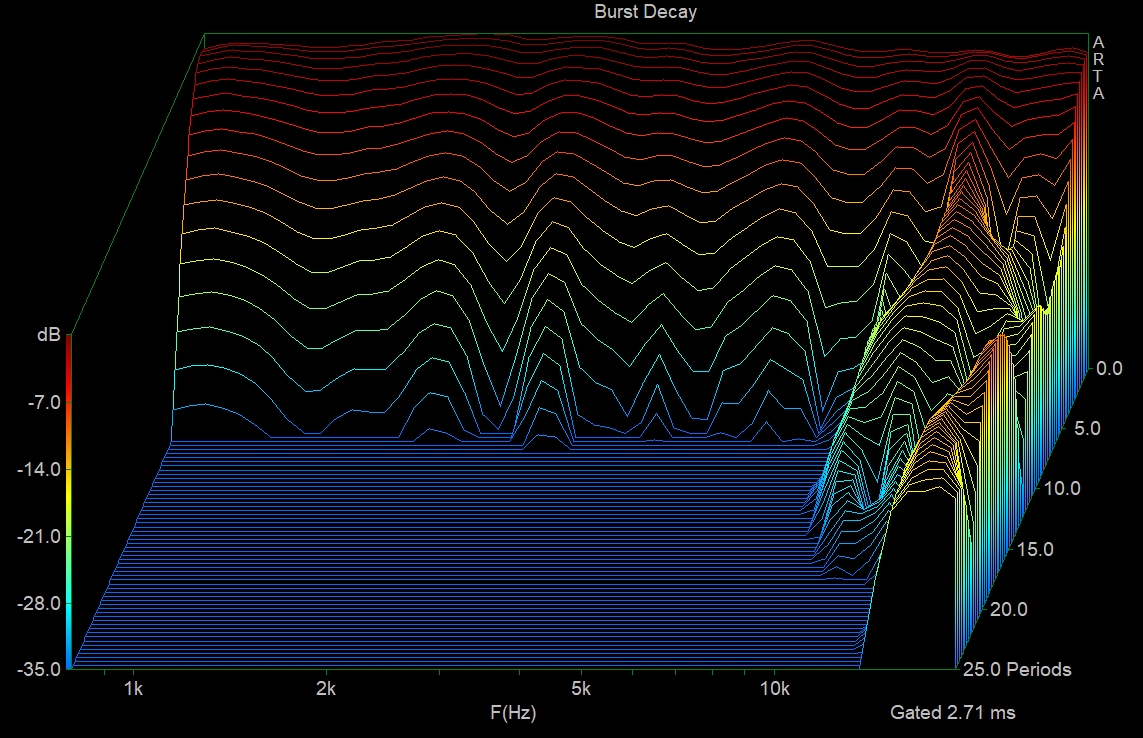
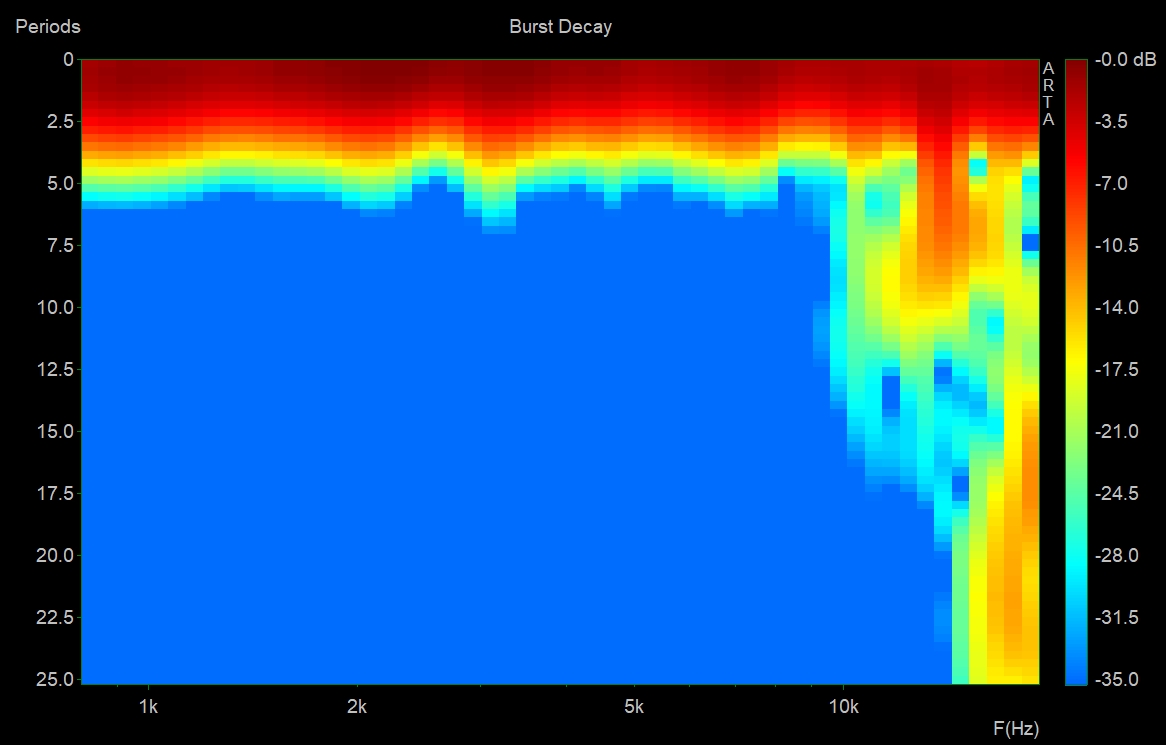
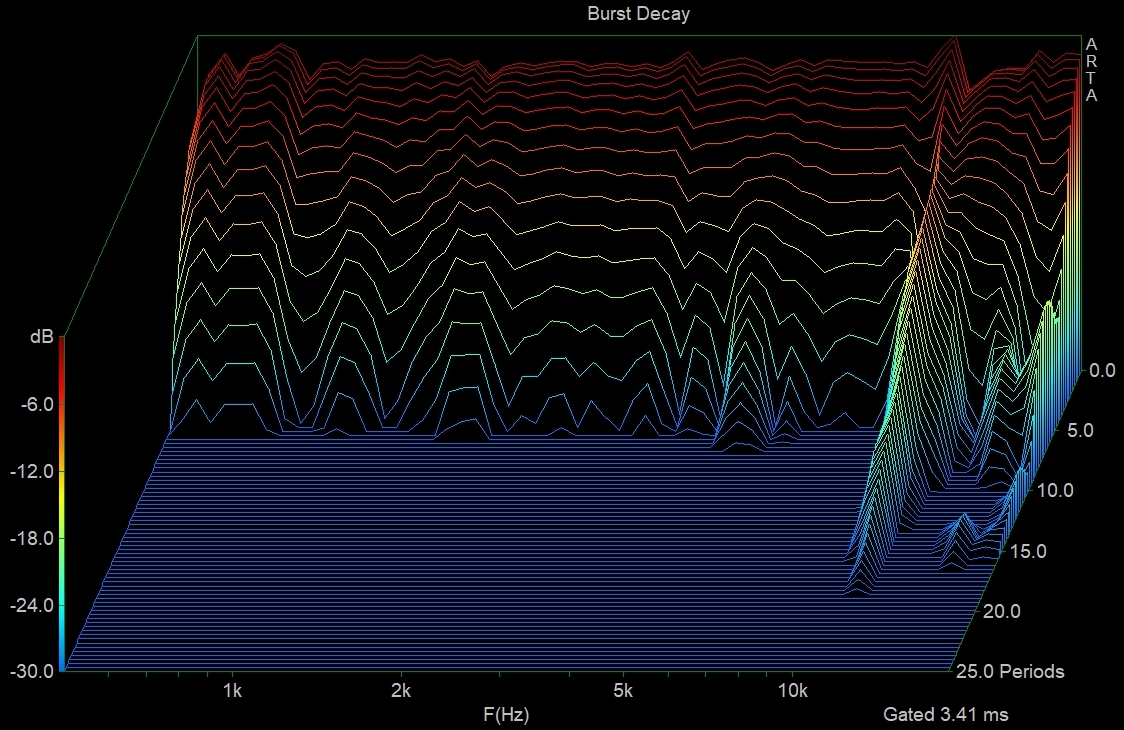
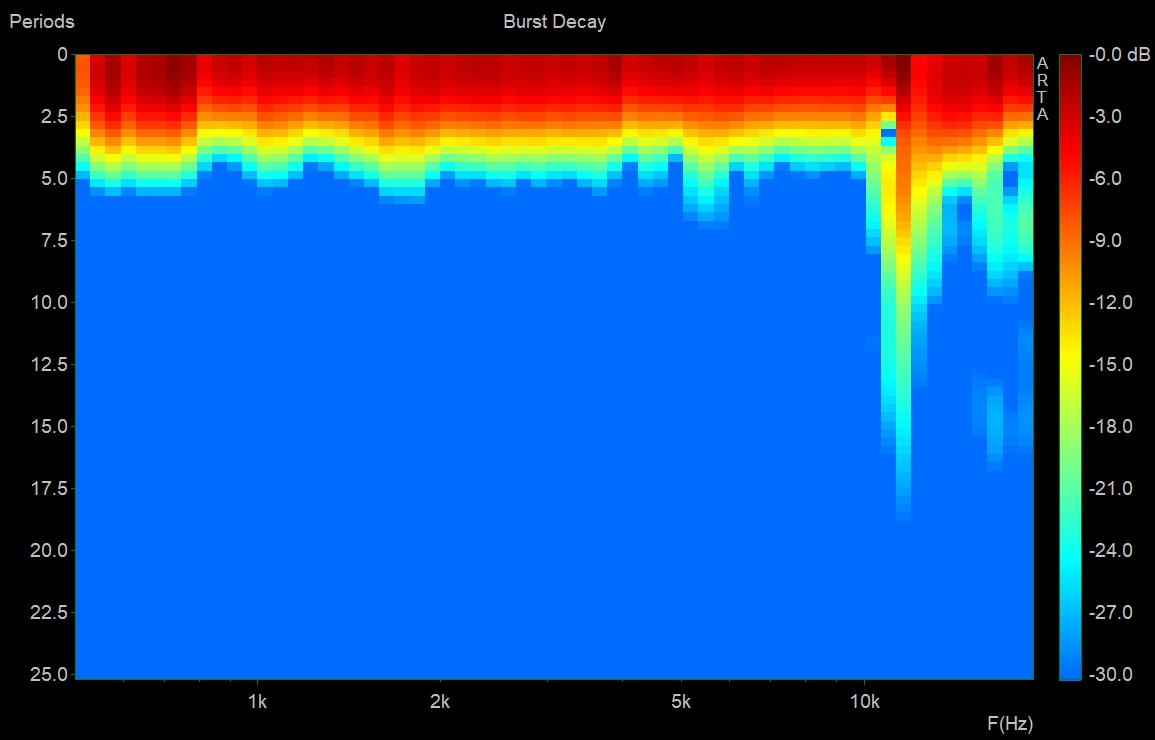
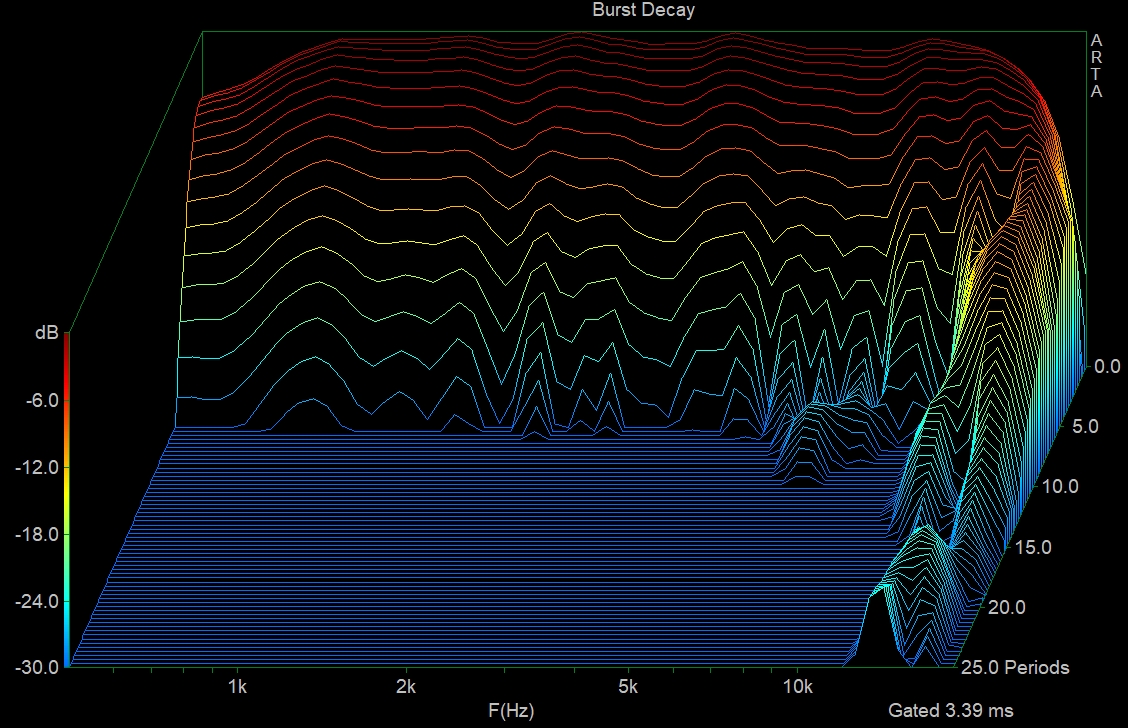
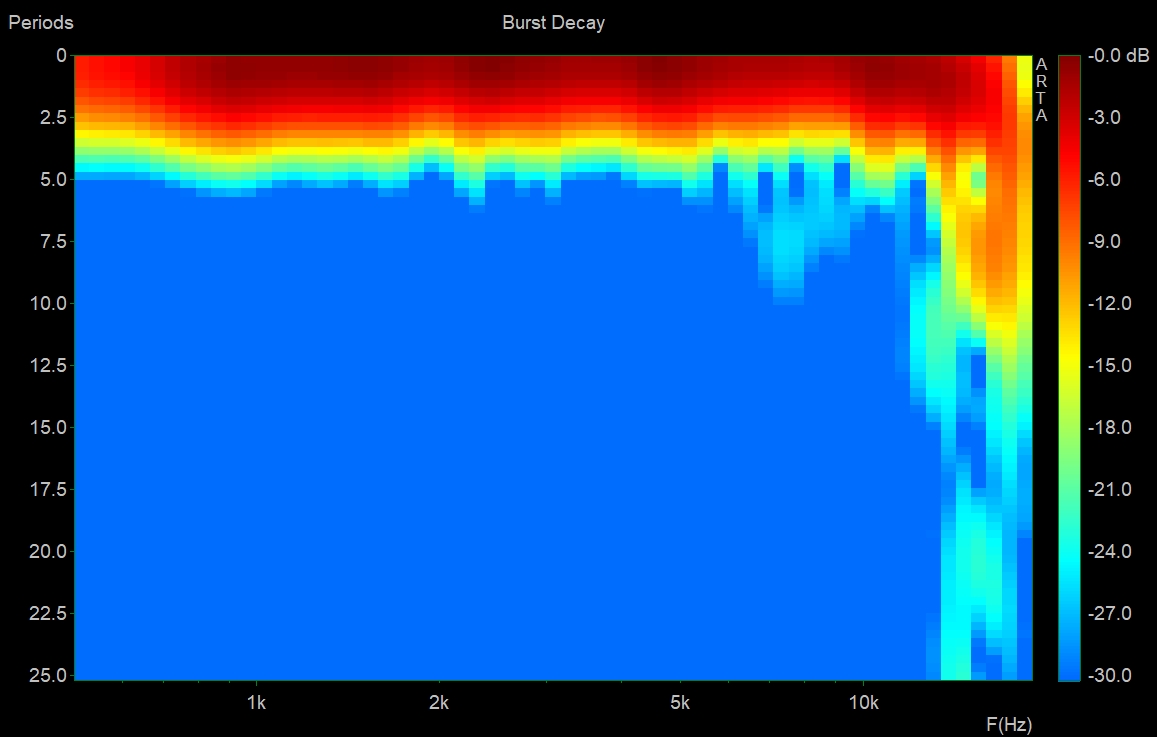
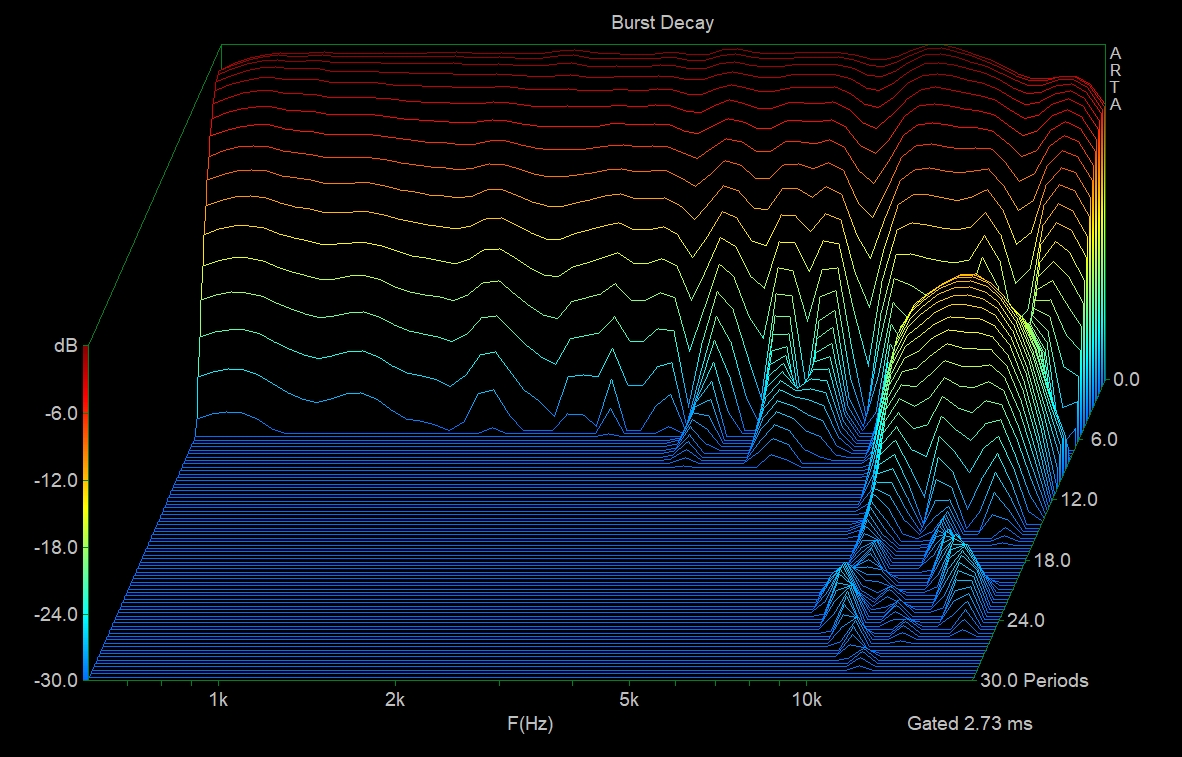
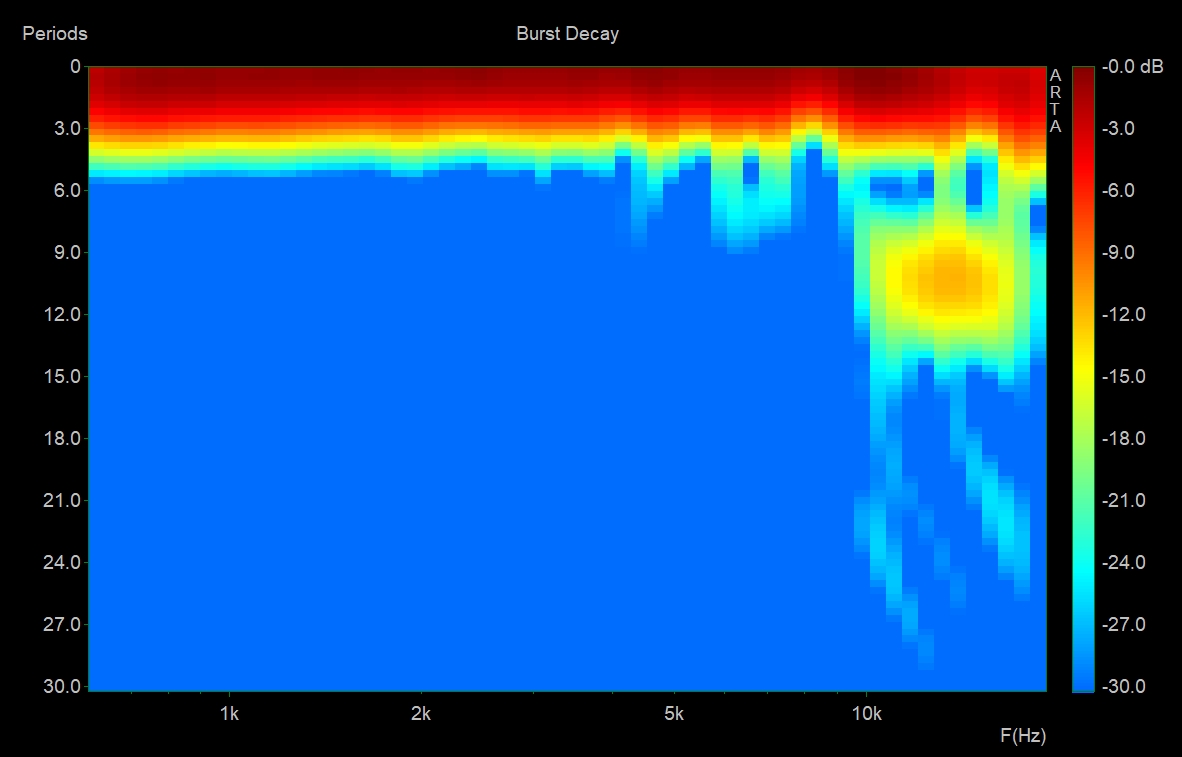
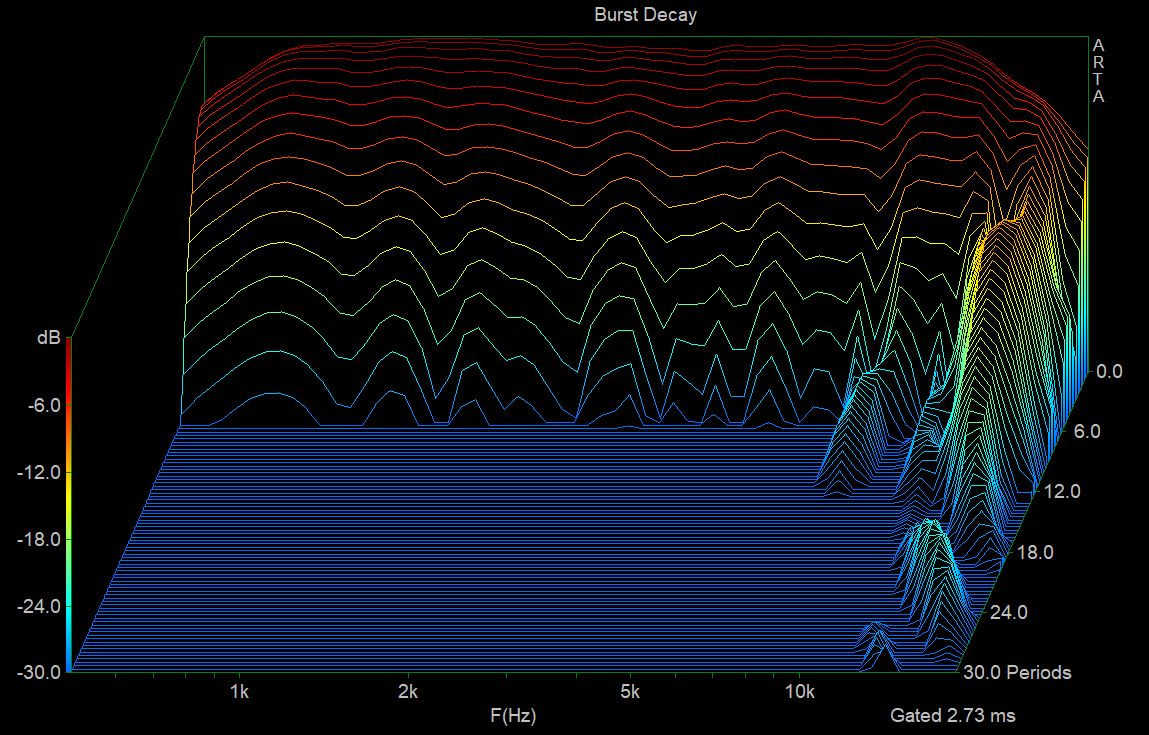
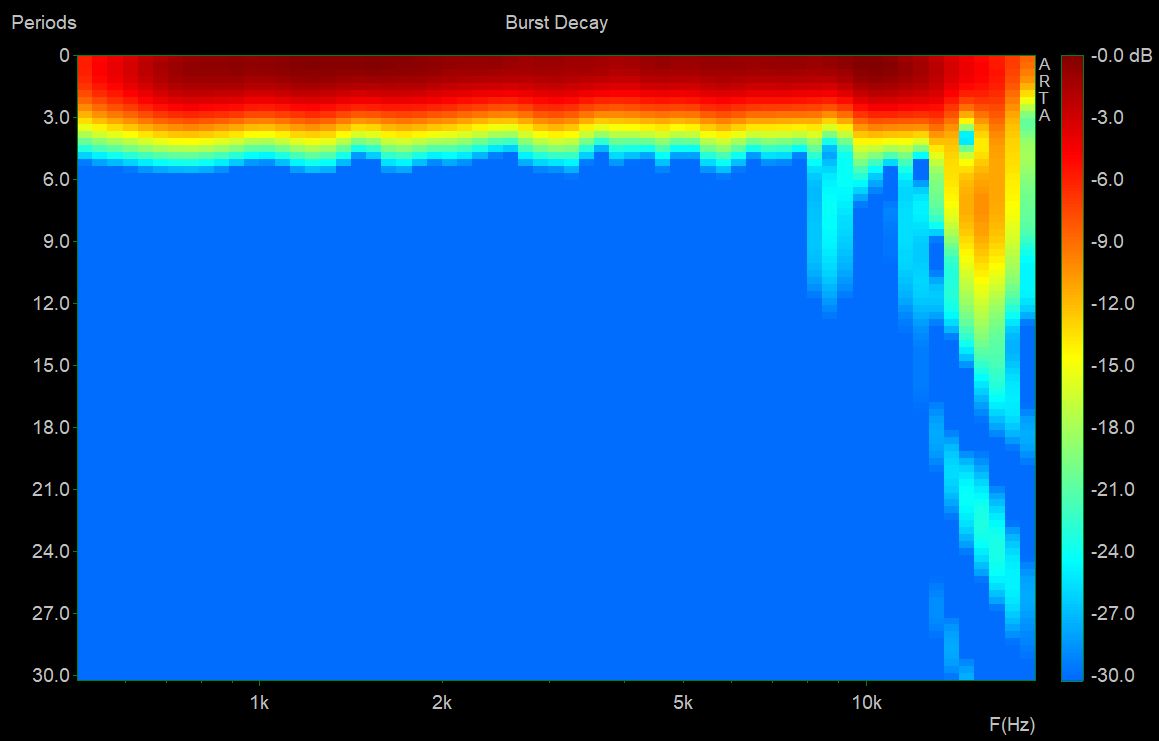
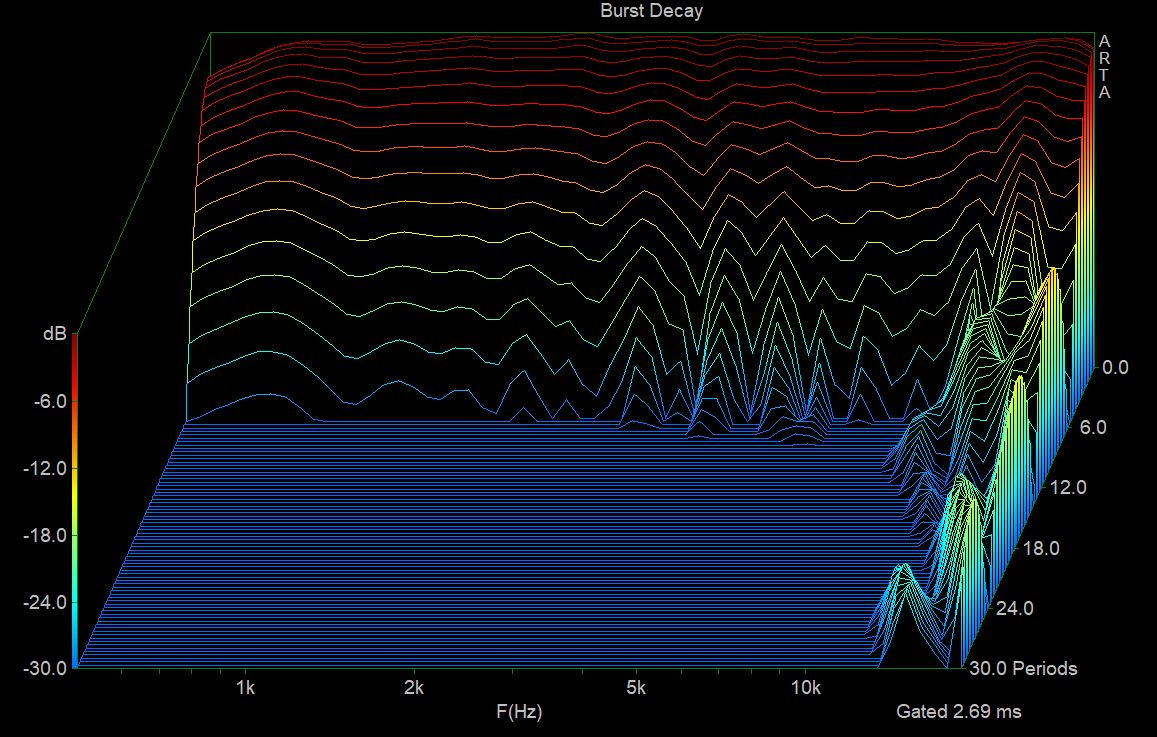
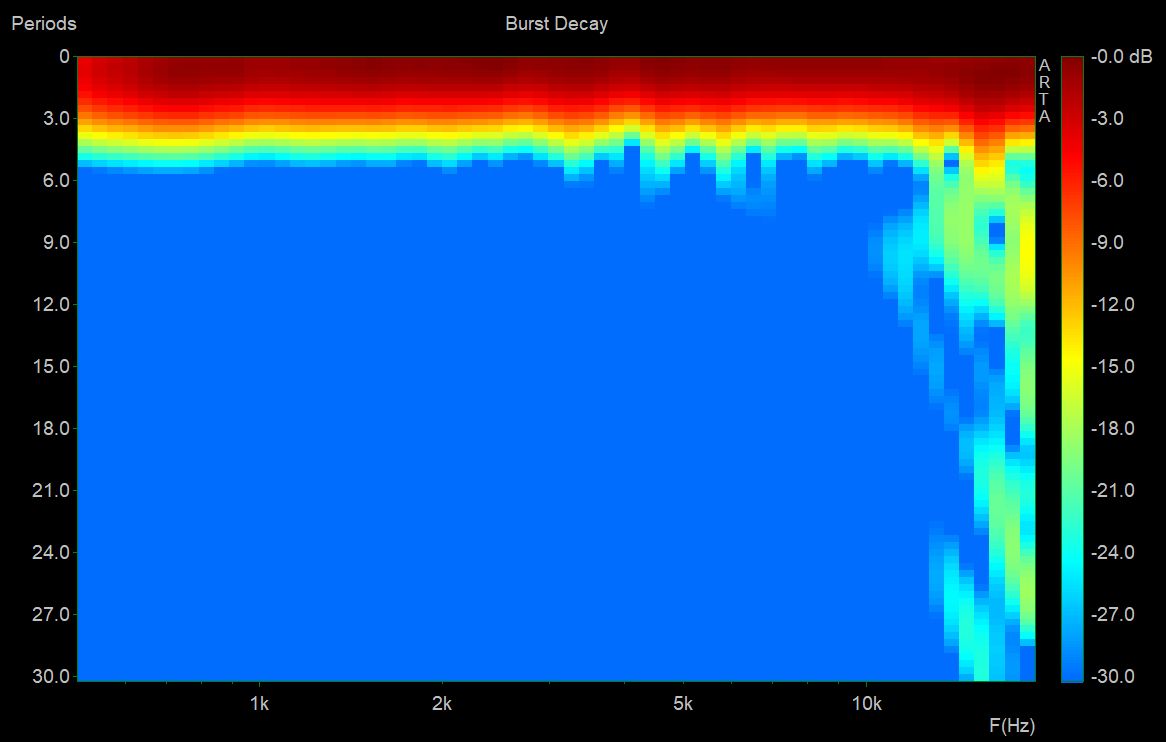
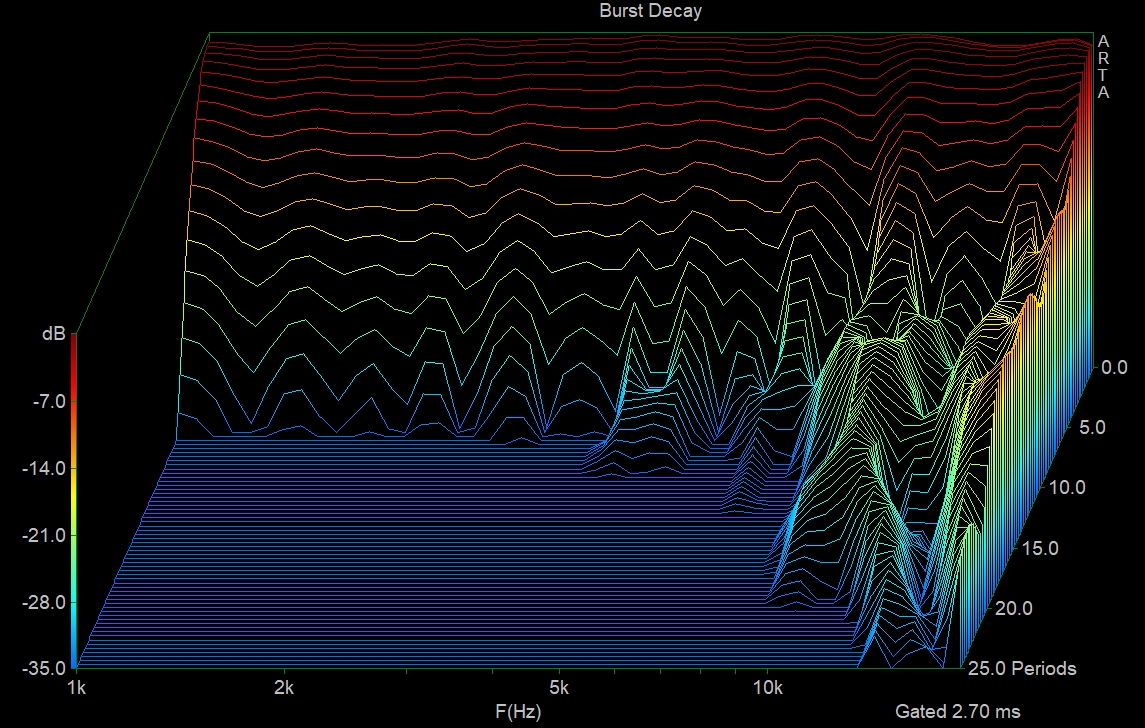
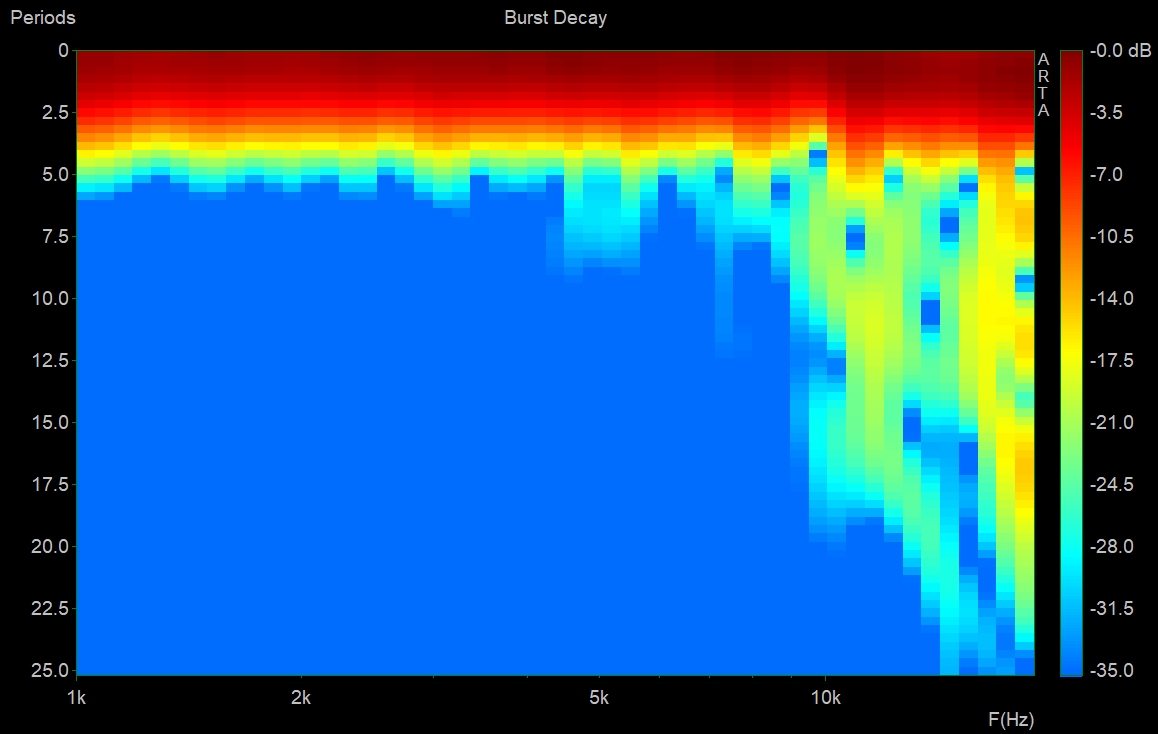
There are pros and cons here. We look for a breakup that does not occur too early, but also does not generate strong temporal artefacts. As always in audio, it is a compromise.
The 18Sound 1460 performs very well and represents a good compromise, as well as the HF1440 and its annular diaphragm.
The HF1460, with its TeXtreme carbon diaphragm, shows a higher breakup mode, but it is extremely violent when it appears.
The Faital HF144, on the contrary, exhibits a more present breakup, which will impact its directivity behavior.
Polar Plot
Why show polar on different drivers?
A horn is based on the assumption that the compression driver produces an ideal plane wave at its exit.
However, diaphragm breakup moves the system away from this ideal plane wave behaviour, as shown in breakup and its distortion article.
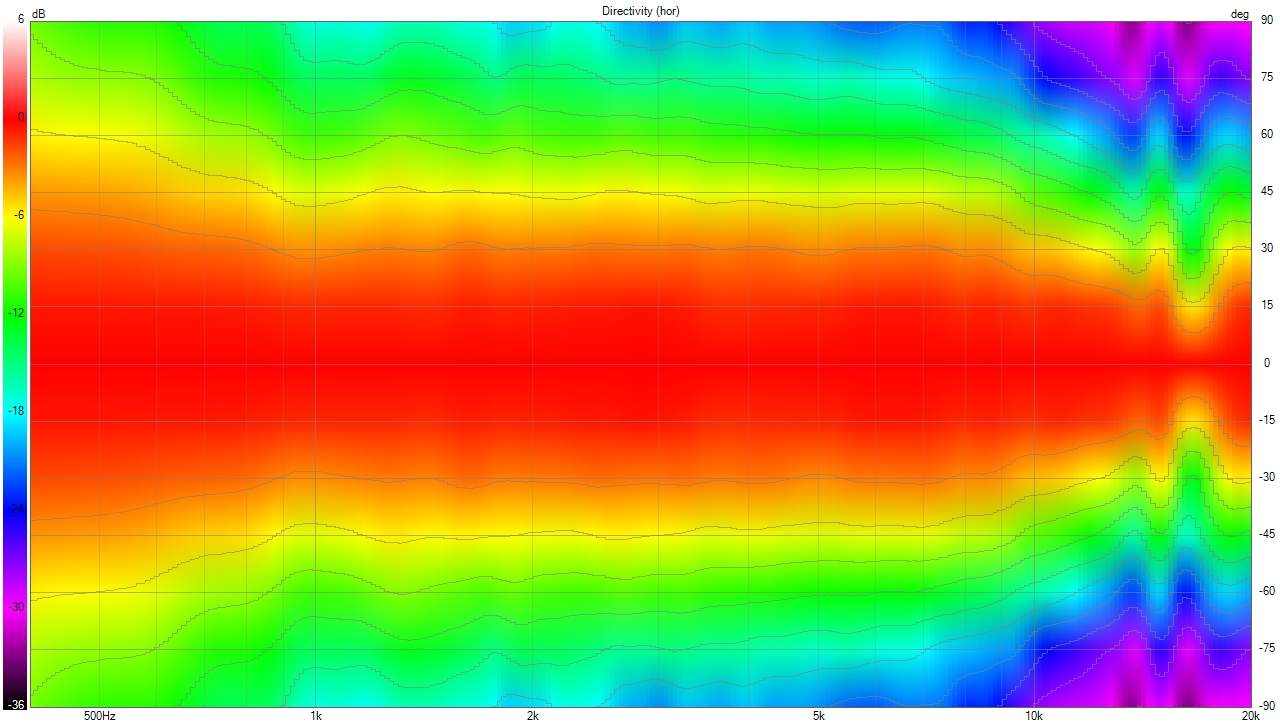
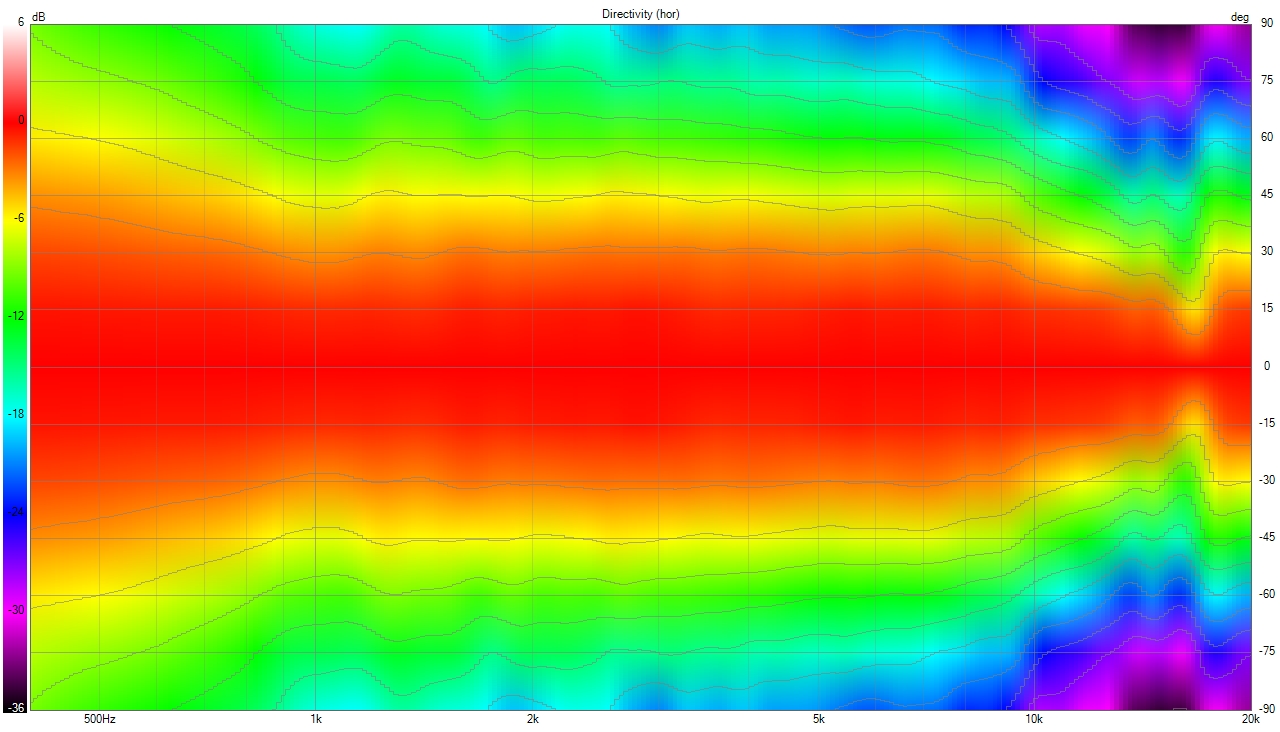
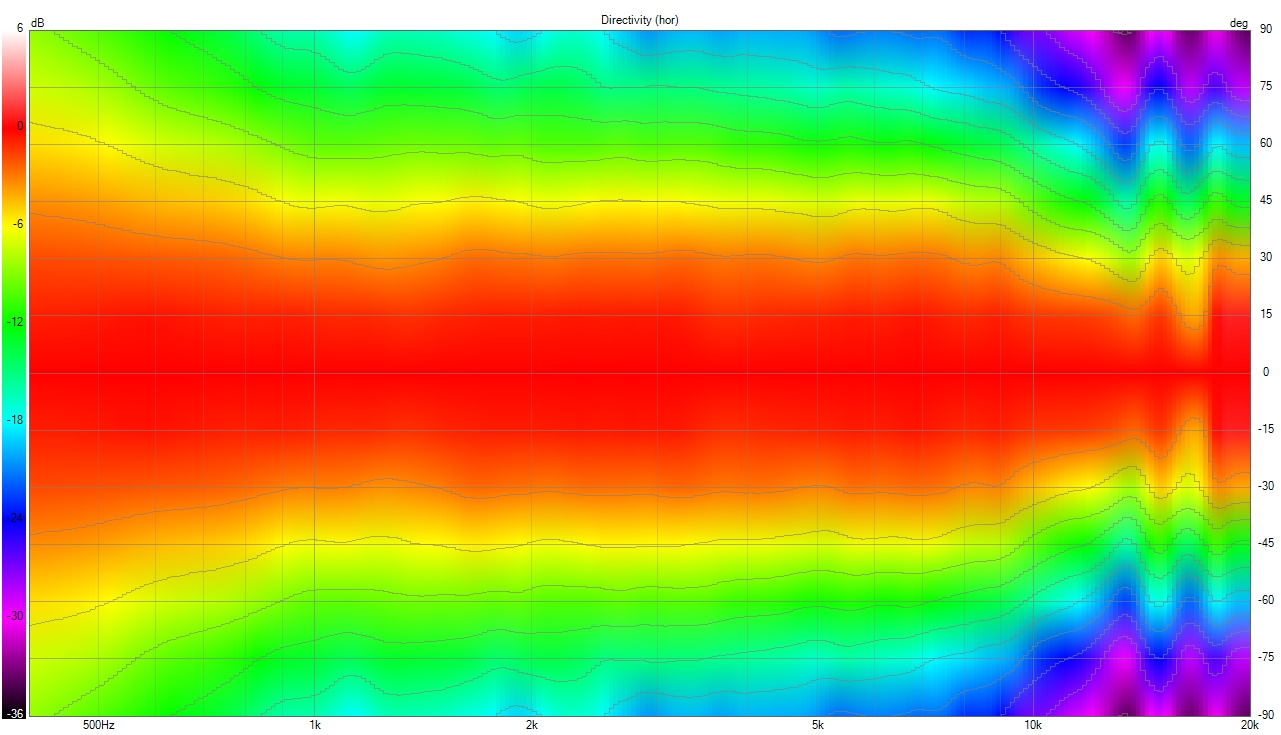
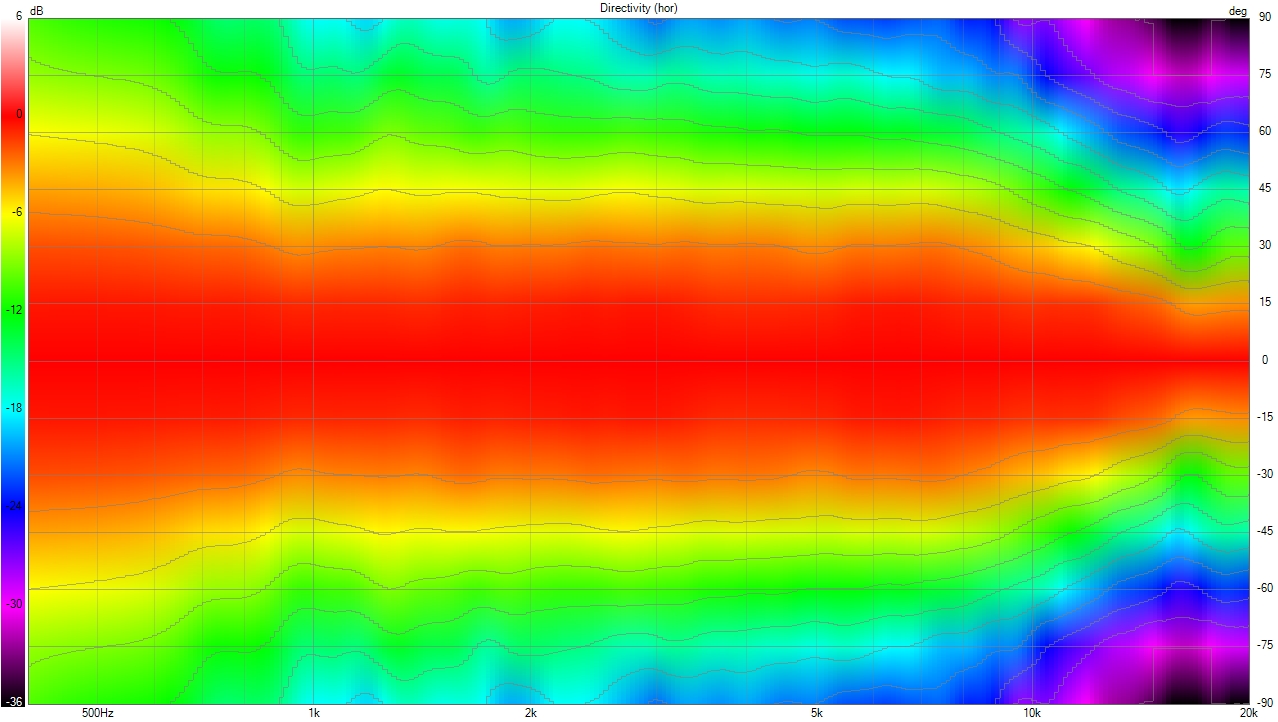
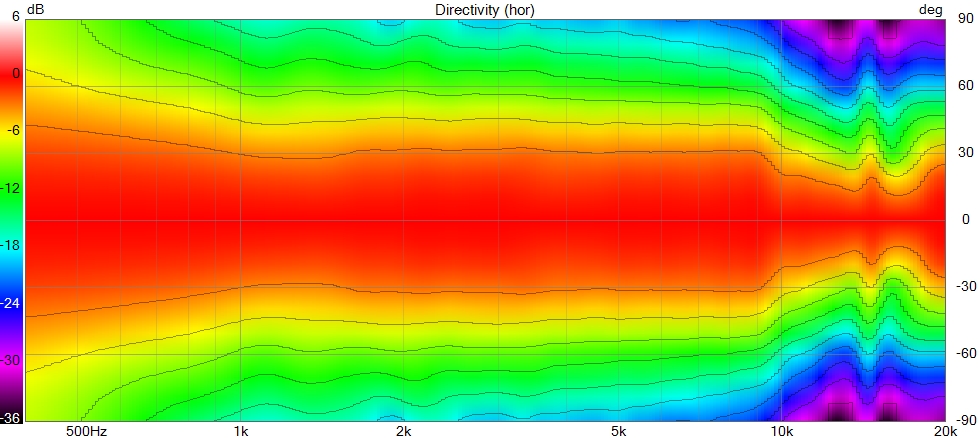
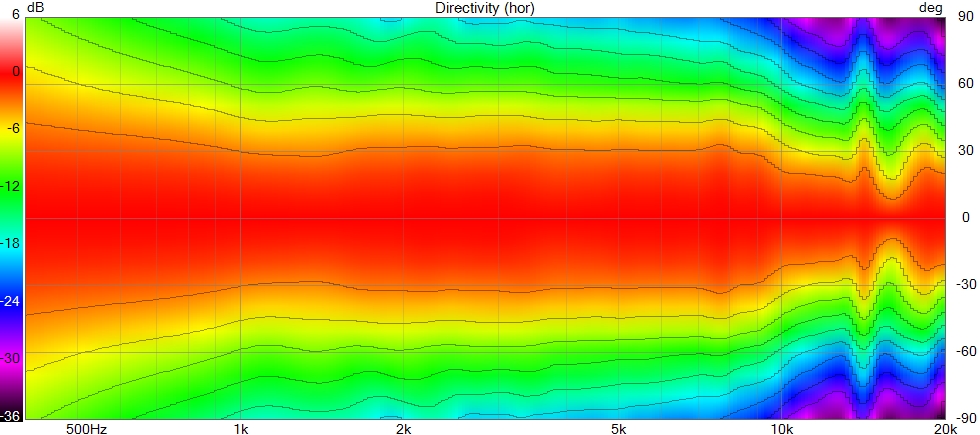
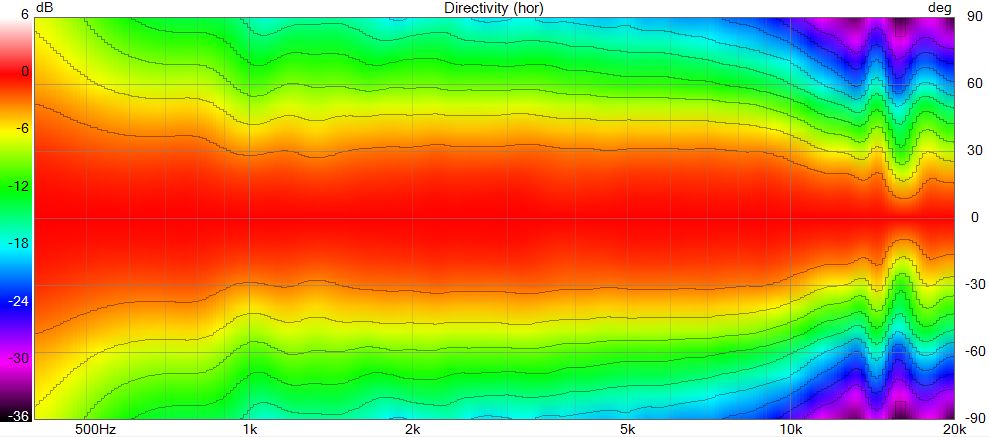
By analysing polar behaviour on a horn designed for near-ideal wave propagation, such as the X-Shape X34, we can identify when and how breakup affects wavefront propagation inside the horn.
From this, we can infer the quality of the propagation and the degree to which the system maintains a plane wave behaviour.
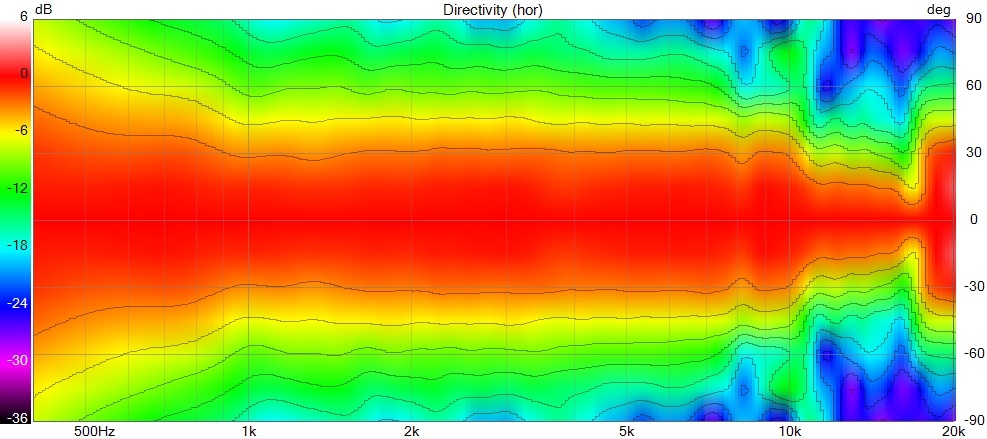
Polar on X-Shape X34
Polar conclusion and breakup impact
Here the logic is well respected, more the diaphragm is Stiffer (“hard”) more the breakup will bring the wavefront too far from plane wave radiation and enter in an impredictible chaotic behavior.
The HF1440 (Ketone) is incredible for a 3.4" diaphragm, she acte like a good 1" one and his breakup almost doesn’t affect it’s plane wave expansion at 12 kHz.
On the other hand, the HF144 is more affected by its breakup, which impacts its directivity behavior.
All drivers perform well overall. The aluminium diaphragm used in the 18Sound ND3A is less interesting than titanium in this context. The 1460 in standard titanium version appears to be the most interesting option in the 18Sound lineup.
Conclusion
Conclusion
As always, it is difficult to define a clear winner, as we are comparing some of the most advanced 1.4" drivers on the market.
It will be interesting to see how TeXtreme (and other carbon-based diaphragms) evolve in the future. It appears that extending carbon materials to the surround of the compression driver can limit low-frequency extension. The HF1460 is interesting, but it does not really bring anything additional compared to its HF1440 sibling or the 18Sound 1460.
The Faital HF1440 (Ketone) is an interesting case. Its main strength is its low distortion behavior, especially in higher-order components, but it shows a slight rise in H2 in very demanding conditions and at low crossover points. This is partly related to the annular diaphragm geometry: the radiating surface is smaller than in other designs. This behavior is typical of annular diaphragms, which tend to perform very well in H3/5/7/9, but are more sensitive in H2 due to the higher excursion required for the same SPL. In extreme real-world conditions (e.g. night-club use, 750hz crossover), the HF1440 can become a limiting factor. In one case of very high SPL usage, it failed (voice coil burn) and was replaced by an 18Sound 1480.
The 18Sound ND1460 and ND1480 both show very good time-domain behavior and high SPL capability. For very high SPL applications, the 1480 remains the preferred choice (e.g. night-club use).
Overall, the most balanced solution depends on the application. The 18Sound ND1460 and the Faital HF1440 represent two strong but different approaches, provided that the system design accommodates their respective constraints.
The HF1440 requires more attention in EQ and low crossover usage, while offering excellent distortion behavior when properly used.
For 1" tests, see our other article: 1" compression driver test.
The 12" Mid-woofer
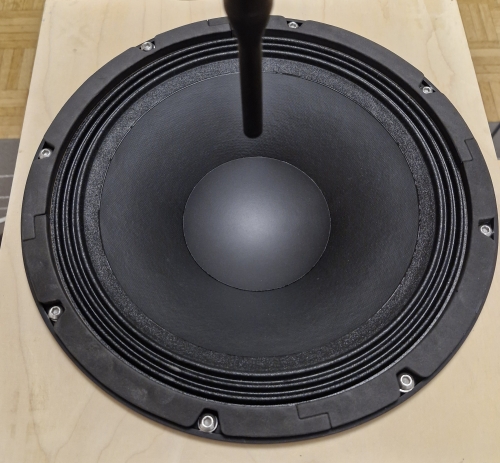
For now we have one 12" in this article:
- Sb Audience NERO 12mwn700d
We will also measure distortion with and without a 1.2mH air core inductor, to reduce the driver breakup impact on distortions when possible, as seen in speaker breakup article.
In essence: We use Back Electromotive Force principle with an air core inductor that will increase gradually the impedance (affecting the voice coil) and replace some EQ to linearize the woofer in the same time, it works very well if the woofer is already rising up in his final box.
It will reduce a lot H3 and H5 distortion related to breakup if there is.
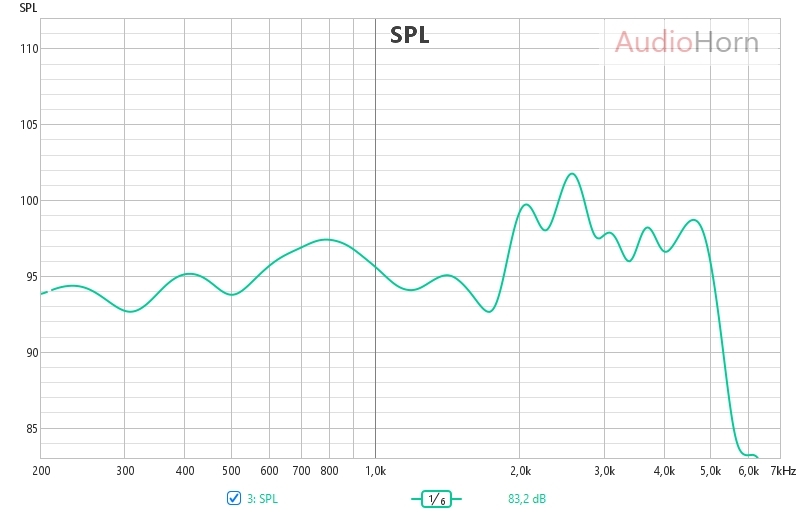
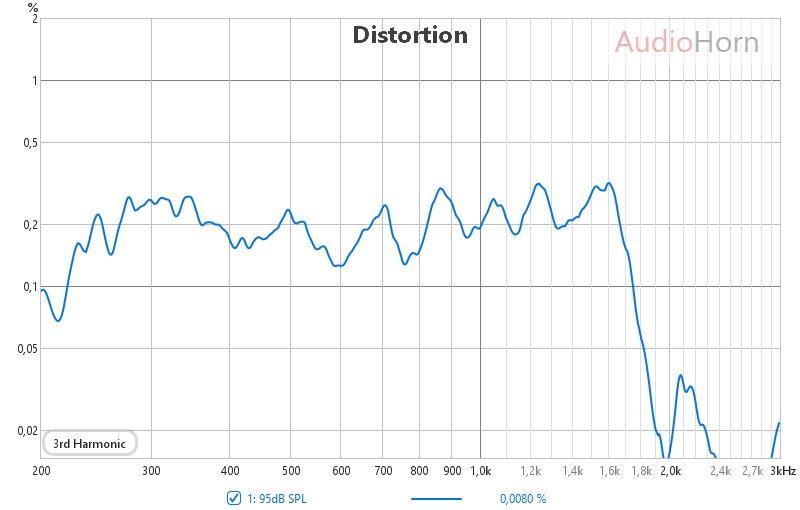
Distortion measurements are done at 31.5cm 95dB SPL, all drivers are EQ flat to be compared : The SPL is the same on all the bandwidth, for all drivers, with and without air core inductor, the difference with and without air core inductor is not due to SPL but to Back Electromotive Force principle, as explained in our dedicated article.
SPL
Distortion Without inductor
H3
H5
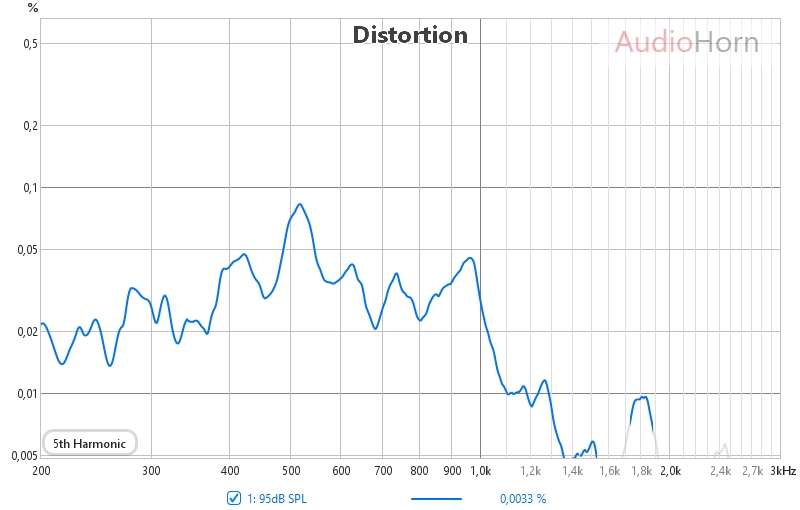
Distortion with inductor
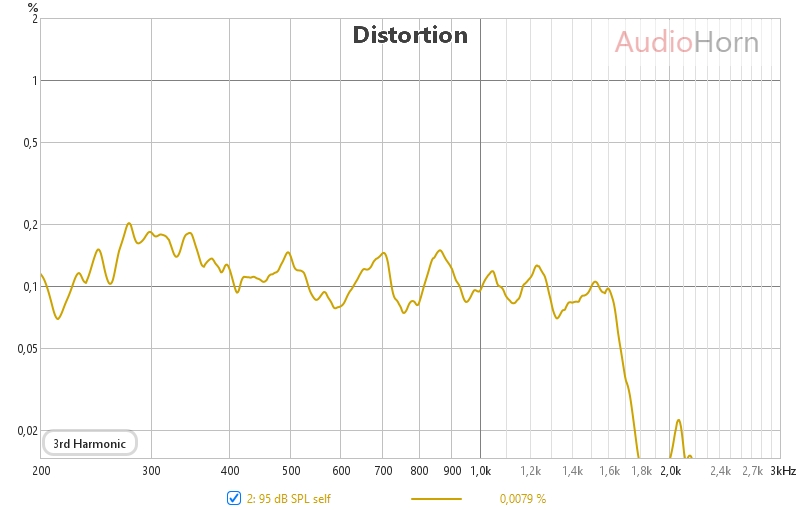
H3
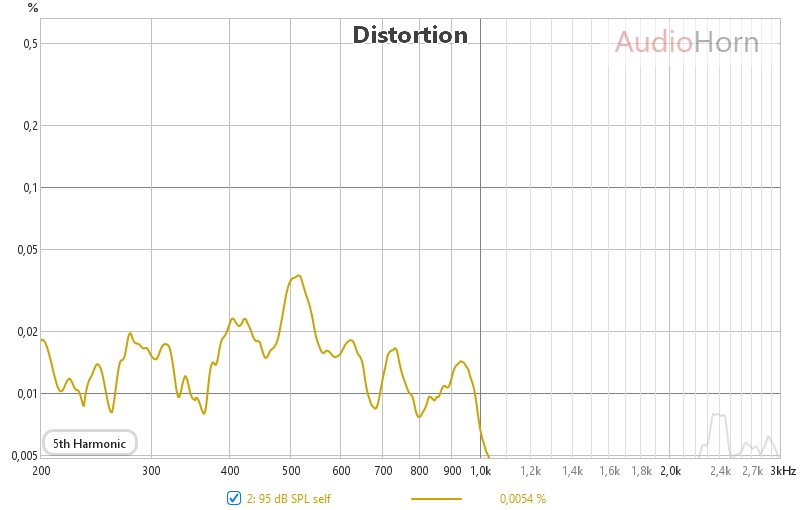
H5
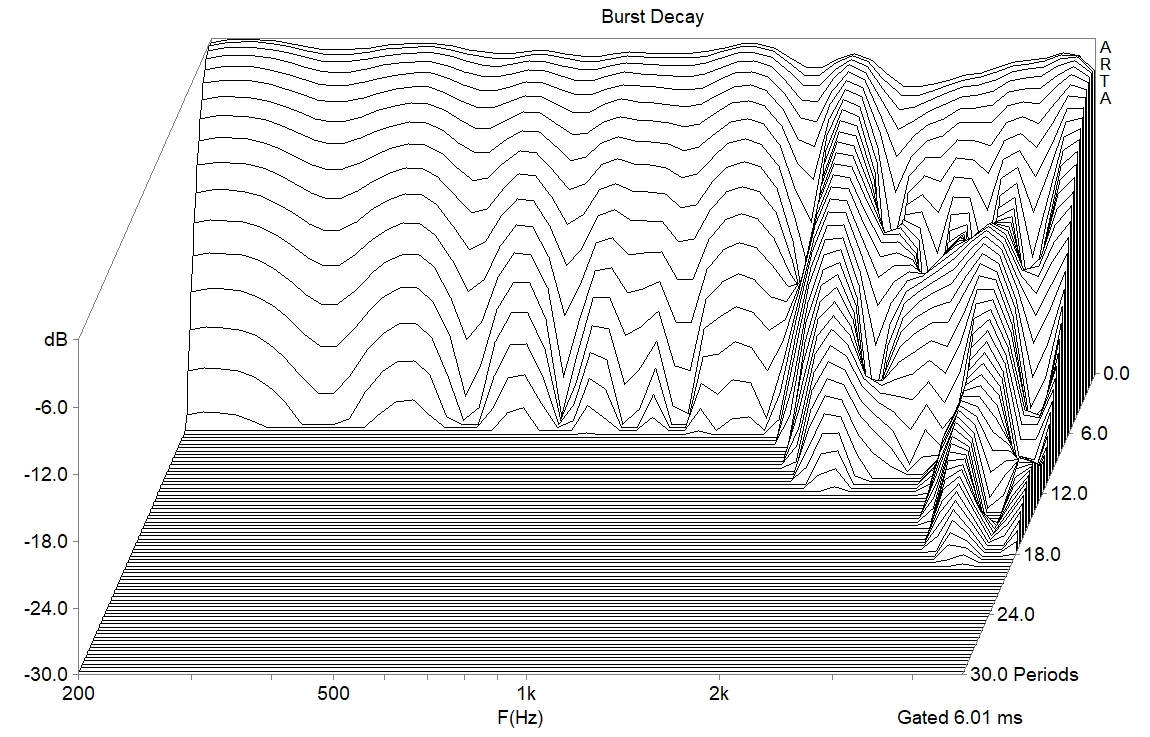
Time-domain measurement
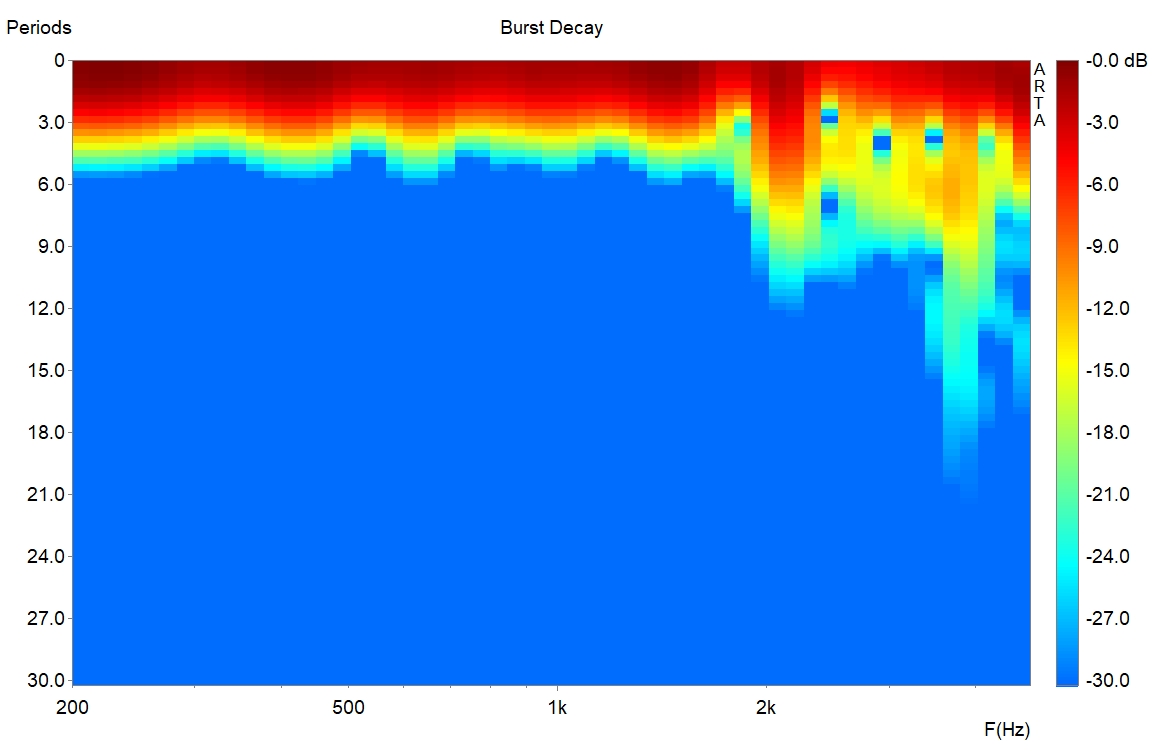
As always, there’s nothing to see in the time domain if we stay away from breakup:
Conclusion
The driver has a well-damped breakup, so naturally there’s no rise in distortion. The increase in SPL makes it suitable for operation with an air-core inductor. We replaced some EQ with an air-core inductor effect.
The SPL remained the same, but we changed the impedance at breakup, so the driver performs even better in H3 and H5.
It’s a very good alternative to the 12LW1400.
The driver allow a crossover not limited by distortion, we can cut it when directivity match with an X-Shape X33 or X34 at 1150hz or even higher, without the need for an air core inductor.
The 6/7" Mid-woofer
We will test several 6/7.5" Mid-woofer in this article:
- SbAcoustics SB17NBAC-4
- SbAcoustics SB17CAC-4
- SbAcoustics MW16-TX-8
- SbAcoustics MW19-TX-8
- ScanSpeak 18W4434G00
- Sica 6.5H1.5CP
- STX W.18.200.MCX_v2
- STX W.18.140.8.MCX
All drivers are EQ flat to be compared, at 95 dB SPL.
Discalified mid-woofers
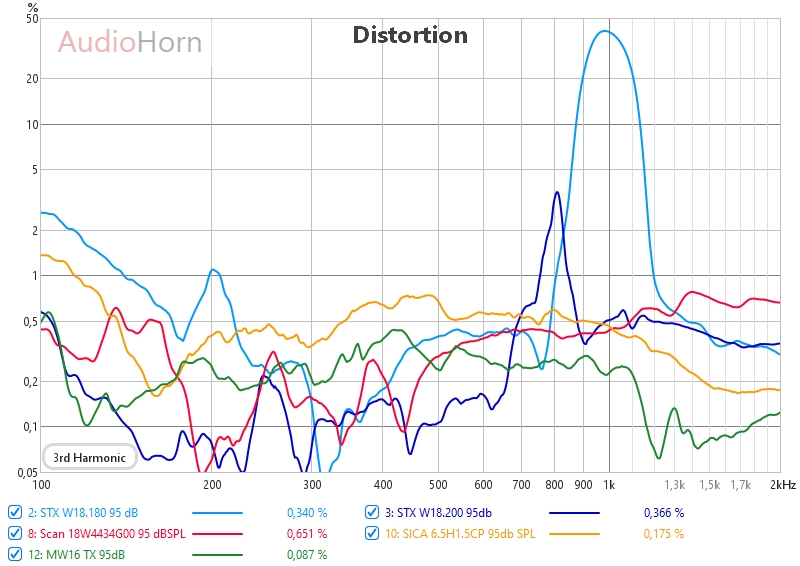
There is too many woofers to have readable charts in overlay so severals has been disqualified, there is the reason why:
-
STX: Both STX have a hollow about 6 or 8dB in plain midrange, even without EQ we see abnormal distortion then after have EQ it flat, it’s of course worse, letting this hollow will not allow to use theses mid-woofer, so they are in fact not usable.
-
Sica 6.5H1.5CP: It’s not a bad driver but other are excellents (without air inductor), it was a good Q/P ratio driver before, now his price has risen so he lost his interest, However it’s a driver that rise up in frequency and love to be linearize with a 1.7mH air inductor, resulting a very good driver in active filtering thanks to this trick (as seen in speaker breakup article).
-
ScanSpeak 18W4434G00: Not a bad driver either, the best of the four, it rises a little bit too much in distortion after 800/900hz but very good in low medium.
Top 4
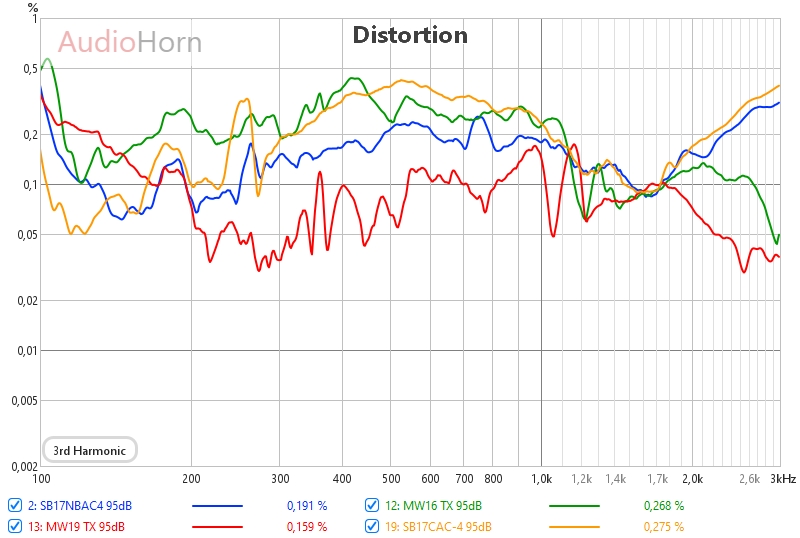
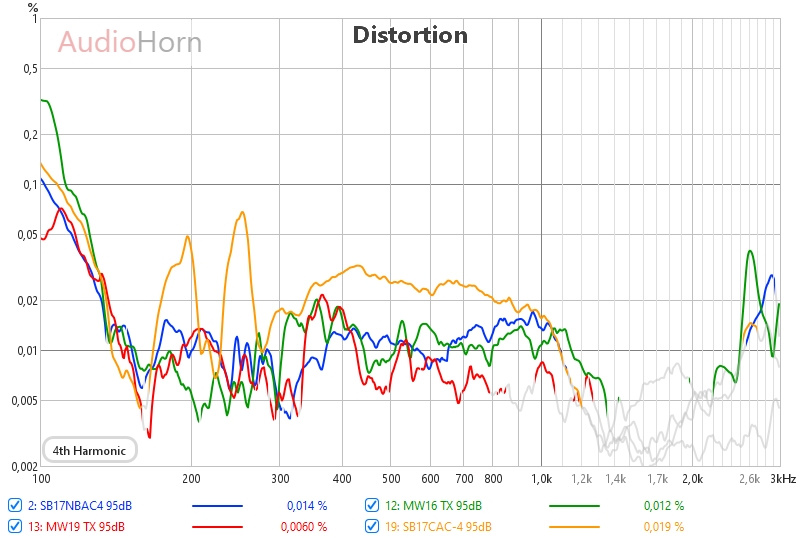
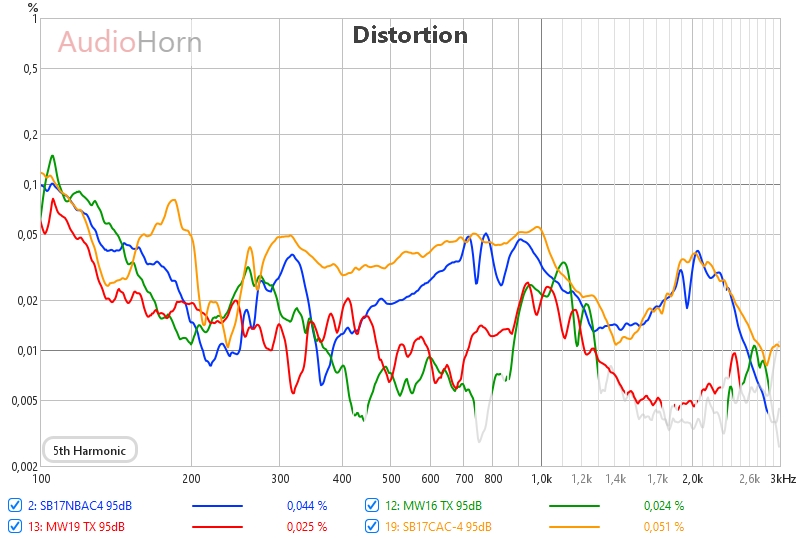
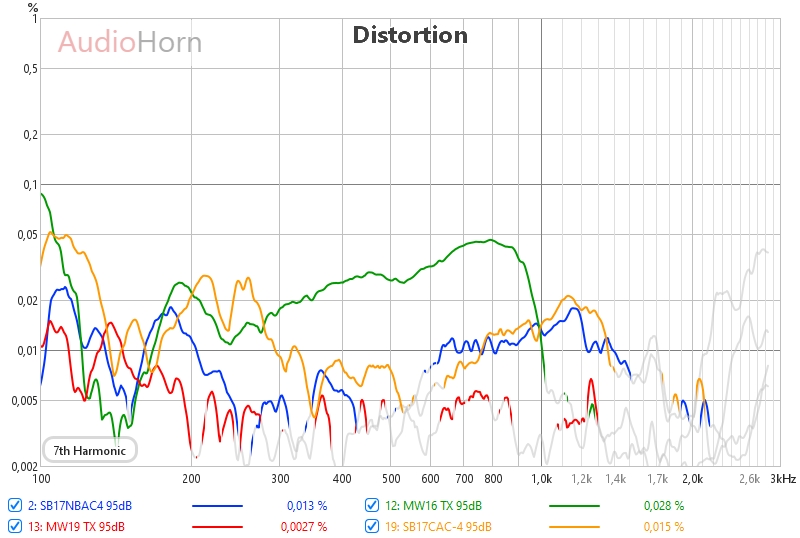
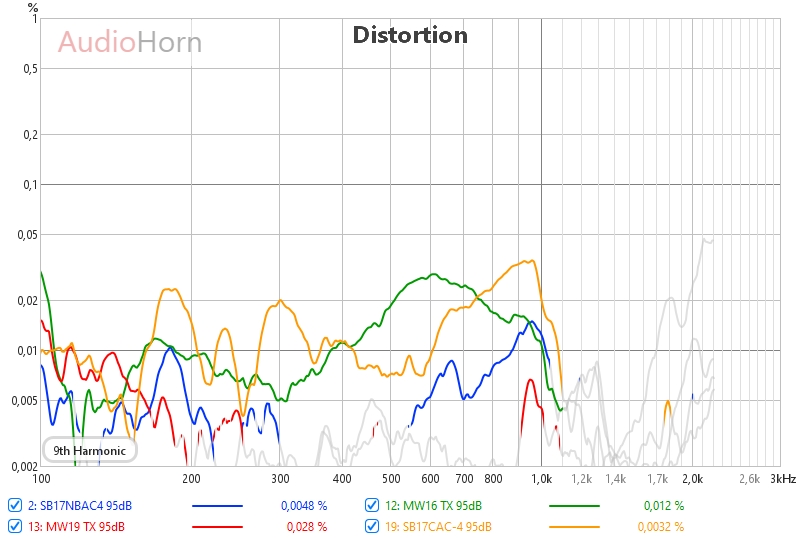
We will take a look of order that show a difference between each drivers, some order are “far” but they are outside of mask effect and in audible range (depending of their %) as seen in masking effect and audibility article.
Due to their surface and directivity match none of this driver should be crossed above 2/2.5khz, almost all have their breakup begining at 4.5/5kHz.
IMD
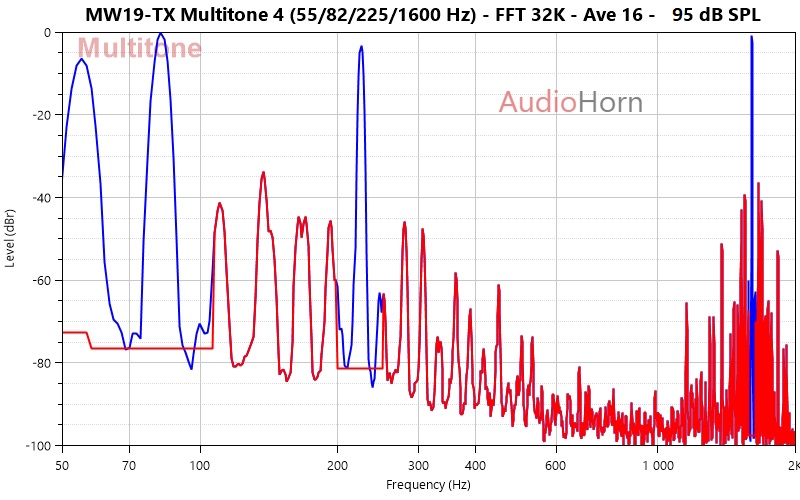
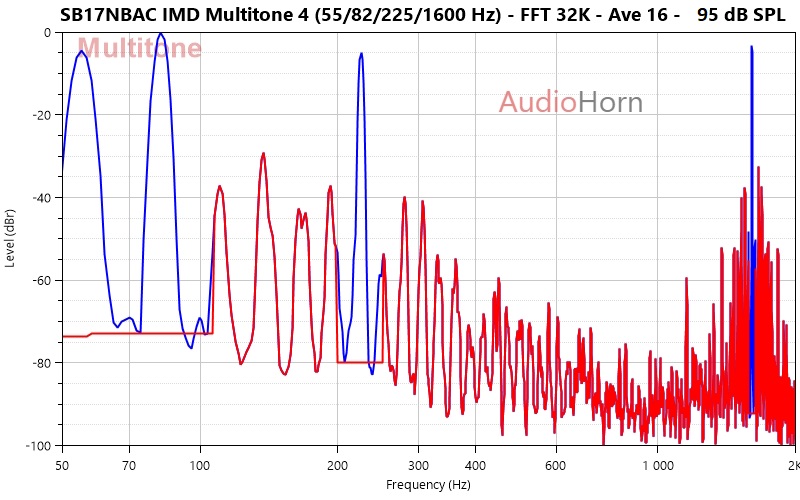
Here we take the two better and try to find a difference in IMD, with a multitone 4 IMD test at 95 dB SPL.
Here we see IMD but THD is also present in the chart so it’s hard to separate the two, we can just say that the MW19-TX looks like better but as he is better in THD too.
Time-domain measurement on midwoofer
When we do it with a compression driver and a horn we measure in fact the couple, for the woofer we don’t want to have the box and the way the woofer is integrated with it.
If we measure CSD or Burst Decay at 25/32cm we measure the woofer with his very close environment (even if we gate the measurement).
If we measure the woofer at 2cm we will only have the woofer alone, and we will see that at breakup his Time-domain measurement is not good. The rest will be perfect, for all.
So avoid being close to breakup, anyway distortion will dissuade you to go near to it, all drivers perform perfectly in Time-domain measurement in usable range here.
Conclusion
STX does a great performance in the 8inch driver test, but here we can see that they have both the same issue between 700 hz and 1.2khz, without EQ there is a huge hollow, and EQ we excite the conception problem.
The MW19TX is a perfect companion for a 2 voices speaker, cross arround 1600hz with a tweeter waveguide like ReShape, not too big, and without the need of a midrange voice, at the cost of his huge price of course.
The SB17CAC under perform compared to NBAC/NAC.
The MW16TX is a little bit stuck, stuck between the MW19TX and the SB17NBAC and by its price, moreover the frequency raw response of the MW16TX is a little bit accidented after 1khz when the MW19TX is not.
There are two winners, the SB17NBAC and the MW19-TX, both have linear response in bonus.
The 8" Mid
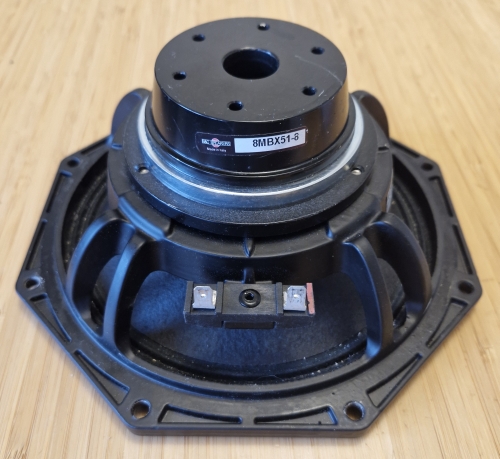
We will test several 8/9.5" midrange drivers in this article:
- 18Sound 8NMB420
- B&C 8MBX51
- BMS 8S219
We will measure distortion with and without a 1.2mH air core inductor, to reduce the driver breakup impact on distortions when possible, as seen in speaker breakup article.
In essence: We use Back Electromotive Force principle with an air core inductor that will increase gradually the impedance, affecting the voice coil, and replace some EQ to linearize the woofer in the same time, it works very well if the woofer is already rising up in his final box.
It will reduce a lot H3 and H5 distortion related to breakup.
Distortion measurements are still done in the same condition, all drivers are EQ flat to be compared : The SPL is the same on all the bandwidth, for all drivers, with and without air core inductor, the difference with and without air core inductor is not due to SPL but to Back Electromotive Force principle, as explained in our dedicated article.
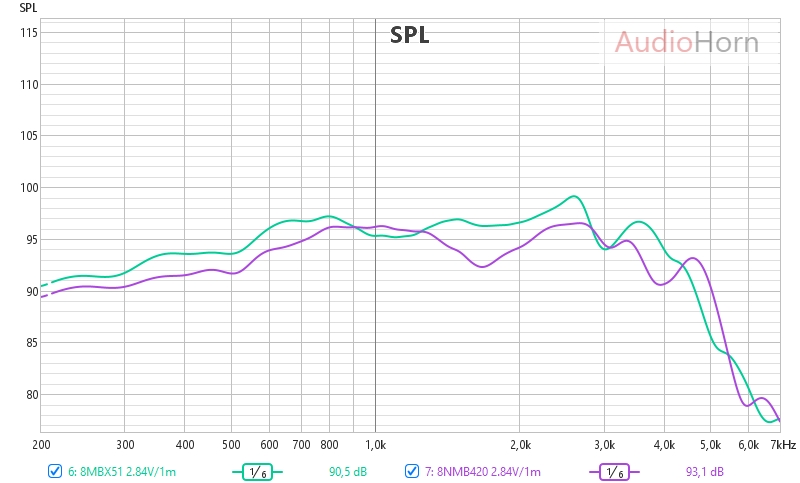
Raw Response 2.84V/1m
Distortion
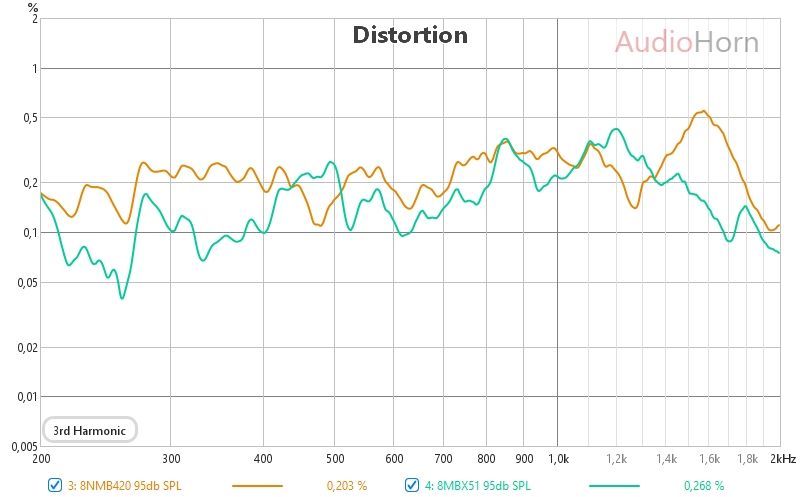
All measurements have been done at strictly the same SPL, 95 dB SPL, and with EQ flat across all the measured bandwidth.
For these cone drivers with similar emissive surfaces (Sd), the main source of distortion will be the breakup effect. Therefore, we should carefully examine H3 and H5.
H3
H5
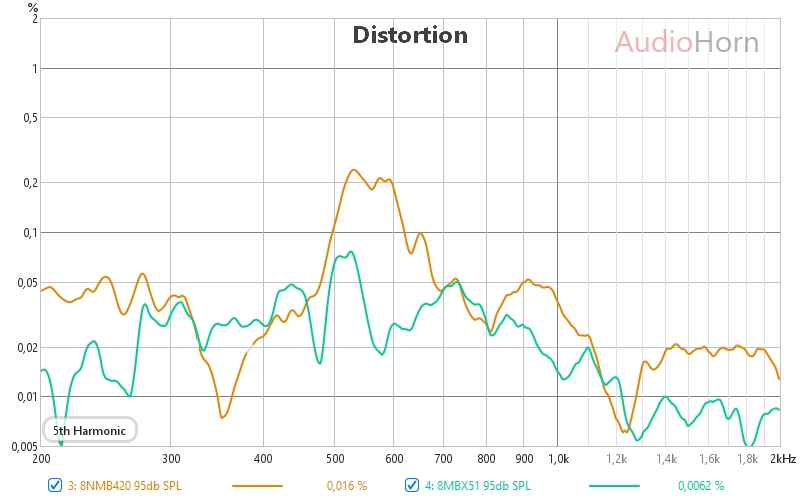
All perform well in H3 but should no be cut so high even if they are midrange drivers. There is a strange peak in H3 for the BMS 8S219.
There is a peak in the H5 measurement for the 18Sound unit, indicating an unwanted sound frequencies around 2500/2700Hz produced. It’s related to breakup, this H5 peak is a little bit too high.
Distortion with Air core inductor
H3
H5
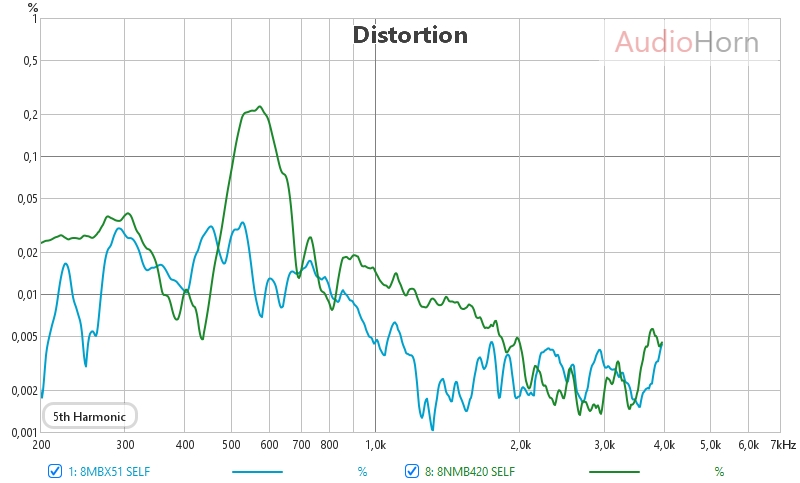
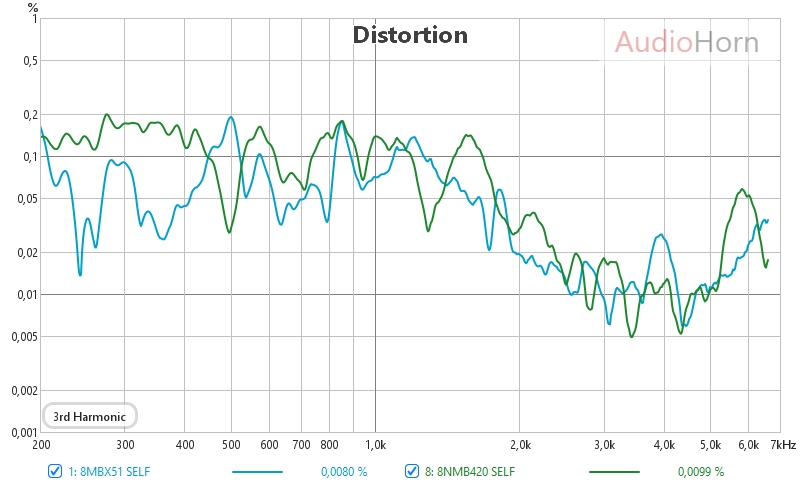
As these speakers exhibit a significant rise in their frequency response, they demonstrate a substantial improvement in H3, making them very suitable for ’true midrange’ applications. However, the H5 peak remains present in the 18S model as well of the H3 spade for the BMS.
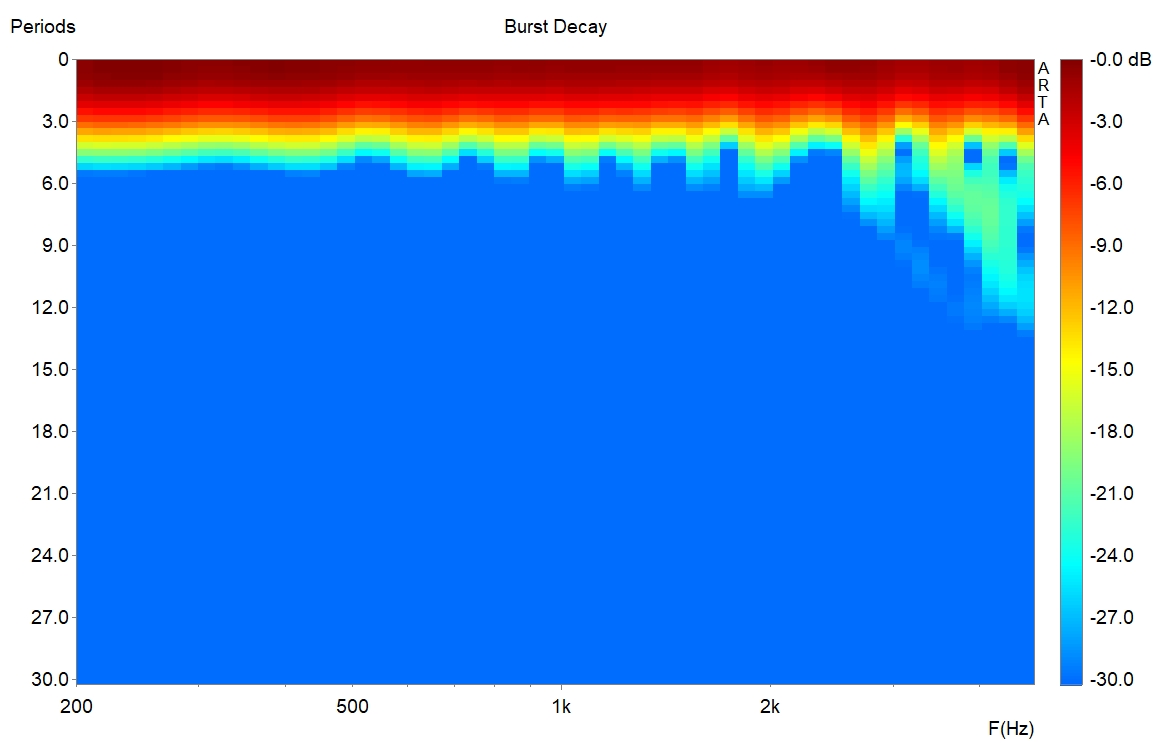
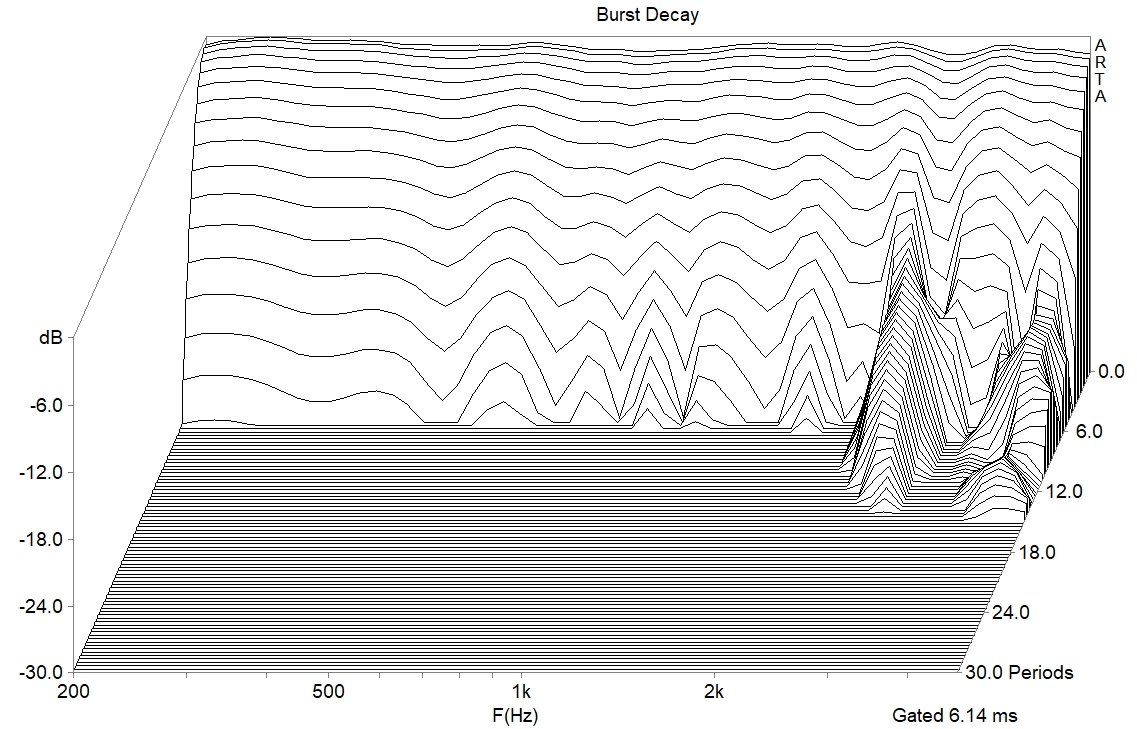
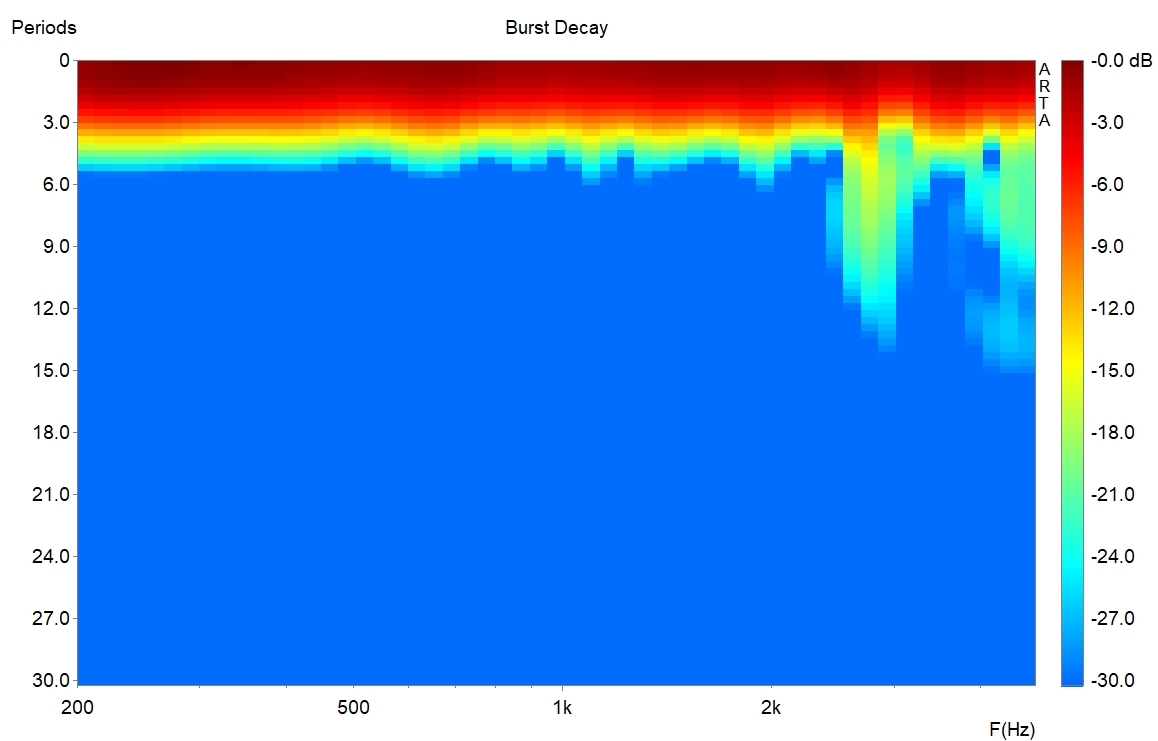
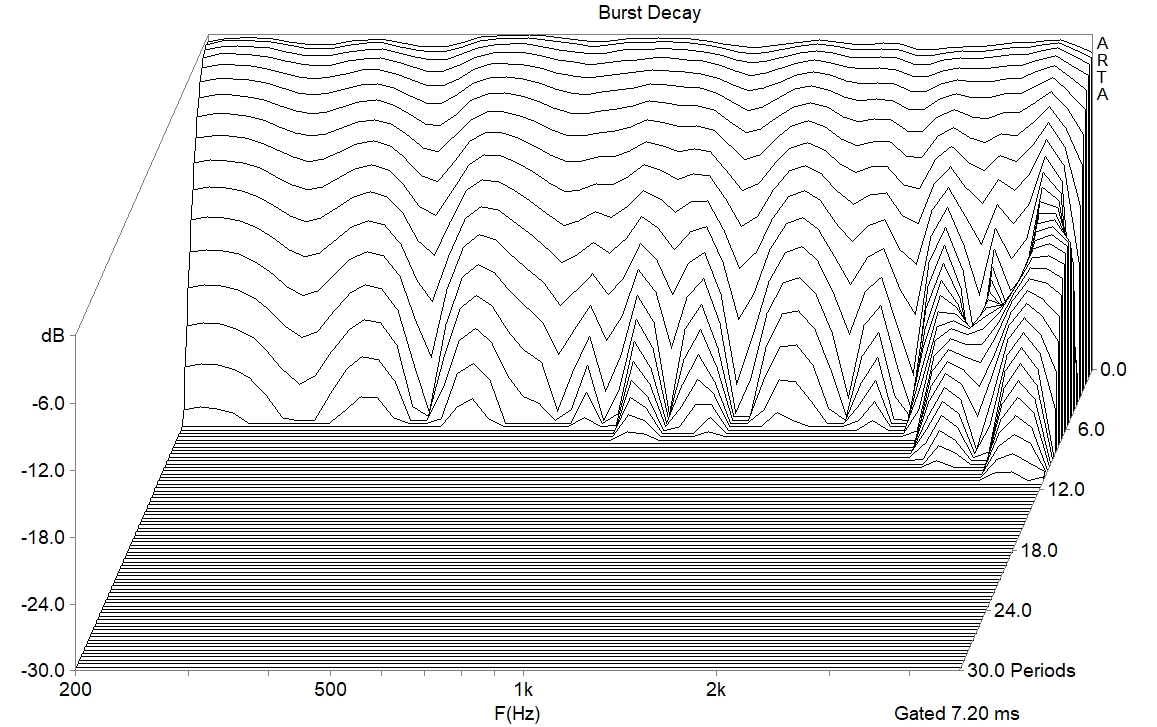
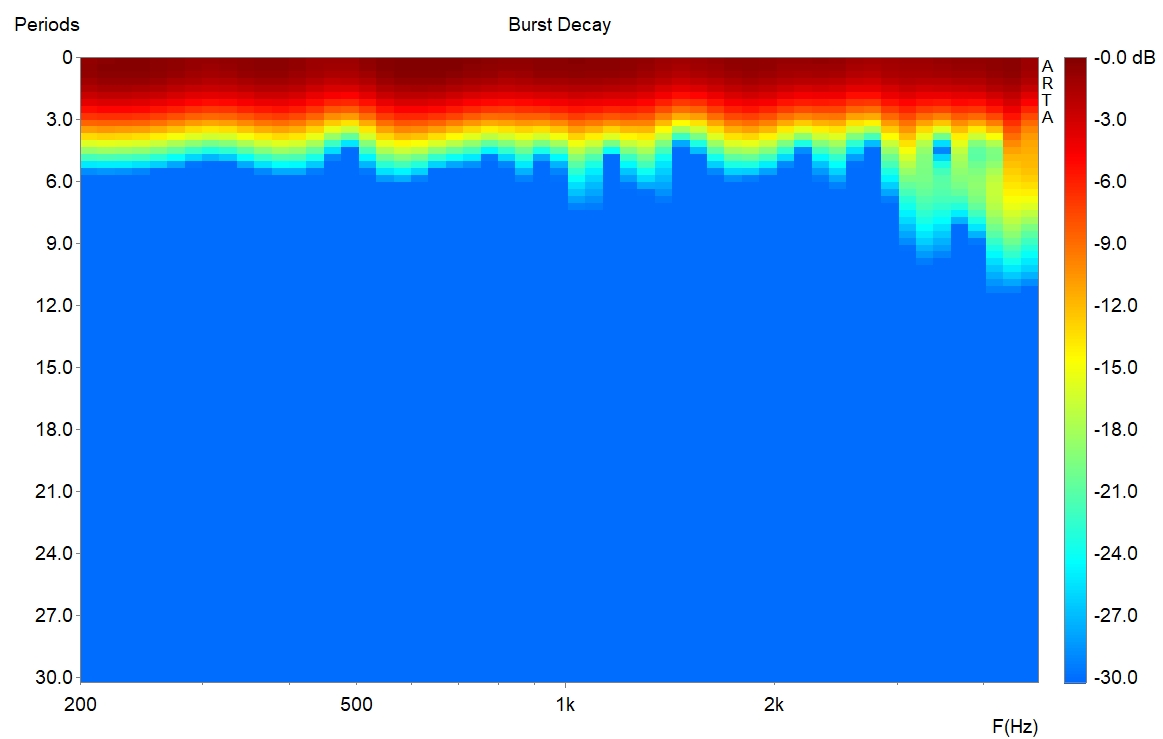
Time-domain measurement
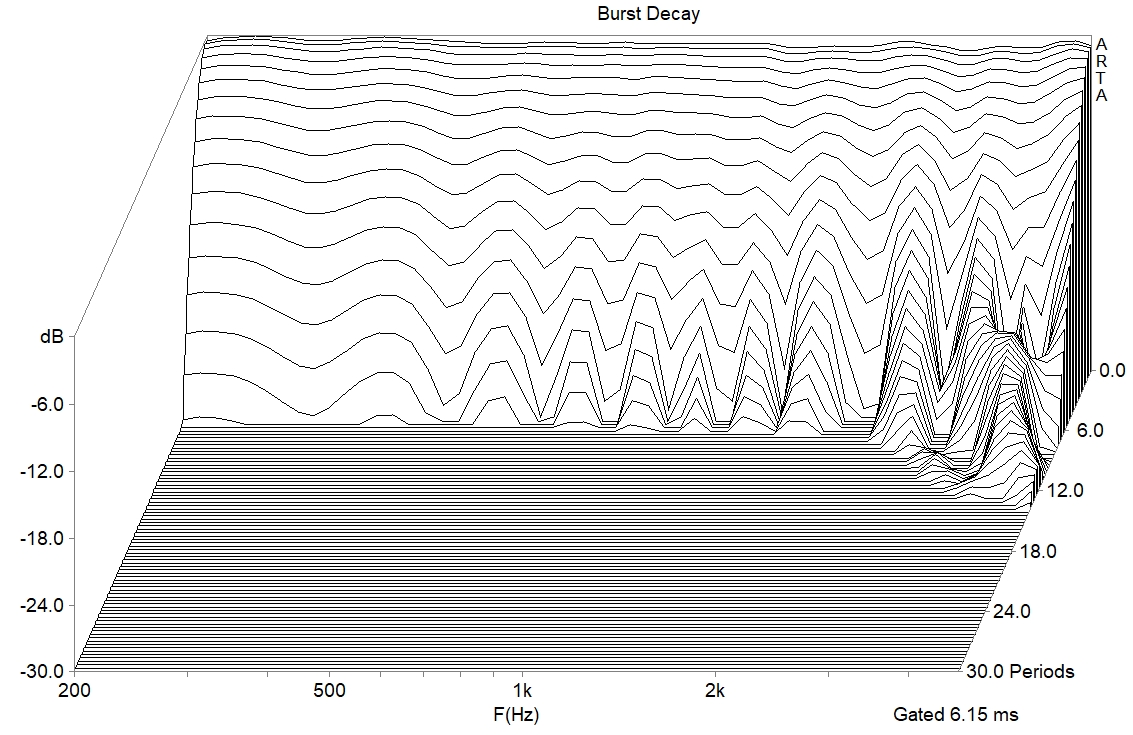
As always, there’s nothing to see in the time domain if we stay away from breakup:
18Sound 8NMB420
B&C 8MBX51
BMS 8S219
Conclusion
The 8NMB420 exhibits some counter-performance due to its significant cone breakup, but this will likely be noticeable at very high SPL.
The BMS 8S219 has a small spade in H3, hard to explain, not very noticeable. The BMS motor looks very evolved, but the speaker basket uses only four screws. That is a little bit optimistic for this kind of driver (8") design to play very loud, when it comes to high SPL usage, where vibration and airtightness become important.
Considering its price the B&C is very interesting, the B&C 8PE21 was already the best 8" medium for years and it seems B&C still have the lead in 8" medium, even if all drivers perform very well.
Important Note: All these drivers are considered as midrange-capable only. Even for the tests conducted, substantial low-end EQ was necessary to achieve a flat response. 200Hz already represents a very low frequency for these drivers.
Generally speaking, we can observe that this speaker allows for a high crossover frequency, enabling a good directivity match around 1400/1500Hz. However, in the midrange at 105 dB SPL, their performance is comparable to that of good 8" Hi-Fi speakers.
These filters, implemented using linear-phase (IIR filters), will influence both Group Delay and phase, allowing for their linearization in the low-frequency range.
The 8/9.5" Mid-woofer
We will test several 8/9.5" Mid-woofer in this article:
- Wavecor WF223
- SbAcoustics SB23NBAC
- SbAcoustics WO24P
- ScanSpeak 22W4534G00
- Tymphany Peerless HDS-P830869
- Sica 8H2CP
- Visaton TIW 200 XS
- STX W22.200.8.MCX_V2
- STX W22.200.8.MCX_V3
- PURIFI PTT 8.0X 4 NAB 2
We will measure distortion with and without a 1.2mH air core inductor, to reduce the driver breakup impact on distortions when possible, as seen in speaker breakup article.
In essence: We use Back Electromotive Force principle with an air core inductor that will increase gradually the impedance, affecting the voice coil, and replace some EQ to linearize the woofer in the same time, it works very well if the woofer is already rising up in his final box.
It will reduce a lot H3 and H5 distortion related to breakup.
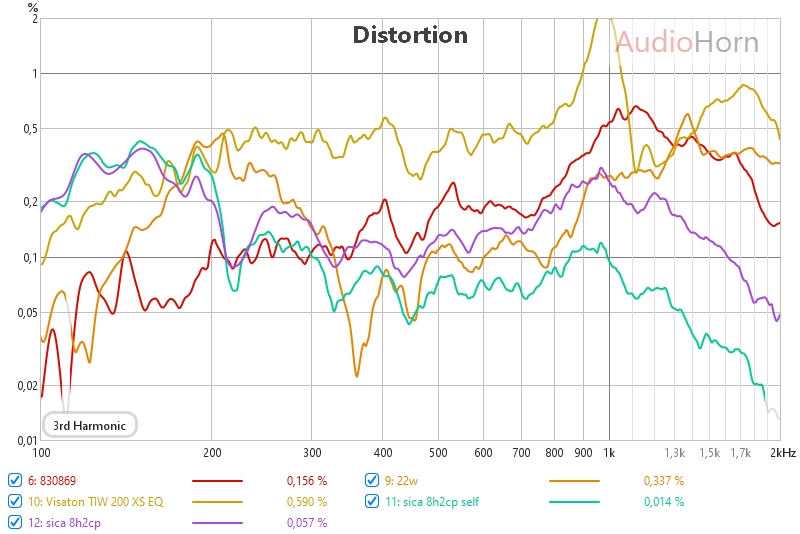
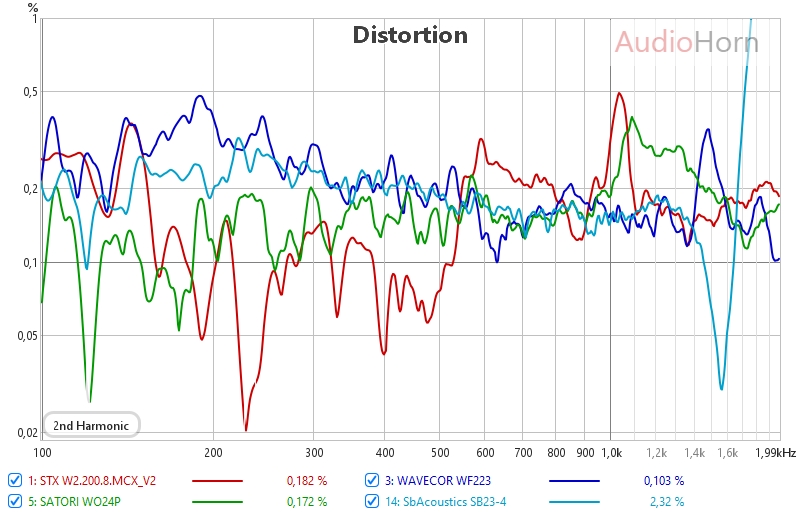
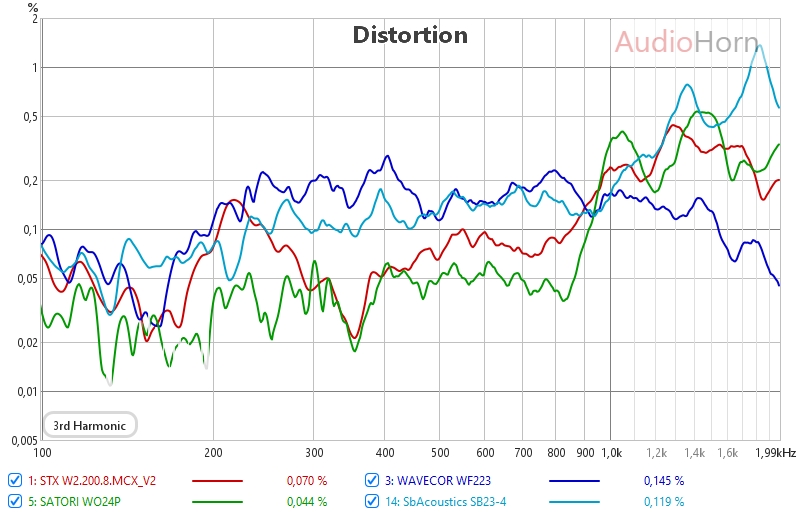
Distortion measurements are done at 25cm 98dB, all drivers are EQ flat to be compared : The SPL is the same on all the bandwidth, for all drivers, with and without air core inductor, the difference with and without air core inductor is not due to SPL but to Back Electromotive Force principle, as explained in our dedicated article.
-
ScanSpeak 22W4534G00: A huge H3 rise up, very audible, badly placed as the generated harmonic will be for H3 200/300Hz an unwanted (and impossible to avoid) sound produced at 600/900hz.
-
Sica 8H2CP: not very bad but the rise up between 100/200 hz some does it better, it was an excellent Q/P driver before, now his price has risen so he lost his interest.
-
Tymphany Peerless HDS-P830869: It’s the better of the four but the next 4 others will do it better.
-
Visaton TIW 200 XS: hard to use.
H2
H3
H5
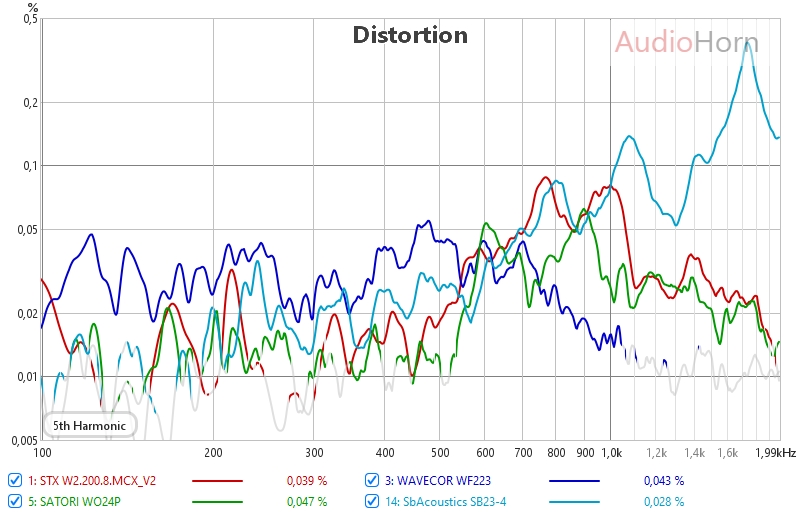
H3 with air core inductor at the same EQ SPL
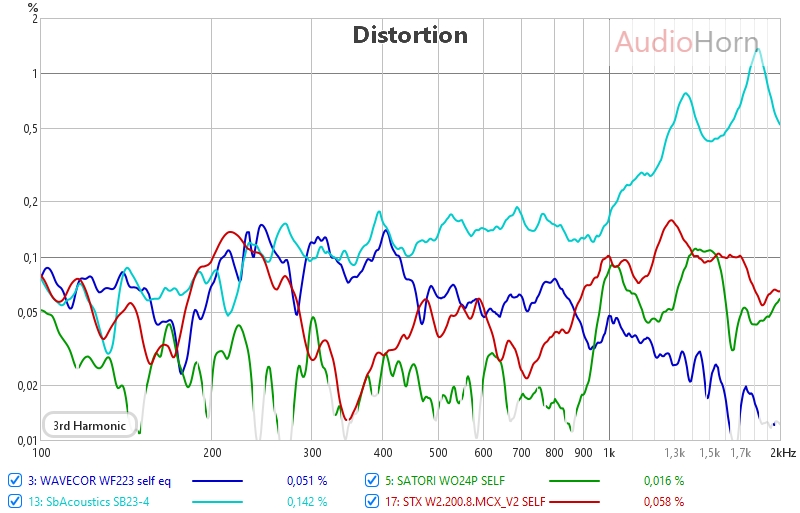
H5 with air core inductor at the same EQ SPL
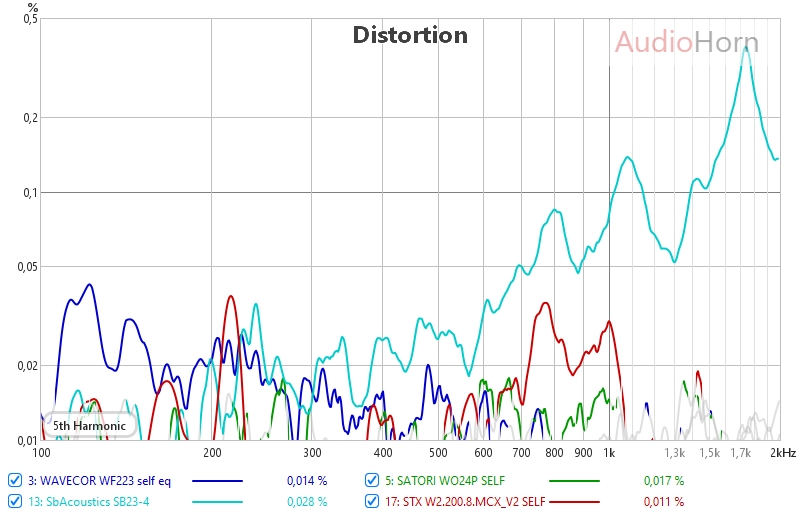
All performs extremely well, the WO24P is the better when the STX is extremely good and costs literally 10 times less.
The Wavecore WF223 is good for a high crossover.
It’s not shown here as all are EQ but the SB23 is naturally flat, an advantage in passive filtering but not mandatory in active one when we use the air core inductor, as we will see it after.
We see here that with the air core inductor there is a top 2 almost ex-aequo between two drivers, the WO24P and the STX W22.200.8.MCX.
The SB23NBAC remain on inductor charts even if he don’t have and cannot have an air coil (has it not rise up in box)
A new process, for new tests, is used and allows us to better differentiate the best options, including new top-of-the-line 8" drivers with the PURIFI.
On this graph, we will select all the best solutions, both with and without air-core inductors.
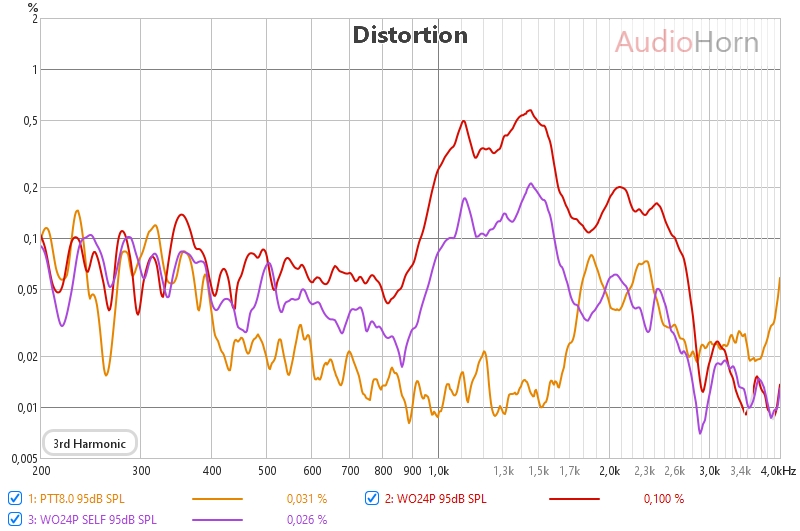
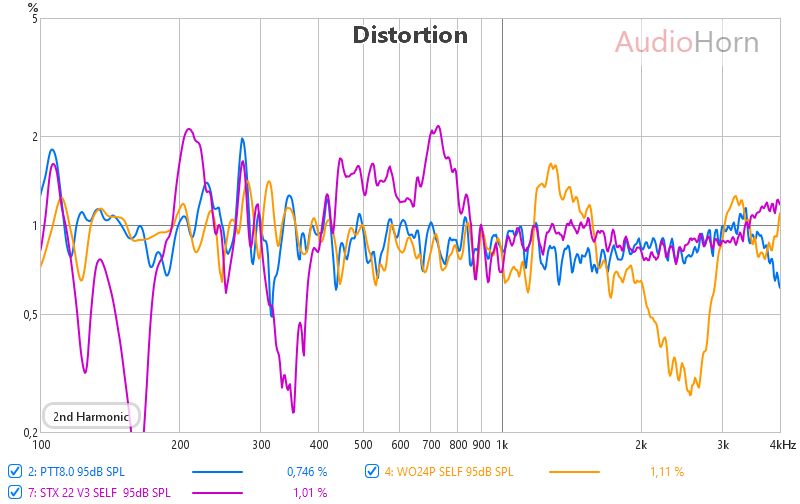
These drivers are so good that only the H2 and H3 stands out from the noise and offers a noticeable difference.
H2
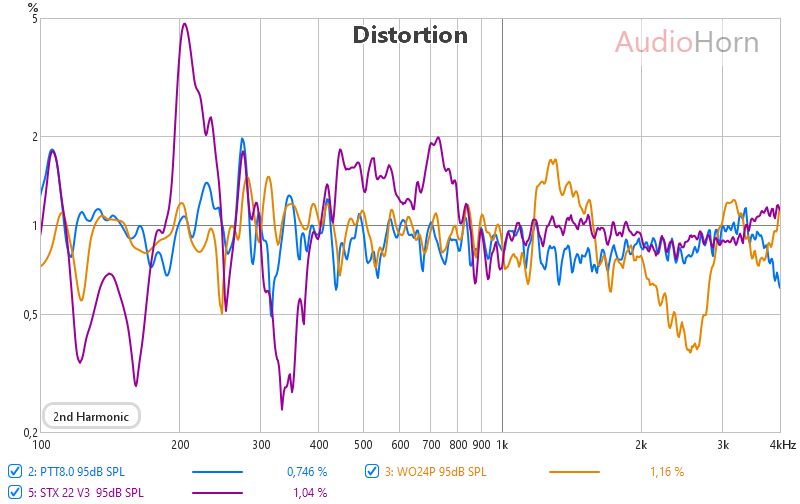
H3
H2 with air coil inductor at the same EQ SPL
H3 with air coil inductor at the same EQ SPL
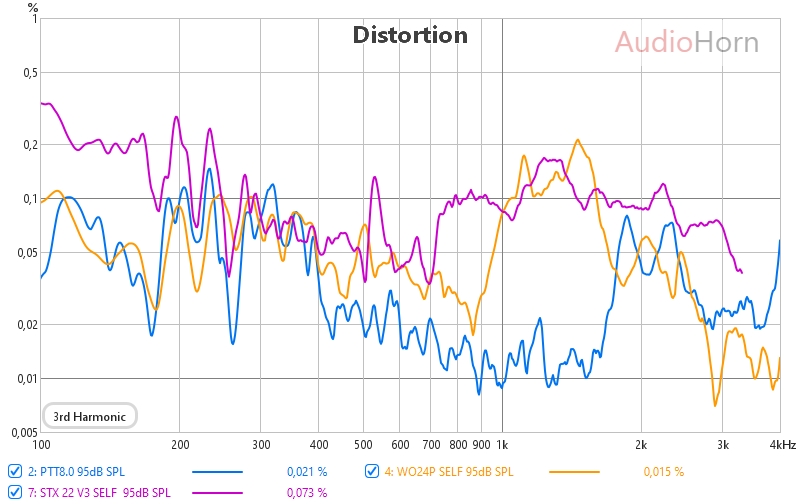
The H5 of these excellent drivers is below 0.05% and not very significant.
The STX W22 is surprising, as the back electromotive force applied by the air-core inductor reduces distortion at 200 Hz. Even the H2 is reduced, indicating that the distortion increase at 200 Hz was, in fact, related to the breakup.
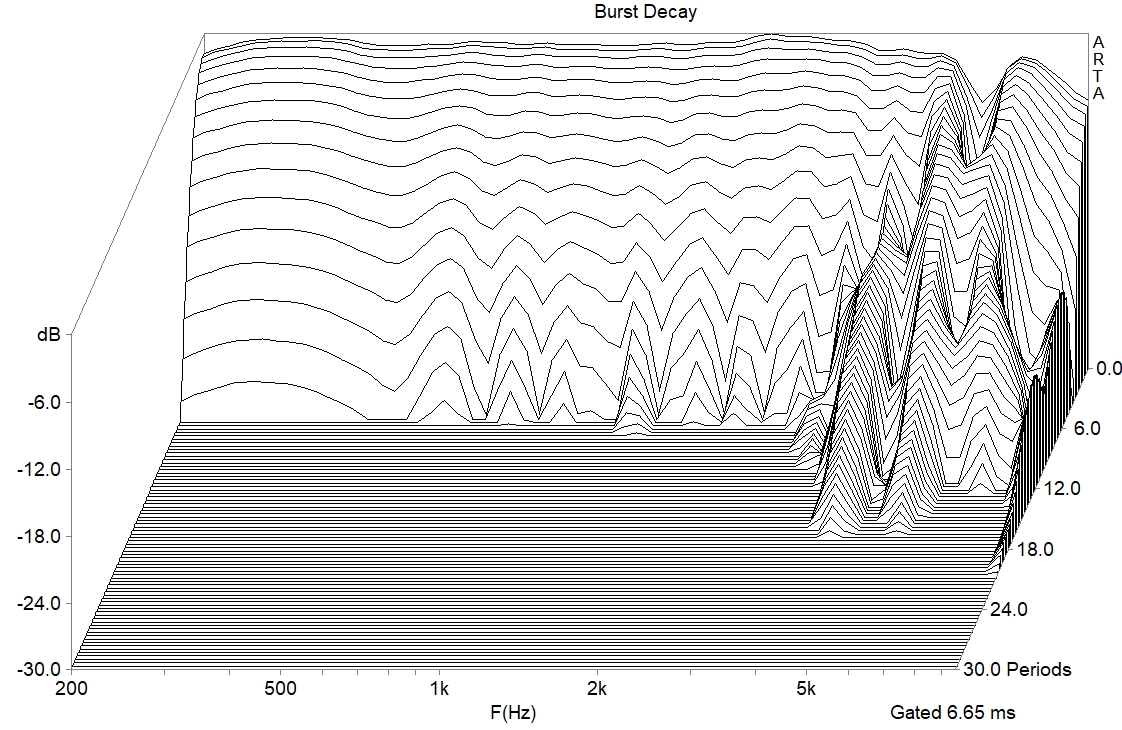
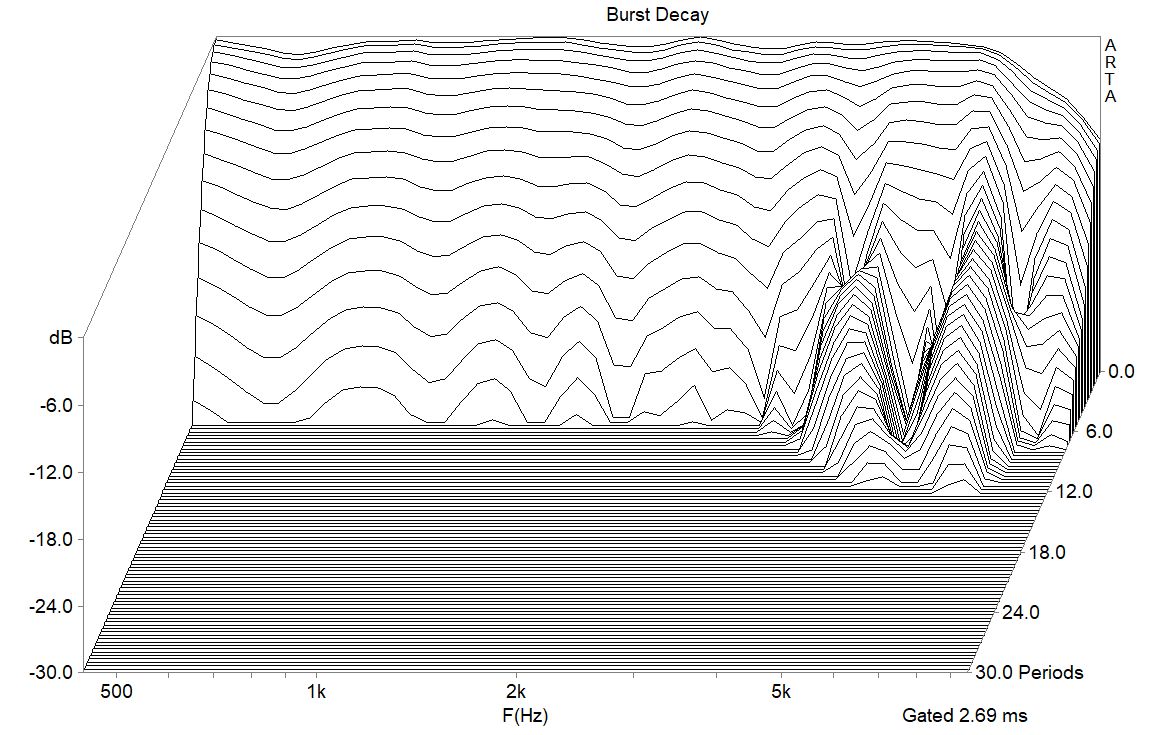
Time-domain measurement
As always, there’s nothing to see in the time domain if we stay away from breakup:
WO-24P
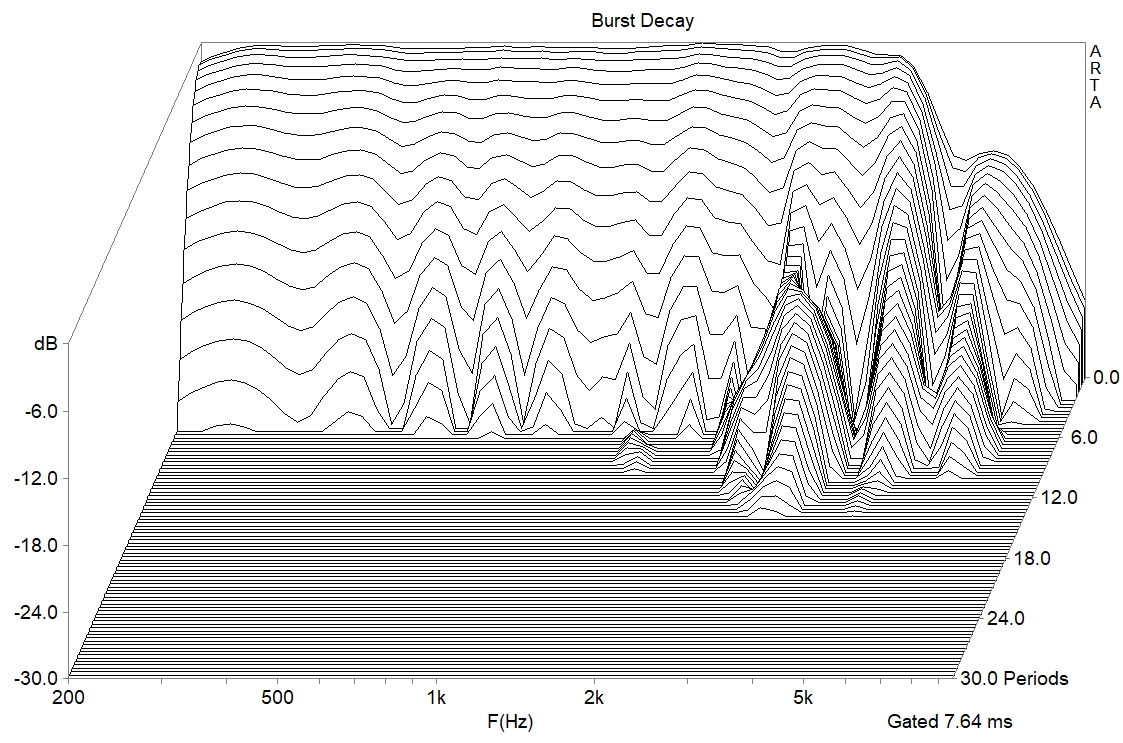
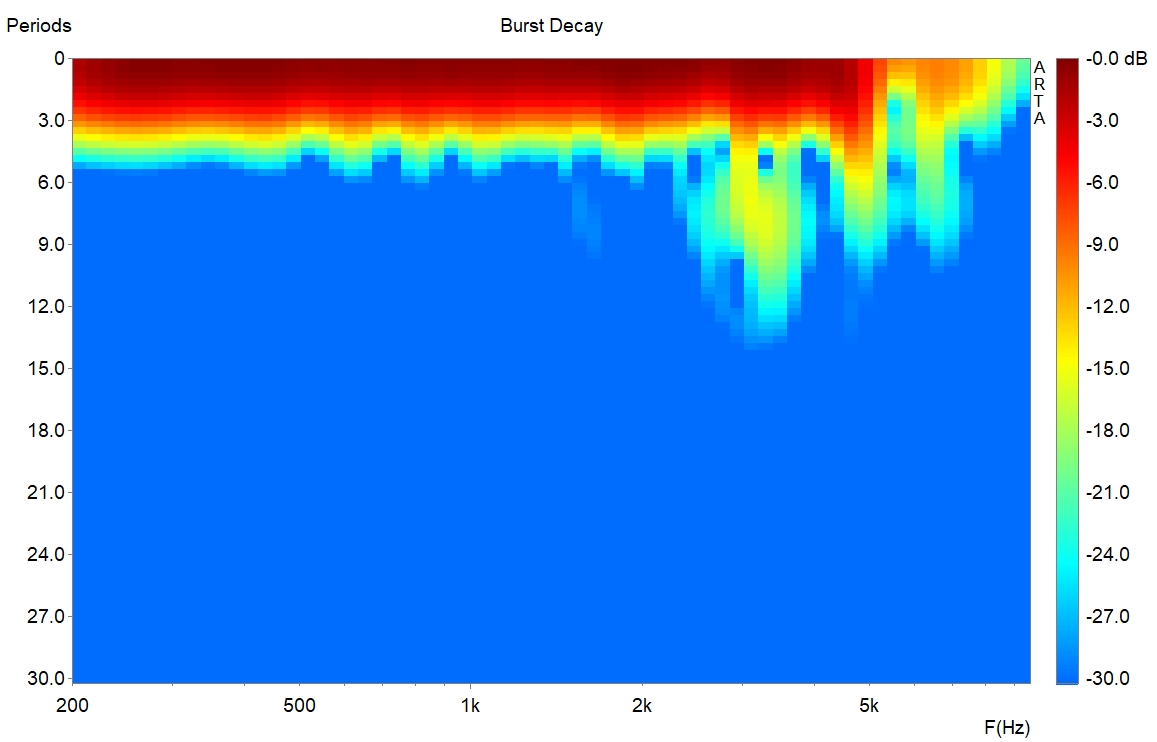
PURIFI PTT8.0
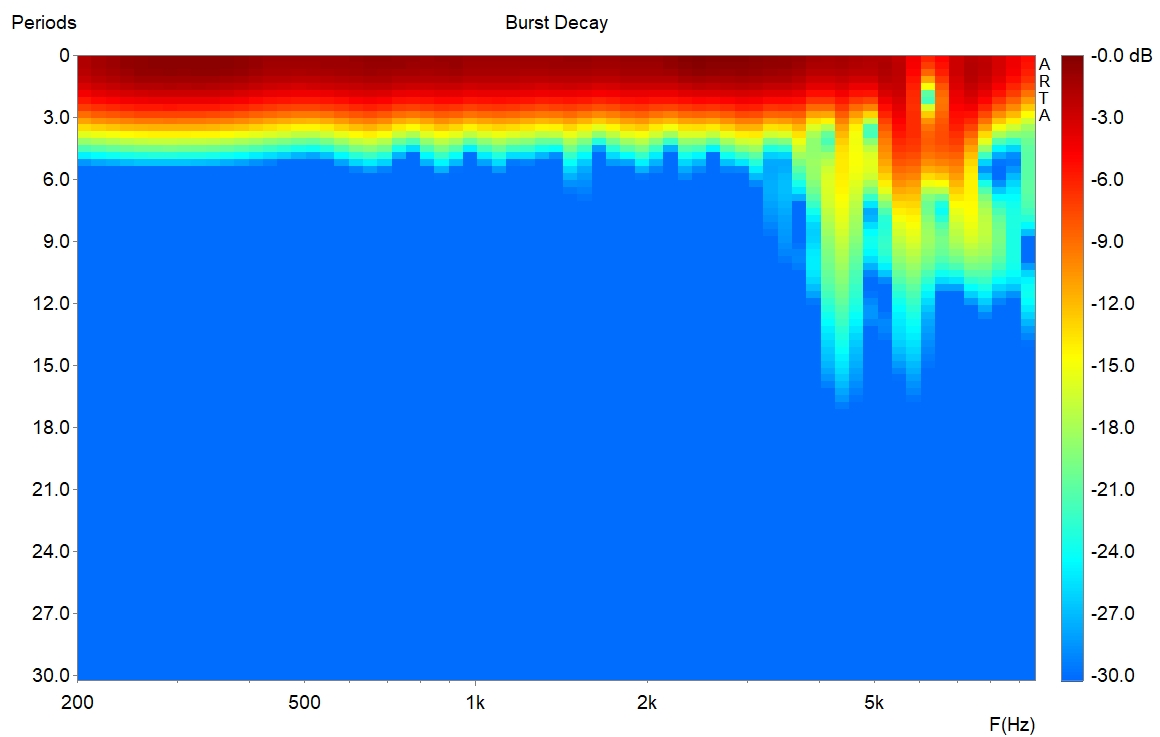
STX W22.200.8.MCX_V3
Conclusion
Without the little rise up on H3 at 200/300hz the STX V2 and V3 will be ex-aequo on distortion with the WO24P.
The self transform both WO24P and STX in low-medium woofer for a 2 way usage cut at 1250/1300 hz with an X-Shape 25.
With a Back Electromotive Force system, such as a notch filter or an air-core inductor, the STX matches the best-in-class woofers in terms of distortio, at a fraction of the price.
The Purifi is an expensive killer and doesn’t need an air-core inductor to perform extremely well compared to the WO24P. The last advantage of the WO24P is its 1.5" more larger size (more emissive surface), which will make a difference in the very low end (not visible on charts) and also in directivity control when we want to control directivity as low as possible with the HF horn at crossover.
The best compression drivers usable with them are tested here: 1" compression driver test.
There is a huge difference in chassis between the WO24P and this STX that is an stamped sheet metal making the STX harder to integrate, but well, we have seen that it doesn’t impact performances.